
Award recognizes critical childcare air quality research
Hailin Zheng wins the first edition of the Renz van Luxemburg Award for his research on improving air quality in childcare facilities.
Published on July 2, 2026
© Rien Boonstoppel

As Head of Partnerships, Linda liaises with new partners. She coordinates all ongoing collaborations and connects our journalistic editorial and commercial articles. She is not only the connector behind our articles, but also all of our events.
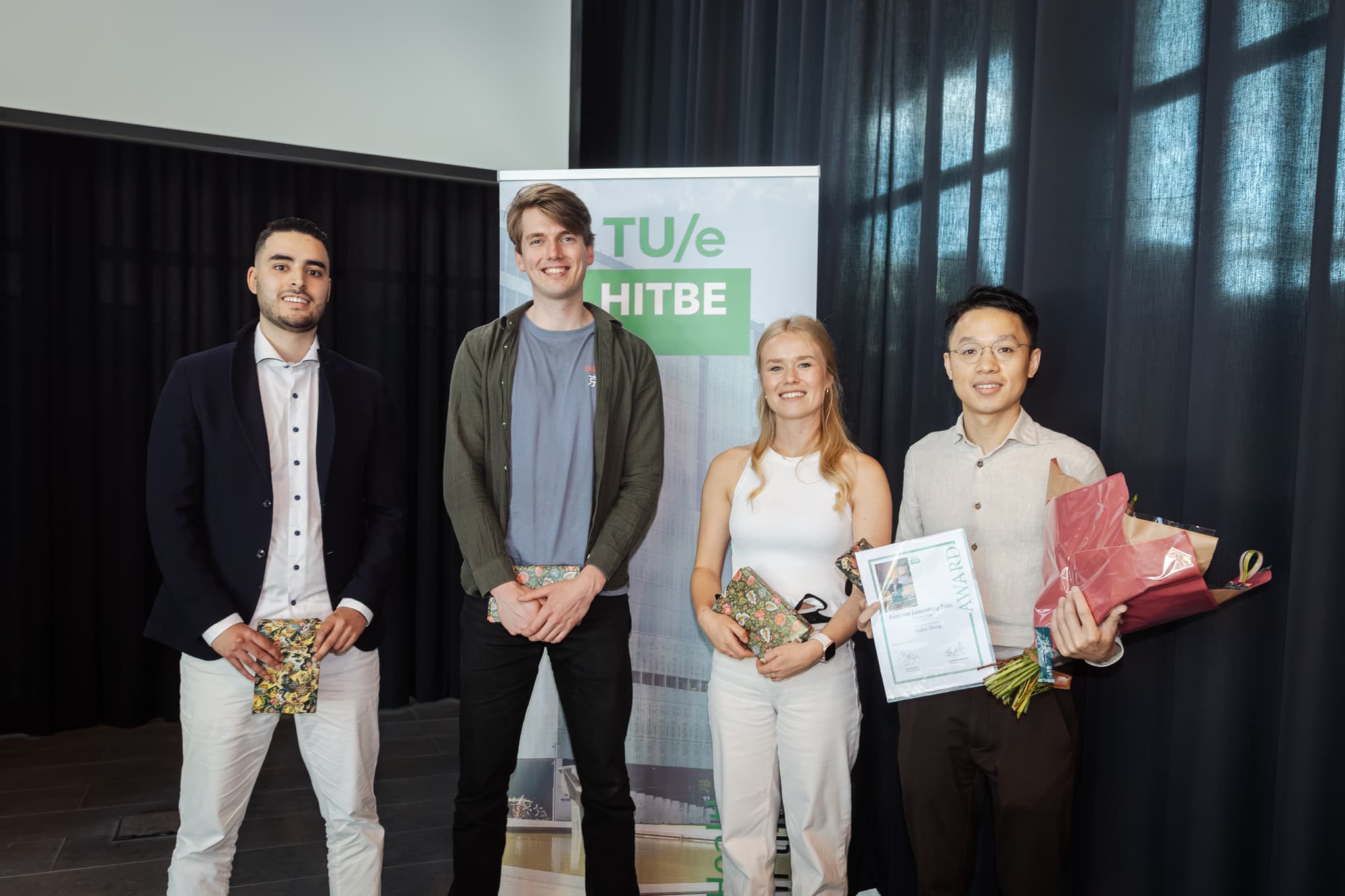
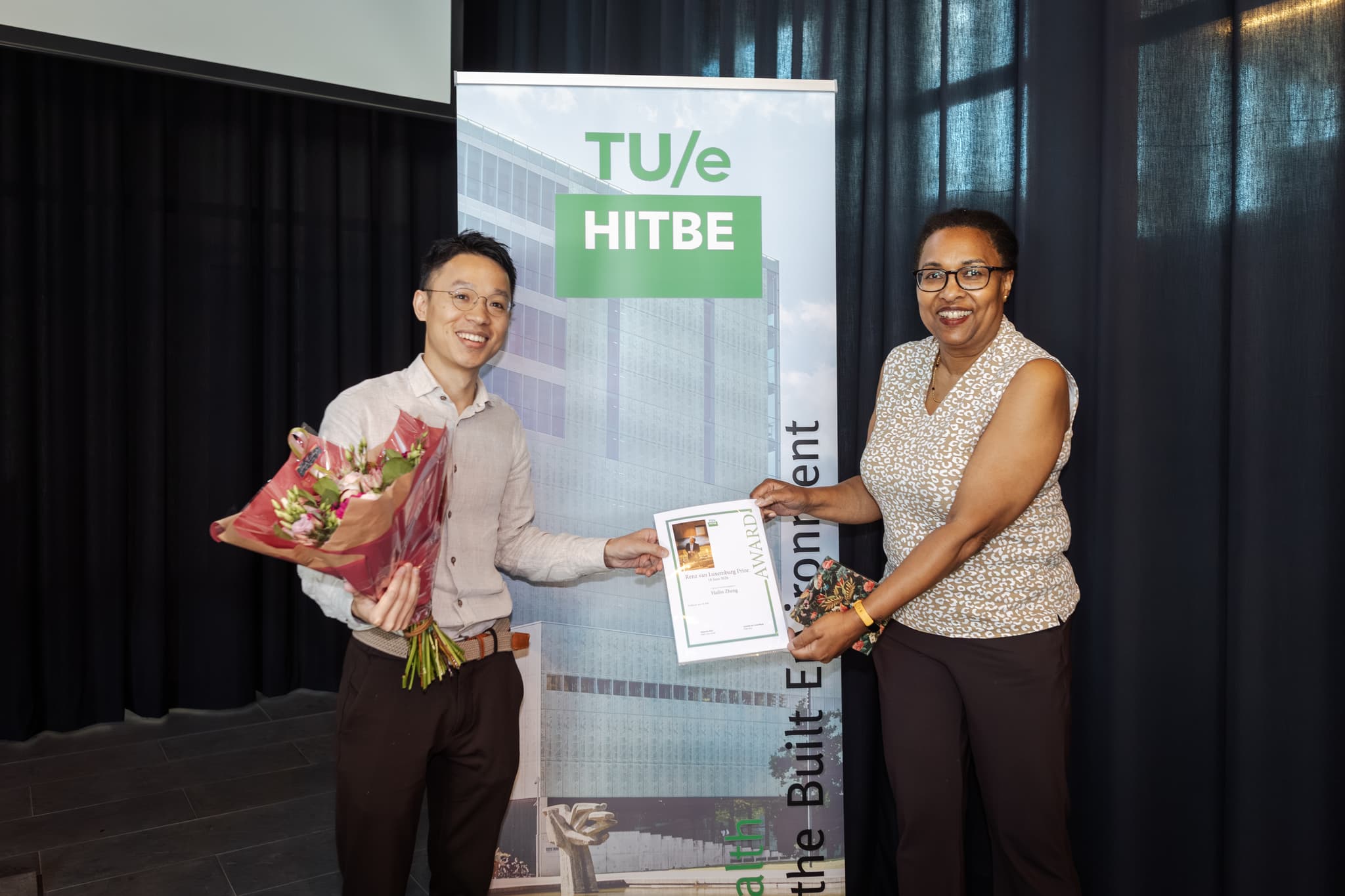
The air quality of many buildings still leaves much to be desired, as Hailin Zheng observed during his PhD research at Eindhoven University of Technology (TU/e). In his work, Zheng focuses specifically on measuring and improving air quality in daycare centers. “Children are more vulnerable to air pollution because their bodies and lungs are still developing,” he explains. On June 18, Zheng won the Renz van Luxemburg Award for impactful and multidisciplinary research on health in the built environment.
“I am honored to have been chosen as the winner by the jury,” Zheng said after the award ceremony. “It underscores the importance of this research. Children cannot yet express what they need; they rely on adults to do that for them.” He received the award during a meeting of the Health in the Built Environment research community. Zheng, like the three other candidates, presented part of his work to the jury and the other attendees.
Poor air quality in baby beds
As part of his research, Zheng studied air quality in semi-enclosed baby bunk beds commonly used in Dutch daycare centers. Based on a field survey of nearly 70 bedrooms across 17 centers, he built a full-scale laboratory setup with breathing thermal baby manikins. The experiments showed that exhaled CO₂ can accumulate inside these beds, with inhaled CO₂ levels averaging about three times those measured in the room exhaust.
© Rien Boonstoppel
Personal ventilation
Zheng therefore explored various options for improving ventilation in daycare sleeping areas. Among the tested strategies, personalized ventilation at the bed level proved to be the most effective solution. “Good ventilation can help provide cleaner air in the breathing zone and reduce the accumulation of exhaled CO₂ and other pollutants. This is especially important during sleep, when children cannot actively respond to their environment,” the researcher explains.
He notes that, following the COVID-19 pandemic, there has been increased attention on air quality in relation to our health and safety. But there is still room for improvement: “We can certainly do more to raise awareness and take action to improve inhaled air quality.”
The power of nature indoors
In addition to Zheng, three other researchers were nominated for the Renz van Luxemburg Award. For example, PhD student Sietse de Vries is investigating how he can bring nature—and especially its positive effects on people—into indoor spaces. “Nature gives people a sense of relaxation. But we spend most of the day indoors, where we often don’t feel that connection to nature,” De Vries explains in his pitch.
One possibility is to incorporate dappled light—light that filters through tree leaves and falls onto the ground, creating a “dancing” pattern. “This could, for example, help give people in offices that relaxed feeling of being inside nature,” he says. To test the various possibilities, De Vries has created a tool that simulates an environment using VR goggles.
The new role of the office
Master’s student Mohamed Ezzamouri is focusing on a completely different aspect of the work environment. He is researching the new role of the office, as many people are embracing hybrid working in the wake of the pandemic. “Hybrid work has many advantages, such as less commute time and a better work-life balance. But there are also challenges, for example, when it comes to productivity,” Ezzamouri explains. That’s why he’s investigating the opportunities and pitfalls of this new way of working. “A pleasant workplace has a big impact on people.”
The city and heart health
Valerie van Es, a postdoctoral researcher, delivers the final presentation. She addresses an urgent issue: heart health. “By 2050, 70% of the population will live in cities,” she begins. “Cities are home to many stressors, such as extreme heat in the summer and noise pollution. Prolonged exposure to these factors can affect the heart.” That’s why she’s researching how the urban environment influences health. She collected data on the environment and people’s physical responses, such as their heart rate, inside and outside urban areas. “We’re also using machine learning to predict the consequences of certain situations.”
Impactful research
The topics of the pitched research projects varied widely, ranging from the space in a baby crib to an entire city landscape. There is one key common thread: all the studies show that the built environment significantly affects our health, both physically and mentally. “Health is an important theme in our daily lives, in scientific research, and also in government policy,” said Helianthe Kort, professor at TU/e and chair of the research community on health in the built environment, during the award ceremony. “To conduct truly impactful research, we must collaborate in a multidisciplinary manner.”
More about the Renz van Luxemburg Award
That was also the philosophy of Renz van Luxemburg. He graduated from TU/e in 1976. He then began working at the Netherlands Institute for Applied Scientific Research, TNO, and later founded a company: Level Acoustics. Meanwhile, he remained involved in the activities of the Built Environment Department, and in 2010, he was appointed professor of building acoustics. During that time, he was also involved in establishing the research community on health in the built environment and passed away suddenly in 2012.
With his expertise, he contributed to several iconic projects, such as the construction of the Muziekgebouw in Eindhoven. But his passion for interior spaces went far beyond acoustics alone. He also focused on noise, air quality, temperature, light, and all other aspects that affect people’s health. In this way, he inspired many students.
That is why this annual award was named after Renz van Luxemburg. Students from both TU/e and Fontys who are working on health in the built environment are eligible to apply.
Sponsored
This story is the result of a collaboration between 4TU.Built Environment and our editorial team. IO+ is an independent journalism platform that carefully chooses its partners and only cooperates with companies and institutions that share our mission: spreading the story of innovation. This way we can offer our readers valuable stories that are created according to journalistic guidelines.
Want to know more about how IO+ works with other companies? Click here