
AI powered microscopes rewrite health security
Microscope Octopi uses machine learning to diagnose malaria 100 times faster
Published on February 19, 2026
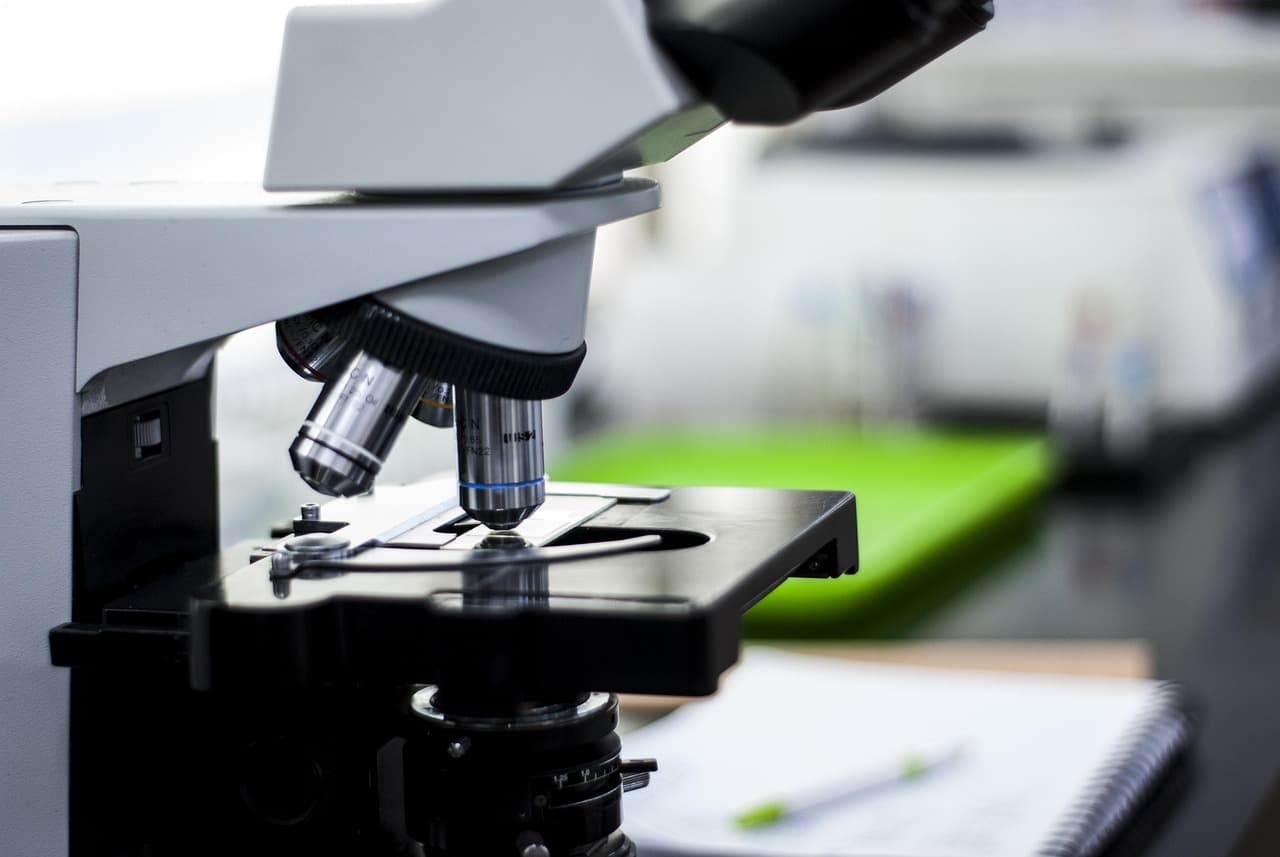
Microscope via Pixabay
Masterstudente journalistiek aan de RUG, stagiair bij IO+, schrijft graag over de integratie van AI in het dagelijks leven
Engineers at Stanford University have developed Octopi, an autonomous, AI-powered microscope for malaria detection. Compact and energy-efficient, it delivers hospital-grade diagnostics to remote areas. By lowering costs and boosting efficiency, Octopi changes how infectious diseases can be managed.
Malaria infects nearly 290 million people and kills over 600,000 annually, mostly children. Detection is the main bottleneck: manual microscopy is slow, labor-intensive, and error-prone.
Octopi brings affordable, portable microscopy to remote clinics
Traditional automated microscopes are heavy, fragile, and power-hungry—unsuitable for malaria-endemic regions. University professor Manu Prakash and his team designed Octopi to run on batteries or solar power. “No power? No internet? No problem!” Prakash tells the Stanford Report.
By using consumer electronics, they cut the cost to around $1,000 (approximately €847) per microscope, making widespread deployment feasible. Octopi scans slides automatically, freeing healthcare workers to focus on patients.
The speed of Silicon
AI scans over 1.5 million red blood cells per minute, which is about 100 times faster than a human. It does not fatigue and detects malaria parasites with high precision. Clinical trials show that when there are 50 or more infected cells per microliter, the disease is detected 90% of the time, and perfectly when there are over 150.
The team further reduced costs by training Octopi to detect a simple spectral shift in infected blood under ultraviolet (UV) light. Hongquan Li, lead graduate student on the research team, explains: “The infected cells light up, and AI can quickly count them to calculate disease load.”
Solving the analog bottleneck
Provided with poorly prepared samples, even advanced AI fails. To address this, the team developed Inkwell: a $15 compact, electricity-free mechanical tool that ensures uniform slides with blood samples. Inkwell employs a spring mechanism to create consistent smears at controlled angles. Inkwell produces slides with tunable cell density. This way slides can contain over 12 million distinguishable red blood cells.
Octopi enables a reliable workflow, ensuring that minimally trained workers can use it. The system is tested in nine countries.
The app store for diagnostics
Octopi’s open software makes it a general-purpose imaging platform. New diagnostic algorithms can be added like apps, allowing the device to detect malaria, tuberculosis, or sickle cell anemia with a simple software update.
This versatility is already proven: Octopi detected sickle cell anemia in Nepal and is being tested for tuberculosis in other regions. To support global collaboration, the Stanford team is launching the Open Diagnostic Imaging Observatory Network (ODION). The network will share data and let researchers develop models for local health needs. This decentralized approach accelerates innovation and keeps diagnostic tools aligned with emerging diseases.