
At 74, Fred Roozeboom remains a restless pioneer
From the chiplet revolution to PFAS-free water streams: another award for Professor emeritus Fred Roozeboom.
Published on September 15, 2026
Bart, co-founder of Media52 and Professor of Journalism oversees IO+, events, and Laio. A journalist at heart, he keeps writing as many stories as possible.
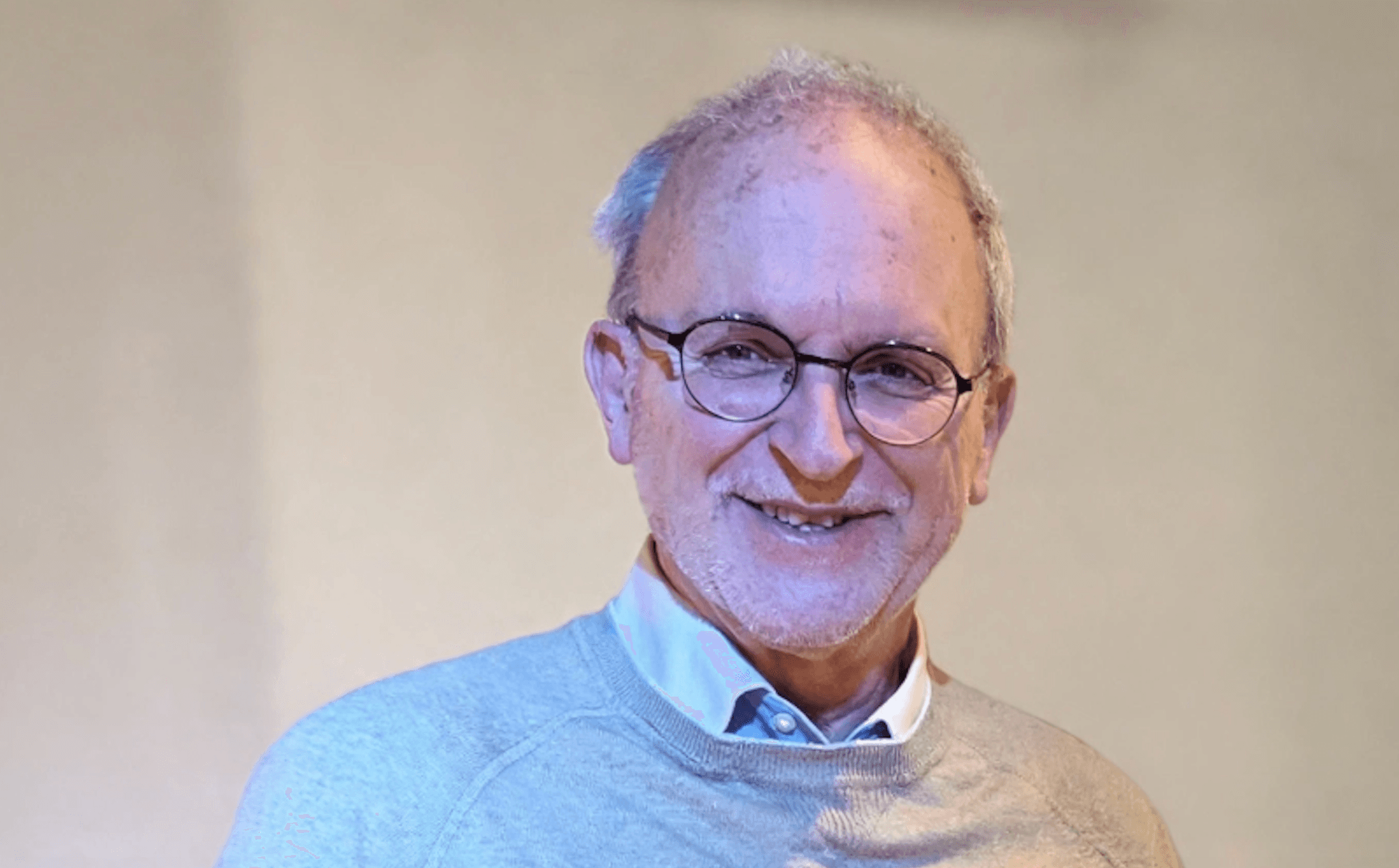
He may be 74 and well past retirement age, but anyone who speaks with Fred Roozeboom quickly realises that sitting still is not an option for him. Next month, the professor emeritus and former Philips researcher will travel to Calgary, Canada, to receive the prestigious Electronics and Photonics Division Award from The Electrochemical Society (ECS). Yet in between prizes, fellowships and honours, he continues to advise startups, write weighty textbooks and use atomic layer deposition to combat PFAS pollution. “I am still driven by pure curiosity.”
Fred Roozeboom’s professional life remains as busy as ever. The first question about the reason for our conversation – the international ECS award he will receive in October – immediately prompts a masterclass in advanced chip architectures, miniaturised medical technology, geopolitical trade restrictions and membrane filtration.
The award, to be presented at the 250th meeting of The Electrochemical Society in Calgary, is Roozeboom’s second major distinction from the venerable institution. In the spring of 2023, he received the Gordon E. Moore Medal for Outstanding Achievement in Solid State Science and Technology. While that earlier medal was awarded at society level, the current Division Award recognises his specific contributions to the Electronics and Photonics Division.
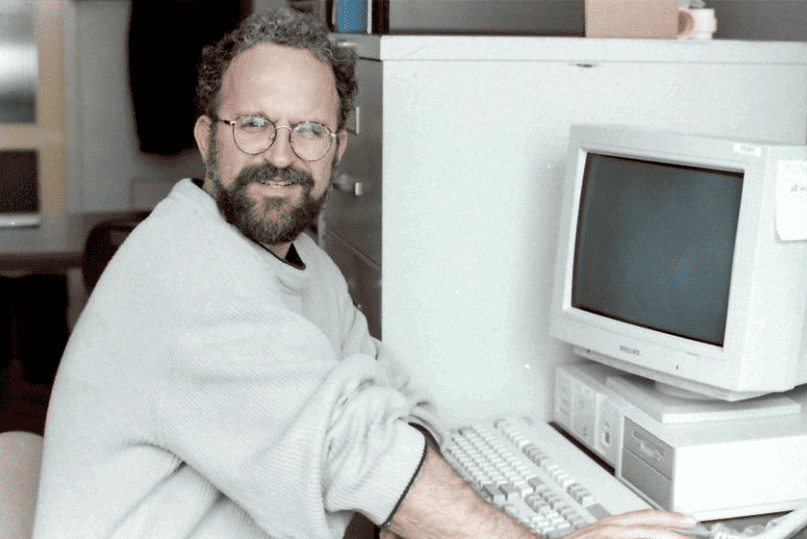
After winning the Gordon Moore Medal, Fred Roozeboom joins an illustrious list of scientists
The Electrochemical Society looked not only at technological excellence within the work of the winner from Waalre, but also at his social impact.
“It is a combination of a lifetime achievement award and recognition of active service,” Roozeboom explains with his characteristic down-to-earth manner. “Over the years, I have organised more than fifty symposia for the ECS division. They were always at the intersection of electronics, a touch of photonics and, most certainly, packaging.”
Back to where it all began: system-in-package
The topic of his planned lecture in Calgary goes straight back to the decades he spent at Philips Research, once a world-leading cradle of microelectronics breakthroughs.
“Today, everyone talks about advanced packaging, chiplets and heterogeneous integration as though they were invented yesterday,” Roozeboom says with a laugh. “Look at Nvidia’s latest AI chips: they are no longer monolithic slabs of silicon. They are complete little chip houses in which nineteen separate dies – computing cores and sixteen high-bandwidth memory chips – are packaged on top of and alongside one another on what is known as an interposer.”
For Roozeboom, it is all very familiar. “Today, it is called system-in-package, but we were already working intensively on it at Philips 25 years ago. The difference is that the need has now become many times more urgent. The traditional lithographic scaling of chip structures is reaching physical and economic limits. The smallest dimensions are levelling off at around 20 to 28 nanometers. To keep Moore’s Law alive, we are now stacking transistors in layers and increasingly shifting the scaling challenge to packaging as well.”
The Brainport region is once again playing a crucial role in the packaging resurgence. The spacing between contact points remained at the micron level for years, but connecting chiplets now demands microscopic precision.
“With CTO Marco Pieters, ASML sees an enormous growth market for deep-UV systems used at the packaging level. And with companies such as ASMPT and Besi, the Netherlands is once again at the forefront of what is known as hybrid bonding, which will allow different types of chips to be connected at micrometre scale.”
Pacemakers inserted through the groin
That same drive toward miniaturisation produced one of Roozeboom’s most tangible achievements – and one with a clear impact on society. At Philips Research, he and his development teams laid the foundations for so-called trench capacitors: capacitors built into microscopically deep structures etched into silicon, offering an enormous capacitance per square millimetre of wafer area.
Initially intended for high-frequency wireless communication, or RF, the technology caught the attention of pacemaker giant Medtronic, which saw a very different application.
“They were looking for ultra-high densities to make their devices smaller,” Roozeboom recalls. “Together with the factory in Caen, France, we carried out intensive technology transfers from Philips. Medtronic subsequently miniaturised not only our capacitors but the entire pacemaker. The result? In the past, major open-heart surgery was required to implant such a device beneath the skin. A modern pacemaker is now only about half the size of a thumbnail. Today, it is inserted through a catheter in the groin and guided directly to the heart, where tiny hooks secure it to the heart muscle.”
The bitter pill of geopolitical restrictions
Not every innovation proceeded without setbacks, however. Roozeboom speaks candidly about technologies that were too far ahead of their time. Together with his Philips colleague Herbert Lifka, for example, he designed an interposer with optical communication – using integrated OLEDs and photodiodes – capable of exchanging data at hundreds of gigahertz: co-packaged photonics avant la lettre.
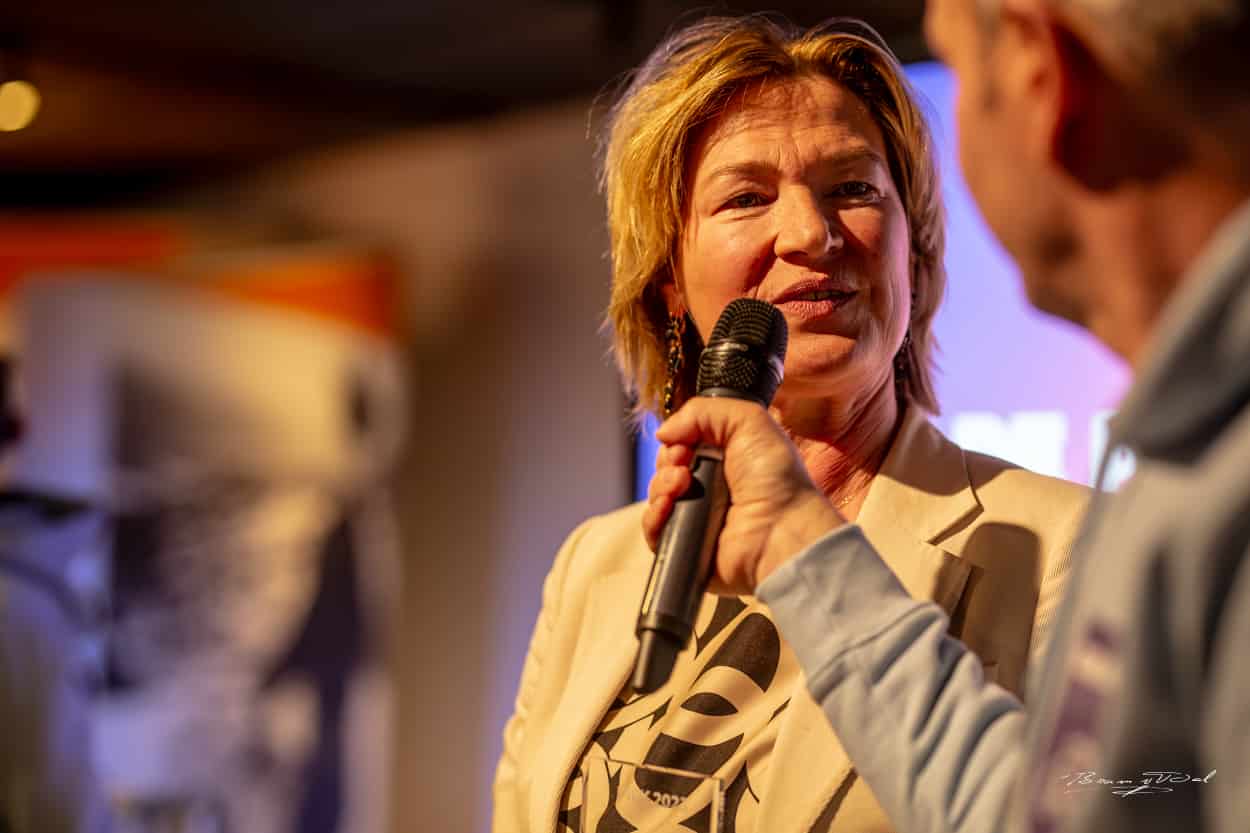
Brigit van Dijk leads the list of winners at the award ceremony of Gerard & Anton High Tech Piek Awards at the Philips Museum
Stars, bangers and a peak: the election of the people who stood out within the Eindhoven high-tech world over the past year again had many fine winners.
“We filed two patent applications, but Philips decided not to pursue them because the company no longer saw sufficient potential. A few years later, to our surprise, we discovered that TSMC had secured those patents worldwide. It was a harsh lesson: if your employer no longer wants to lead, Asia will overtake you on the inside.”
The current geopolitical climate therefore causes the researcher genuine concern. Because of tighter US export controls and the Dutch government’s adoption of similar restrictions, Roozeboom recently had to abandon a visiting professorship at the renowned Huazhong University of Science and Technology (HUST) in Wuhan.
“I had received a three-year appointment,” he says, regret audible in his voice. “But the University of Twente showed me the lists of restrictions on so-called dual-use technologies. I was no longer allowed to collaborate intensively or exchange students. That hurts. Of course, I do not turn a blind eye to human rights abuses in China, but science and global challenges – such as the environmental footprint of chemical production processes – transcend national borders. China produces two million engineering graduates every year. By cutting them off, you are simply forcing them to develop everything themselves. Ten years from now, they will be laughing in Beijing and saying, ‘Thanks for the boycott. We can now do it all on our own.’”
Consulting, PFAS and a gruelling 300-page delivery
Retiring quietly is clearly not on Roozeboom’s agenda. He still works at least three days a week, fulfilling a wide variety of roles. He advises startups such as CoolSem and Innoflex and closely follows developments at Nearfield Instruments, the successful TNO spin-off headed by CEO Hamed Sadeghian.
Major multinational companies also continue to seek his expertise. At Zeiss, he advises on atomic-layer processes used to keep mirrors clean and for other applications in EUV lithography machines. For Japan’s Nissan Chemical, he works on advanced chemistry for EUV photoresists.
At the University of Twente, he is also applying his expertise in Atomic Layer Deposition (ALD) to a highly topical environmental challenge: filtering PFAS from industrial wastewater.
“PFAS molecules are extremely persistent, and some are tiny, such as the trifluoro variant of acetic acid. Together with research groups at Twente and industrial partners, we are investigating how ceramic nanofiltration membranes can be coated with ALD layers so that their pores have exactly the right dimensions at the nanoscale. By also chemically functionalizing those layers – making them either hydrophobic or hydrophilic – you can significantly improve their ability to block the smallest toxic compounds.”
As if that were not enough, he has just completed a substantial 300-page handbook on Atomic Layer Processing for the International Optics Society SPIE, co-authored with two fellow experts.
“One of the most difficult deliveries of my entire career,” he says with a laughing sigh. “All those copyright applications for figures and tables... I came close to throwing it out of the window several times. But as the saying goes: writers endure.”
Fifty years after Twente
It is characteristic of a man who began his research career exactly fifty years ago. In August 1976, Roozeboom joined what was then Twente University of Technology as a 23-year-old chemistry graduate. He earned his PhD there studying monolayers of vanadium oxide catalysts, deposited using a technique that, decades later, would become known as ALD and form a cornerstone of the modern semiconductor industry.
At the end of August, he received a prestigious fellowship from the International Academy of Engineering and Technology (AET) at the University of Strathclyde in Scotland. Next month in Calgary, the ECS award will crown his work for the division.
“Isn’t it wonderful that all this is happening during what people call the twilight of your career?” Roozeboom concludes, his eyes sparkling. “But I do not do it for the applause or for a plaque on the wall. Technology has to move forward; it has to flow. As the ancient Greek maxim embraced by Philips Research puts it: Panta rhei – everything flows. As long as things keep moving, I am happy to keep moving with them.”