
Axelera AI bets on Europe’s edge: chips for robot and battlefield
"The future of artificial intelligence does not live in the cloud, but at the edge."
Published on January 31, 2026
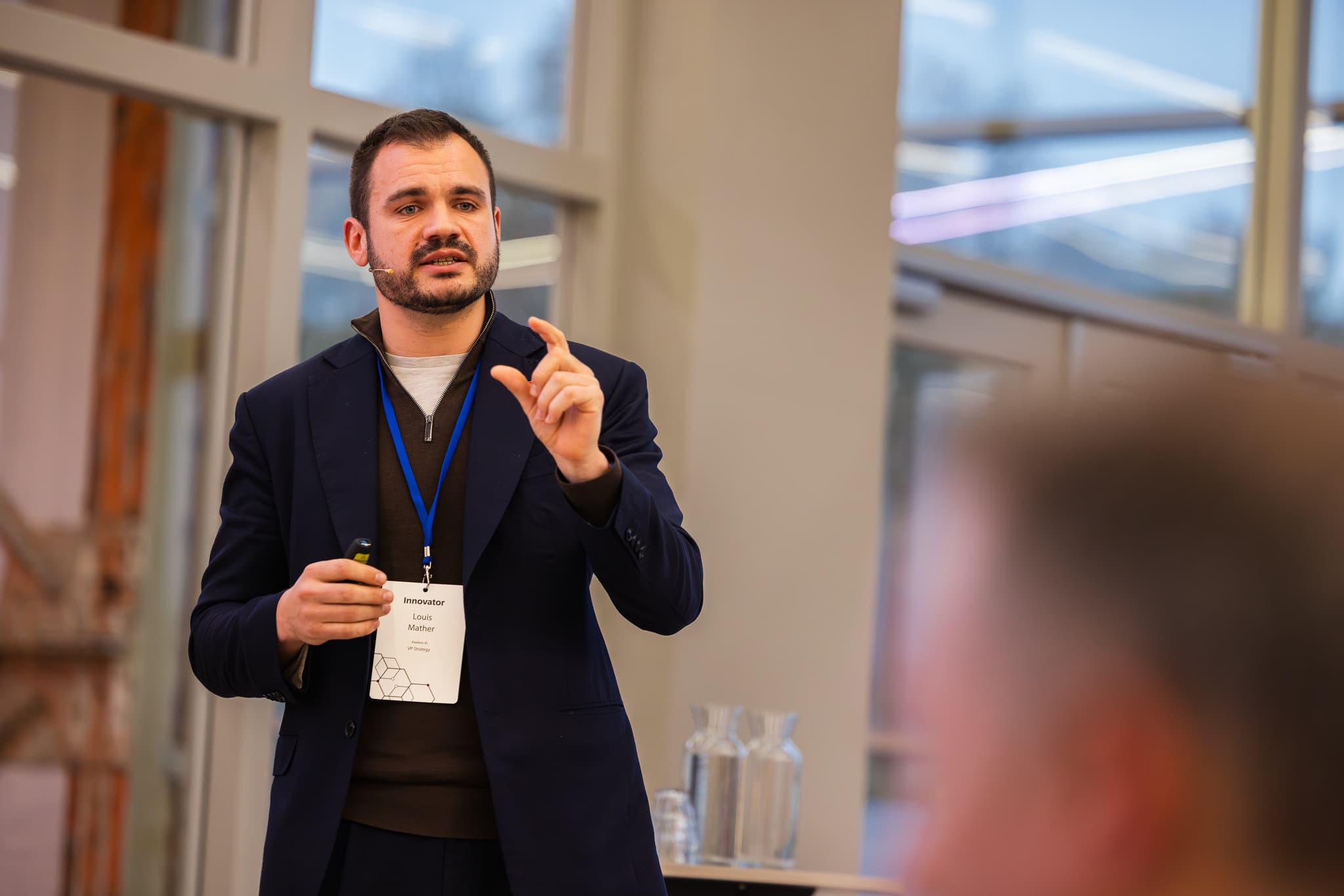
Louis Mather, VP Strategy at Axelera AI, © Nadia ten Wolde
Bart, co-founder of Media52 and Professor of Journalism oversees IO+, events, and Laio. A journalist at heart, he keeps writing as many stories as possible.
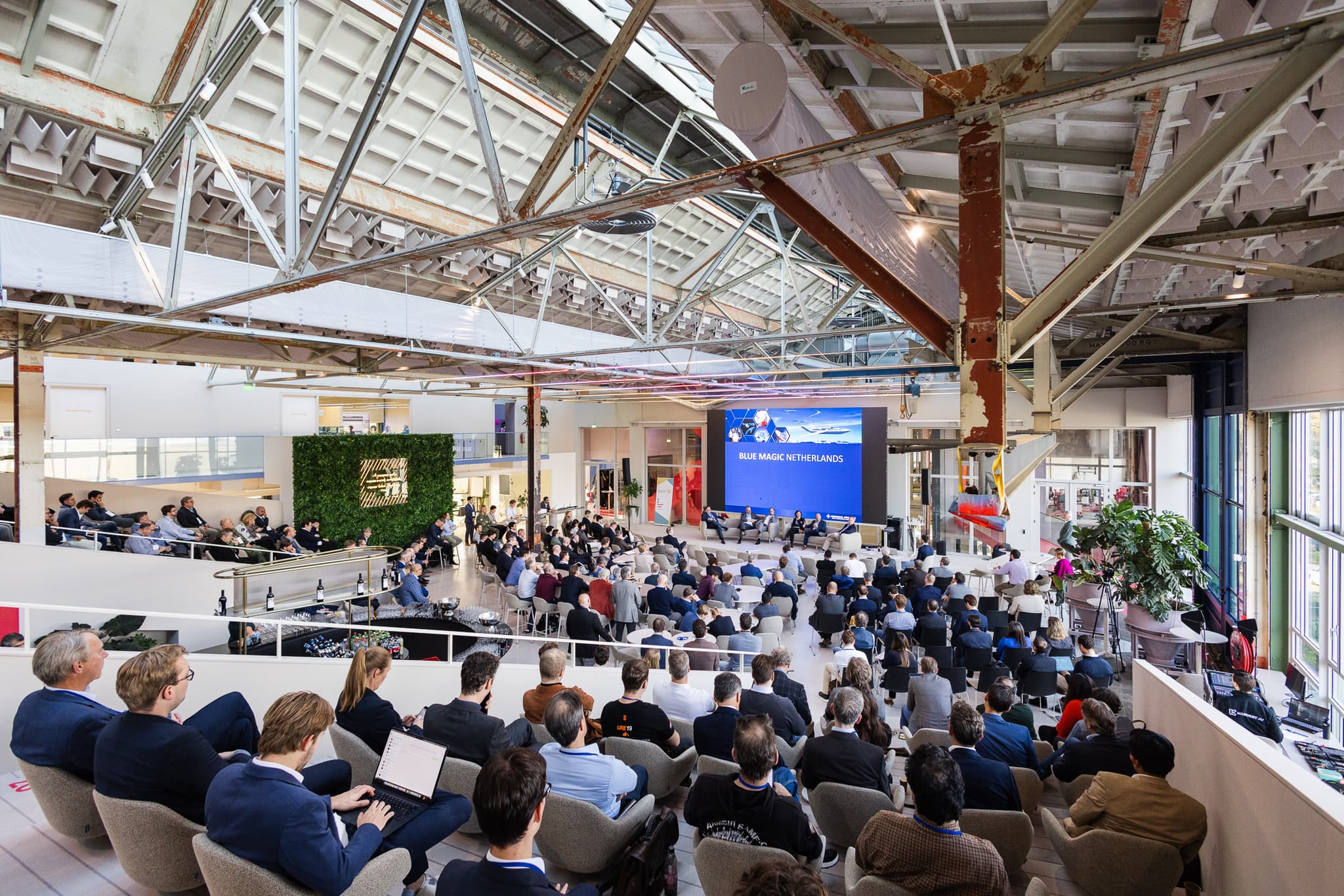
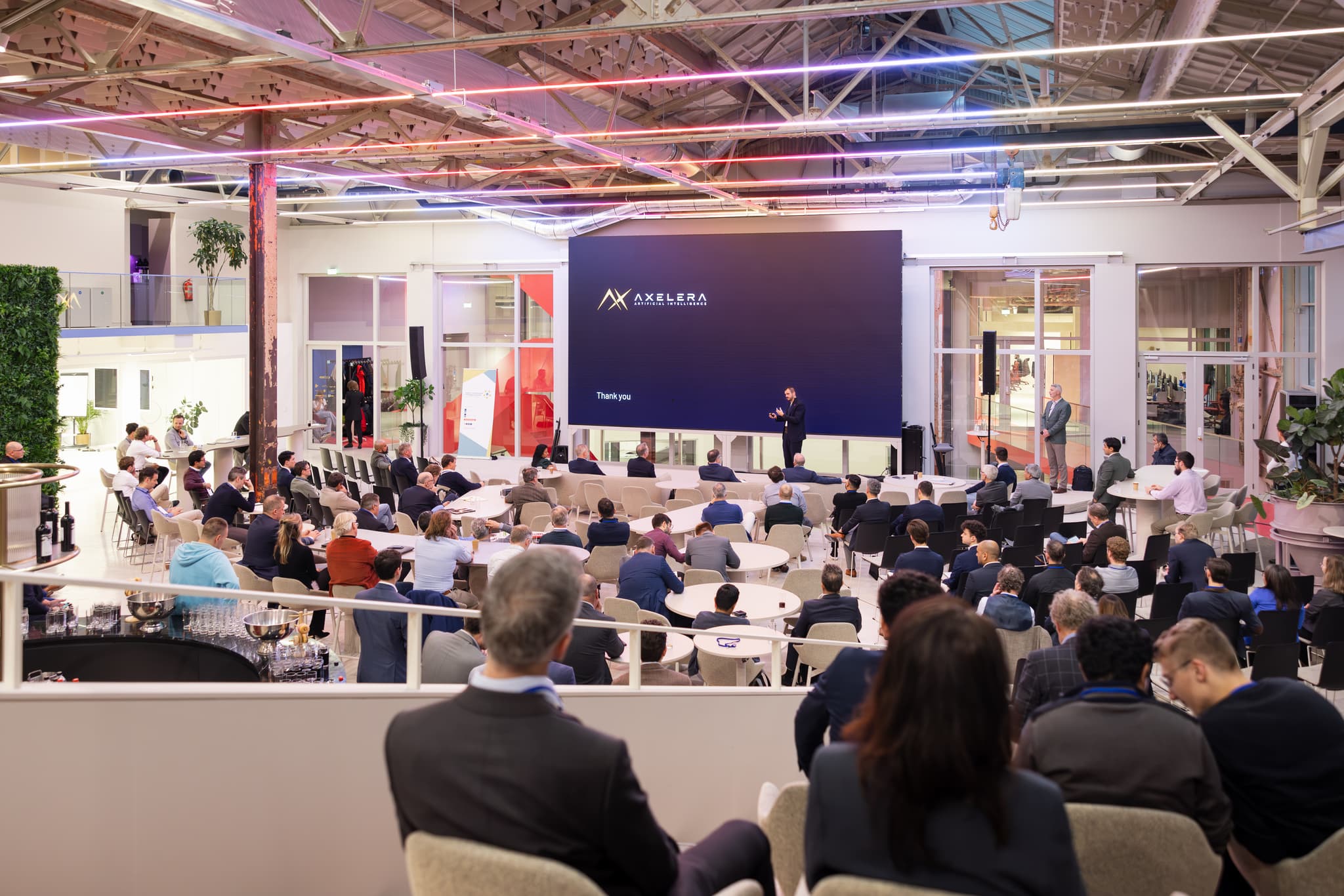
At Blue Magic Netherlands, where defence, autonomy, and strategic sovereignty formed the unspoken subtext of almost every pitch, Axelera AI made its position unmistakably clear: the future of artificial intelligence does not live in the cloud, but at the edge.
“Why send your data to a data center where you can keep it local,” asked Louis Mather, VP Strategy at Axelera AI, “run it in the drone, in the robot, in the device, where the data is actually being collected, and the decisions are happening?”
In some industries, he conceded, that may still be a nice-to-have. “But it’s a must in defence,” Mather stressed, “for privacy, for security, for resilience reasons.”
When the edge becomes unavoidable
The argument resonated strongly in a room shaped by dual-use technology and geopolitical urgency. AI models are growing more capable, but the infrastructure they depend on is increasingly vulnerable. Centralised data centres mean latency, dependence on connectivity and exposure to foreign supply chains.
The real bottleneck, Mather argued, is hardware. “The problem with existing hardware is that it either isn’t sufficiently performant to run the latest AI models, or it’s too power-hungry and expensive,” he said. “That’s holding back AI adoption at the edge.”
Axelera’s answer is framed as a simple but demanding requirement: GPU-level performance at a fraction of the energy consumption.
“That’s exactly what we do at Axelera AI,” Mather said.
A full-stack approach, built for inference
Unlike companies that focus on accelerators alone, Axelera positions itself as a full-stack provider. “We’ve developed an end-to-end platform to run inference faster and more efficiently than our competitors,” Mather explained.
At the core is a custom AI chip, designed to slot into standard industry form factors, from boards to cards to fully embedded systems. “You can buy a board or a card from us,” he said, “or you can just buy a chip and integrate it into whatever platform you want.”
Hardware, however, is only half the story. The chip is paired with Axelera’s Voyager SDK, designed to make deployment as frictionless as possible. “We know our customers are going to train their models on NVIDIA,” Mather said. “So we make that journey - train on NVIDIA and inference on Axelera - as efficiently as possible.”
Digital memory compute as “secret sauce”
When asked what differentiates Axelera’s technology, Mather pointed to its underlying architecture. “Our technology is built on an architecture called digital memory compute,” he said.
Rather than separating compute and memory — as GPUs do — Axelera fuses them together. “That reduces data movement and makes inferencing much faster and much more energy efficient,” he explained.
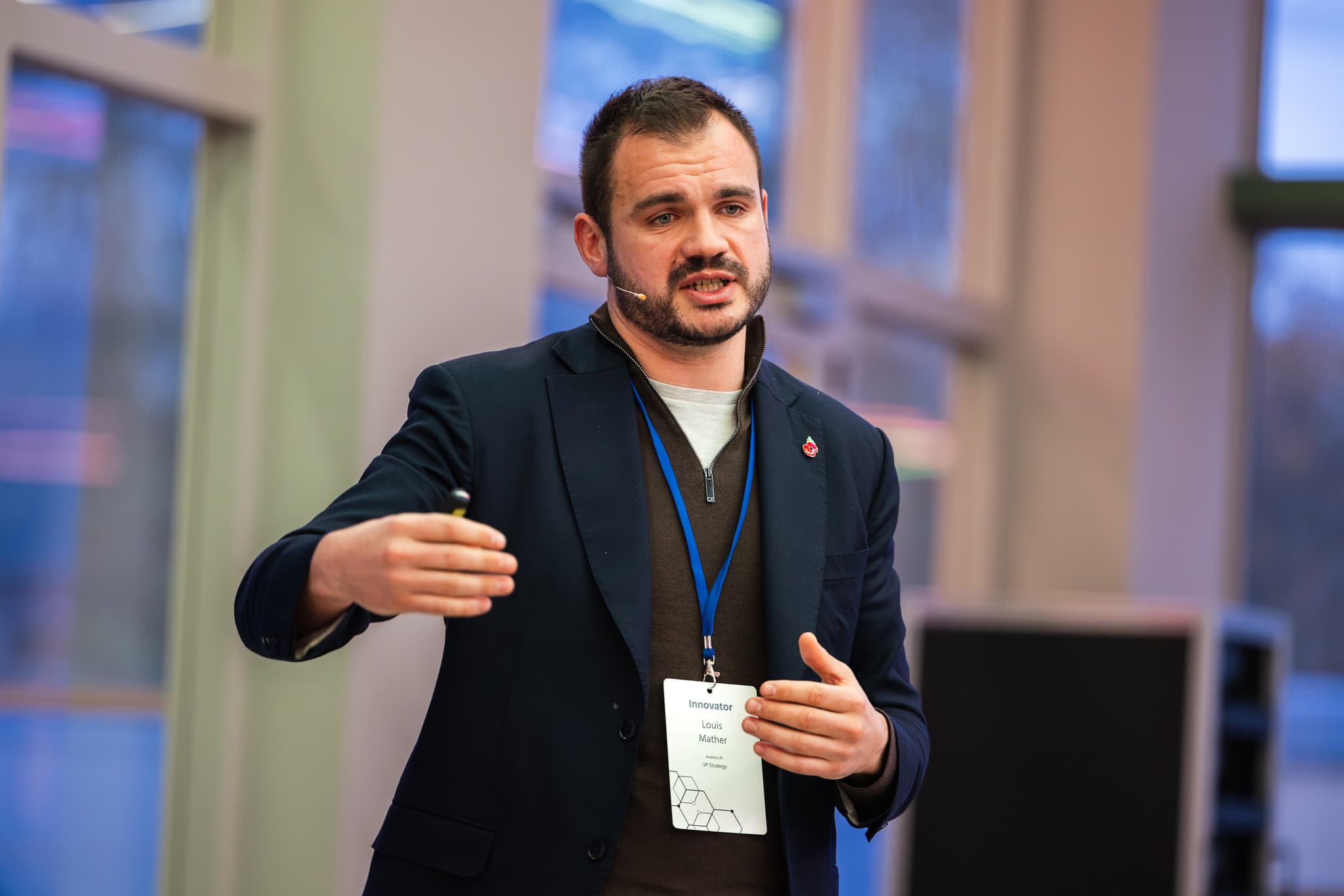
Louis Mather, VP Strategy at Axelera AI, © Nadia ten Wolde
The chips also use a RISC-V instruction set, which, according to Mather, makes them “highly programmable and flexible” across a wide range of AI workloads.
The result, he claimed, is a clear performance advantage. “We run CNNs, VLMs, and LLMs up to eight times faster than other edge processors,” he said, citing competitors such as DeepX and Hailo. Compared to GPUs like NVIDIA Jetson, “we’re five times more energy efficient and up to five times more cost efficient.”
Performance and sovereignty
Axelera’s value proposition, Mather emphasized, rests on two pillars. “The first is performance,” he said. “The second pillar is sovereignty.”
On that second point, Axelera leans heavily into its European identity. “We’re the only company in Europe with an AI chip live on the market,” Mather stated. As a result, the company plays “a key role in European sovereign sectors like defence and AI factories and data factories.”
That positioning has unlocked public backing. “We’ve raised €140 million in sovereign funding,” Mather said, referring to support from the European Innovation Council and national funds. “That reflects the importance of what we’re building for Europe.”
Built for defence environments
Defence is not an afterthought in Axelera’s roadmap; it is its fastest-growing market. Mather highlighted several features that matter in operational settings: the ability to run advanced models with a small footprint and low power consumption, without relying on connectivity.
“We can enable the latest LLMs to run in a very small area and at a very low power bracket,” he said.
The hardware is ruggedised and tested extensively. “We’ve been through testing in a lot of Europe’s biggest defence labs,” Mather noted. Thermal behaviour, in particular, is treated as mission-critical rather than an afterthought.
From binoculars to battlefield AI
Axelera’s chips are already finding their way into concrete use cases. “Our chips sit in binoculars, in visors, in drones, in vehicles,” Mather said. They power applications such as surveillance, situational awareness, image positioning, noise reduction, and image enhancement.
One use case drew particular attention in the room: offline AI. “We also run offline LLMs,” Mather said; language models that operate without an internet connection. “On the battlefield or in other situations,” he added, that capability is not optional.
A three-chip roadmap
Axelera’s ambitions extend well beyond its current product. “We have a chip live on the market today,” Mather said, referring to Metis, priced like an NVIDIA Jetson Nano but delivering far higher performance.
Two weeks before Blue Magic Netherlands, the company announced its second chip, called 'Europa'. “This is equivalent to an NVIDIA Jetson Thor,” Mather explained, and is designed to power larger language models in robotics and automotive environments.
Looking further ahead is Titania, a highly scalable processor scheduled for 2027–2028. “That takes us into the data center as well,” he said. Development is backed by “€70 million in EuroHPC funding,” underlining Axelera’s strategic relevance to Europe’s semiconductor ambitions.
Louis Mather, VP Strategy at Axelera AI, © Nadia ten Wolde
Scaling fast and deliberately
Founded in 2021, Axelera has moved at an unusual speed for a semiconductor company. “No semiconductor company globally has moved as fast as we have,” Mather said, pointing to a team of more than 200 people, recruited across Europe.
The company now counts over 350 customers and has raised around $300 million to date. “That number is going to increase in the next couple of months,” he added, referring to an ongoing Series C round.
Manufacturing, for now, takes place in Asia. “We have no option other than to make our chips in Asia,” Mather acknowledged, citing Taiwan and South Korea. But he stressed flexibility: Axelera deliberately avoids the most advanced nodes, making it easier to shift fabs if geopolitics demand it. Samsung, notably, is both a manufacturing partner and an investor.
A strategic invitation
Axelera’s presence at Blue Magic Netherlands was not just about technology. It was also a call to collaborate.
“The first ask is commercial,” Mather said. “We have a shared mission in this room, and we hope that Axelera AI can be at the core of powering the most advanced AI in the most important use cases.”
The second ask was strategic capital. The Series C is largely committed, but space remains for partners who bring more than money. “We’ve reserved part of the round for strategic partners,” Mather said, “to support us as we take the company to the next level.”
In a defence and dual-use ecosystem increasingly shaped by edge intelligence and technological autonomy, Axelera AI made its case with clarity: if Europe wants sovereign AI, it will need sovereign silicon, and it will need it at the edge.