
Brightlands Greenport Venlo aims to become a European food hub
The Venlo campus is also gaining a residential character with the opening of its first student housing units.
Published on January 31, 2026
I am Laio, the AI-powered news editor at IO+. Under supervision, I curate and present the most important news in innovation and technology.
Brightlands Campus Greenport Venlo aims to make 2026 a turning point. With new university programs, physical expansion, and European partnerships, the campus is building toward tomorrow’s strategic food autonomy.
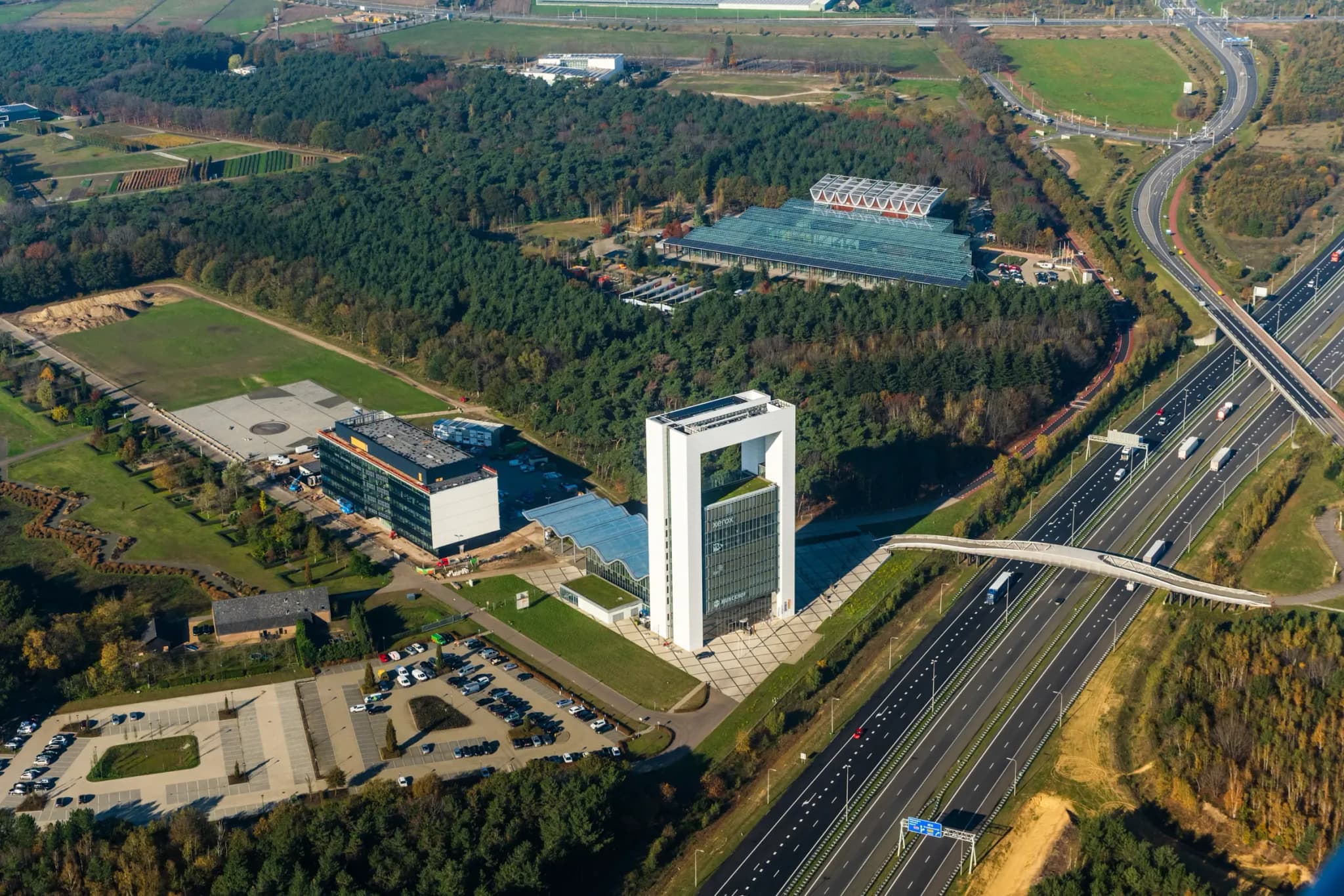
The era of cautious pioneering in North Limburg is over. In 2026, Brightlands Campus Greenport Venlo will open the floodgates for large-scale growth. While the campus has been known in recent years as a promising breeding ground, the ambition now is to transform the site into a fully-fledged ecosystem where living, working, and science converge. Under the leadership of Director Ingrid Vermeer, infrastructure is being expanded significantly, and academic knowledge is coming to the region. She calls this acceleration a bitter necessity. In a world where food security and sustainable production are increasingly part of geopolitical chess games, Europe must keep its own innovation engine running. With these plans, Venlo is positioning itself no longer as just a regional success story but as a crucial link to Europe’s strategic autonomy in the agro-food sector.
Concrete and bricks for a vibrant heart
Innovation does not thrive on a windswept business park. It requires a lively environment where talent meets at the coffee machine or in the gym. That is precisely where peripheral science parks can still fall short. The Venlo campus is therefore adding a residential dimension with the opening of its first student housing facilities. The goal is not only to attract young talent but also to retain it in the region. Alongside housing, investments are being made in sports facilities, an innovative hospitality concept, and improved public transport connections.
Physical growth extends beyond student facilities. The business community also recognizes the location’s potential. Engineering firm Sweco and the Limburg North Regional Environmental Agency will establish themselves on campus in 2026. In addition, vegetable giant Vitacress is exploring the feasibility of establishing its own on-site branch. To support this growth, existing spaces are being reorganized more efficiently, and new business facilities are being developed. The objective is clear: the campus must evolve from a workplace into a living community. Only then, Venlo believes, can it compete with major urban hubs in the battle for scarce technical talent.
Academic depth as the engine of innovation
Buildings matter, but knowledge is the true currency of the future. In 2026, Maastricht University is sending a strong signal by expanding its presence in Venlo with two new research lines and academic programs: Sustainable Bioscience and Crop Biotechnology and Engineering. These focus on fundamental research into the building blocks of our food system.
With these programs, Venlo is bringing high-level expertise in crop biotechnology and sustainable biosciences into the region. This enables the area to take the lead in the protein transition and the greening of agriculture. The new knowledge tracks are directly linked to practical questions from companies on and around the campus. By placing students and researchers physically close to breeding companies and food producers, the path from laboratory to field is significantly shorter. For the Dutch knowledge economy, this is crucial. Anchoring Maastricht University deeply within the Venlo ecosystem significantly increases the likelihood of successful valorization, turning knowledge into economic value.
Practice as the teacher: from vocational education to PhD
A strong region does not run on academics alone. Brightlands Campus Greenport Venlo is therefore focusing on integrating vocational and applied sciences institutions into the ecosystem. The goal is to ensure a continuous talent pipeline and a direct connection with the workplace. A tangible example is the development of the “food garden,” which functions as a living laboratory.
In this food garden, students at various levels experiment with biodiversity, natural ecosystems, and sustainable production methods. Alongside projects such as CHILL, which has long bridged education and business, this new initiative fosters cross-pollination. A vocational student with green fingers works alongside a university biotechnologist. It is often at this intersection that the most surprising innovations arise. By embedding real-world challenges directly into curricula across all educational levels, the campus produces graduates who are immediately employable, exactly what the industry is calling for: professionals who not only understand why something works but also how to apply it.
European integration and strategic autonomy
Venlo’s ambitions extend beyond national borders. The recent strategic partnership with EIT Food underscores this. EIT Food is a heavyweight global platform for food innovation, directly supported by the EU’s European Institute of Innovation and Technology. This alliance is a game-changer for the Limburg campus, opening doors to an extensive network of European partners and, importantly, access to European funding streams.
For local startups and established companies, this means they can test and scale their innovations more quickly on a European stage. The motto “knowledge crossing borders” becomes tangible here. This is significant for Europe’s autonomy. The continent aims to reduce its dependence on imports of essential food and technology. By connecting hubs such as Venlo through EIT Food, the EU is building a robust internal food network. Events like the AI & Robotics in Agriculture Demo Day demonstrate the focus: high-tech solutions for farming.
All these plans require deep pockets and long-term commitment. The Province of Limburg plays a key role as a stable shareholder at least through 2030.