Congestion pain: Eindhoven cannot wait for a bigger power grid
Twelve teams at Recharge Eindhoven look for capacity where there appears to be none.
Published on October 5, 2026
Bart, co-founder of Media52 and Professor of Journalism oversees IO+, events, and Laio. A journalist at heart, he keeps writing as many stories as possible.
Eindhoven’s electricity grid is full. As the city and the Brainport region continue to grow, the physical energy infrastructure is reaching its limits. Waiting until thicker cables have been laid everywhere is not an option. During the Recharge Eindhoven Hackathon, twelve teams explored a different question: how much capacity can we create right now by using the energy system more smartly?
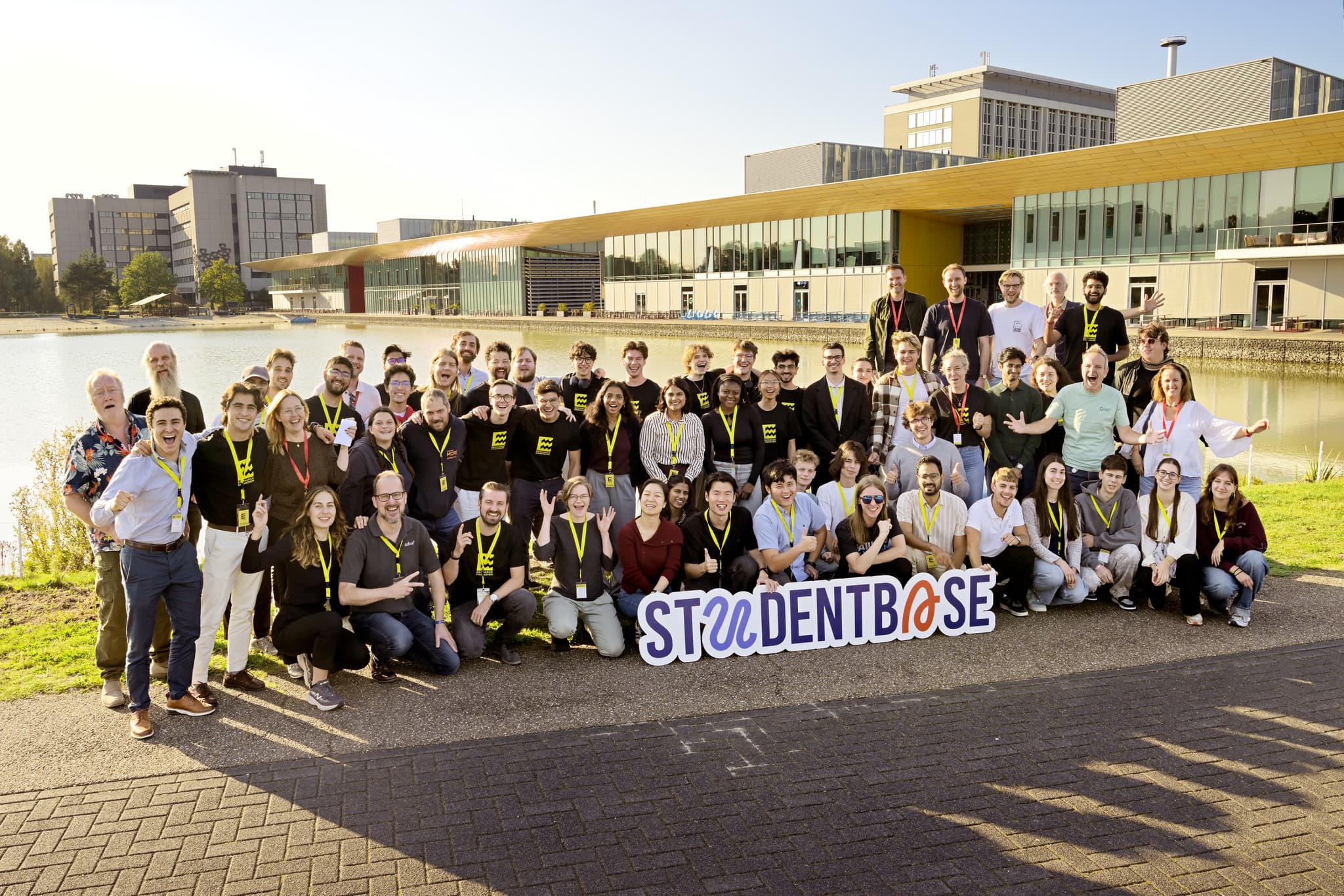
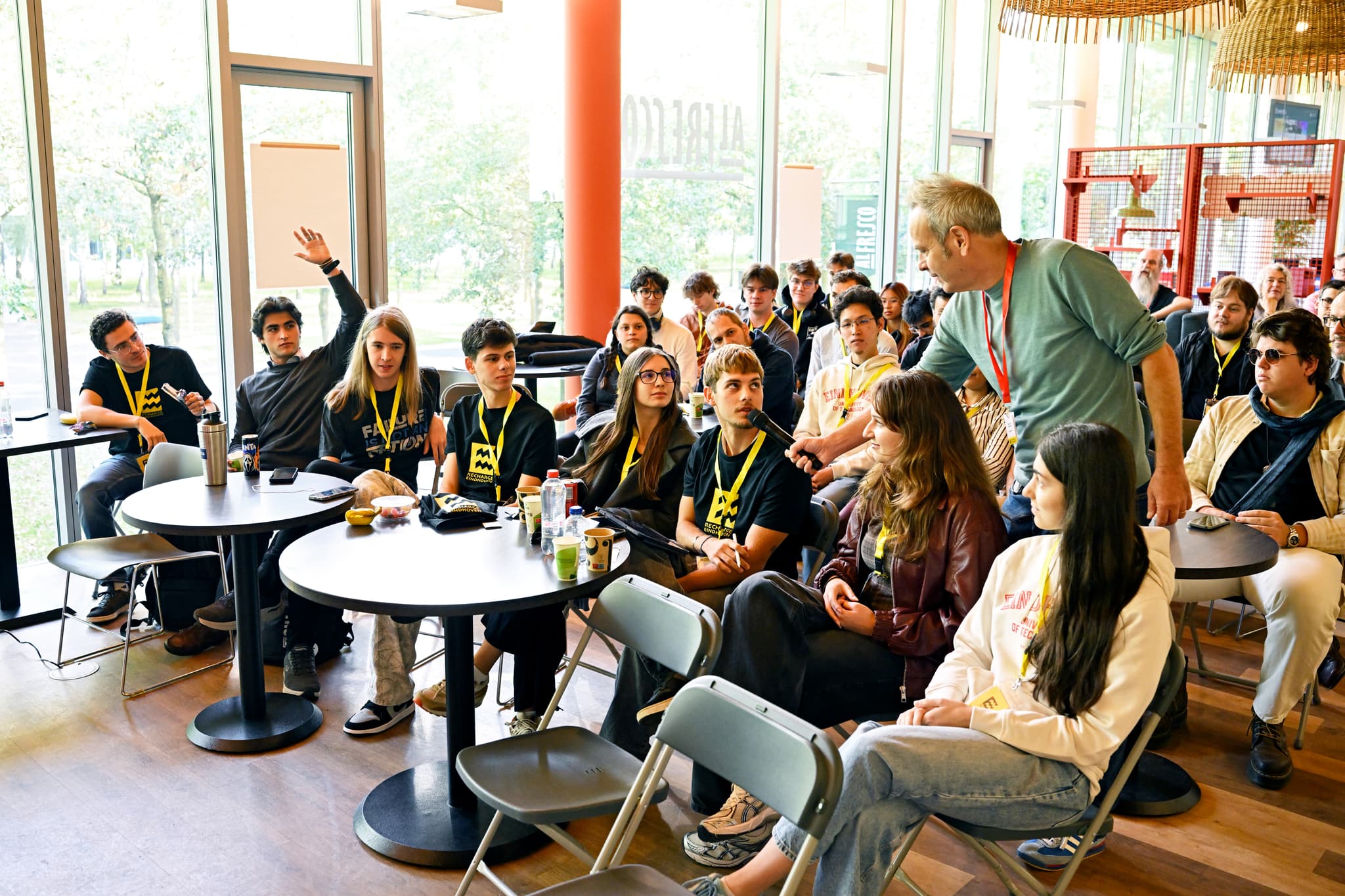
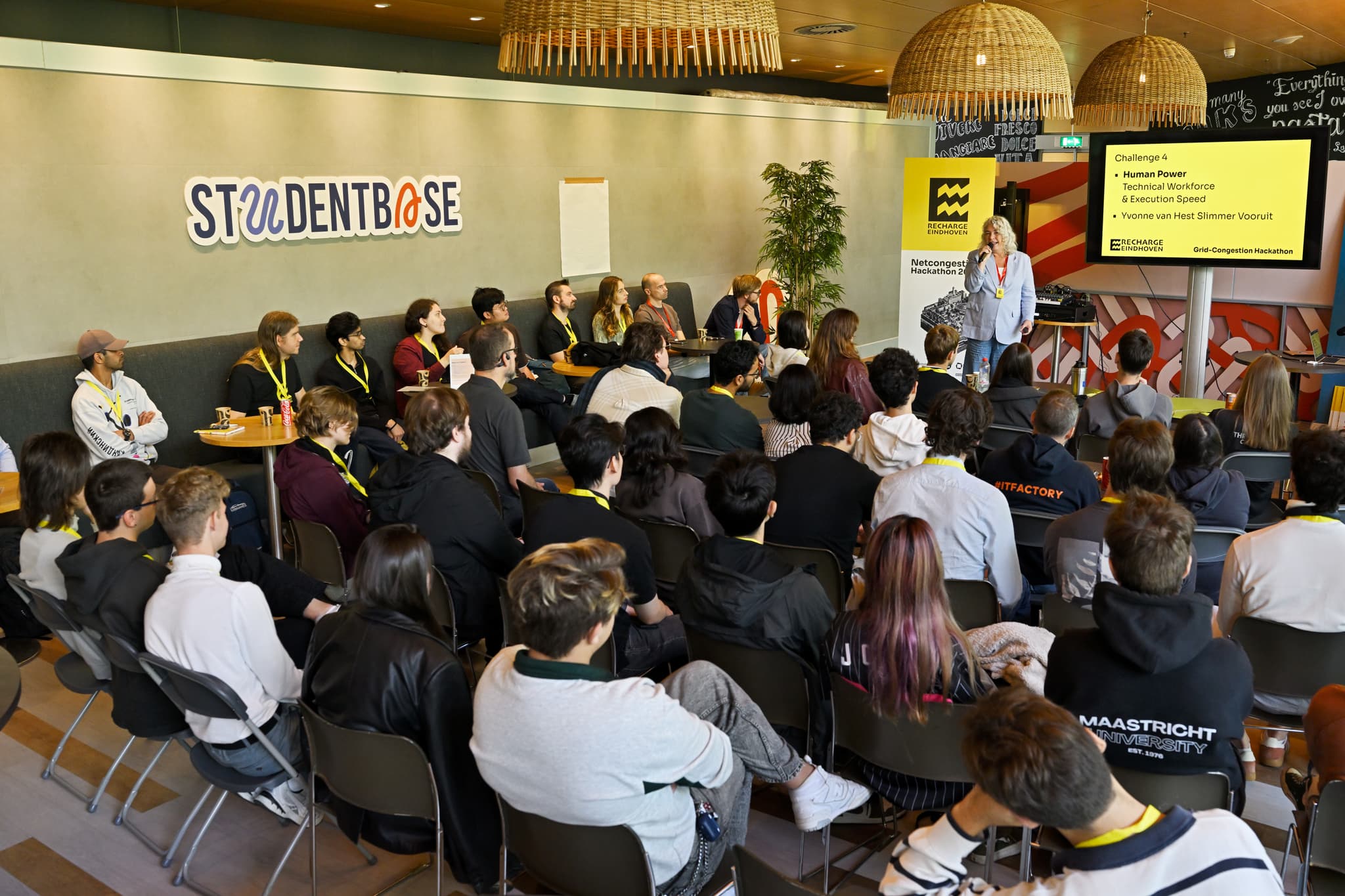
For two days, students, engineers, entrepreneurs and other professionals worked at Student Base on High Tech Campus Eindhoven on five concrete challenges around grid congestion. Their approaches included technological solutions, as well as new ways to collaborate, organise, and train people.
Recharge Eindhoven - Grid-congestion Hackathon - © Bart van Overbeeke
“The urgency is 99 on a scale of 100”
During the hackathon, alderman Rik Thijs, responsible for Climate, Energy and Urban Greening, made clear just how critical the situation has become. On a scale of zero to one hundred, he puts Eindhoven's urgency at 99. “This is an issue we have been dealing with for years, but since January — and especially a few weeks ago — the proverbial shit has really hit the fan.”
What concerns him most is the limited predictability of available grid capacity. Information changes rapidly, while businesses, housing associations, and investors need to plan years ahead.
“What keeps me awake at night is that the information we receive simply isn’t clear enough. The situation changes quickly. That is why it is important for Enexis to give us clarity as early as possible about where and when capacity will be available. That predictability is essential for housing development, businesses and amenities.”
The consequences directly affect Eindhoven's and Brainport's growth. According to Thijs, stakeholders therefore need to work much more closely together. “ASML is scaling up a company, Brainport is scaling up an economy, but we are scaling up an entire city. That has to be a joint effort.”
The alderman believes this also requires better data access. If businesses provide insight into how much capacity they actually use and when spare capacity is available, opportunities emerge to distribute energy more intelligently at a local level.
Recharge Eindhoven - Grid-congestion Hackathon - © Bart van Overbeeke
Five real-world problems
That was Recharge Eindhoven's starting point. Instead of a theoretical innovation assignment, teams tackled five practical challenges: sharing energy capacity locally, reducing peak demand, using heating and cooling as a buffer, finding and training enough people for the energy transition, and electrifying without first reinforcing the grid for every new application.
The scope deliberately extended beyond technology. Solutions could also involve behaviour, collaboration, organisation or social innovation. Challenge owners from organisations including the Municipality of Eindhoven, Eindhoven Energie and Slimmer Vooruit contributed the practical questions and supported the teams throughout the weekend.
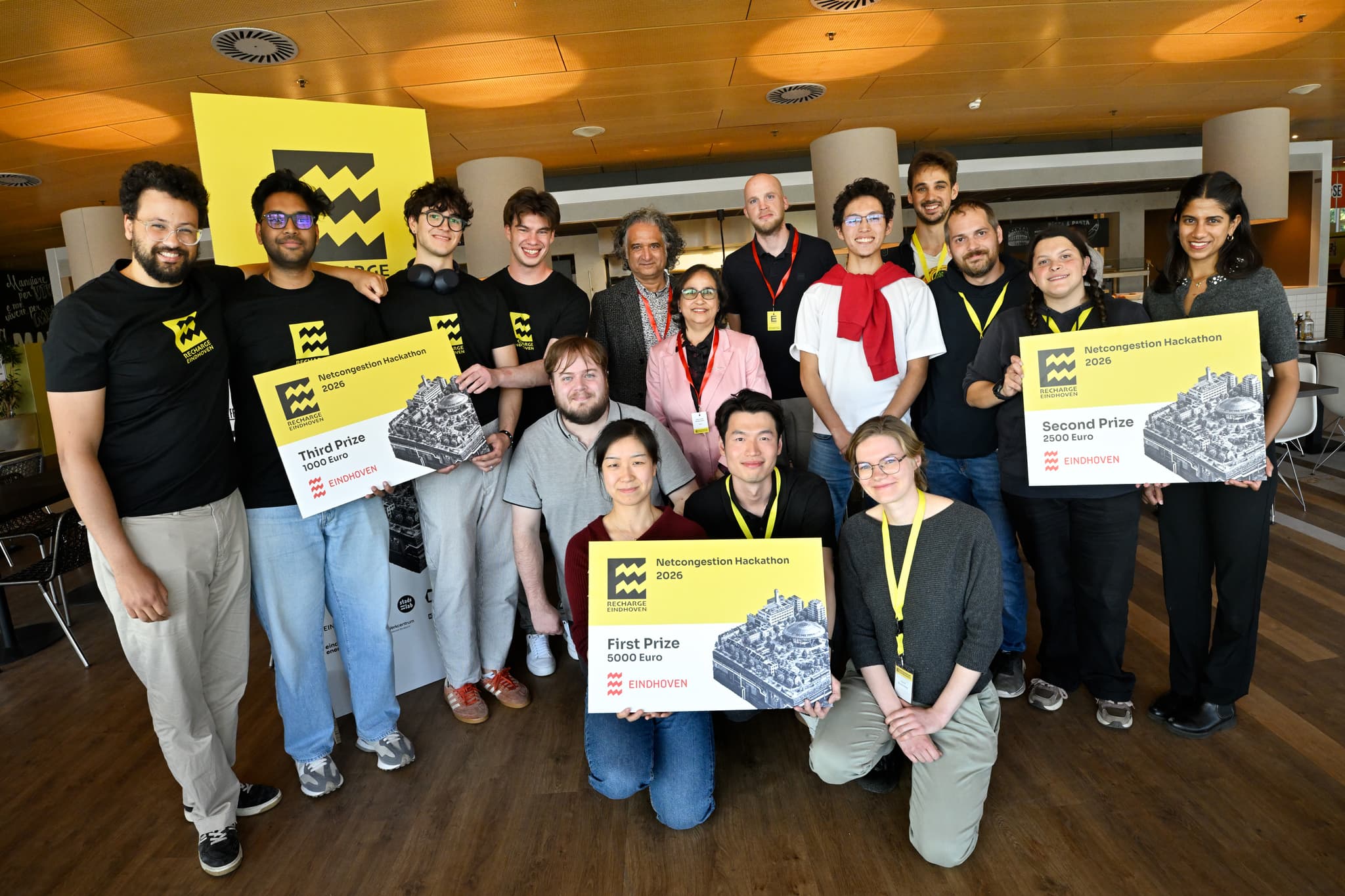
After two days, twelve solutions competed against one another. The jury included Stephan La Haye (NRG Group), Sharmistha Bhattacharya (TU/e) and Jelle Schunselaar (Brainport/the GATE). A total of €8,500 in prize money was available.
De Vonk: more capacity from the same grid
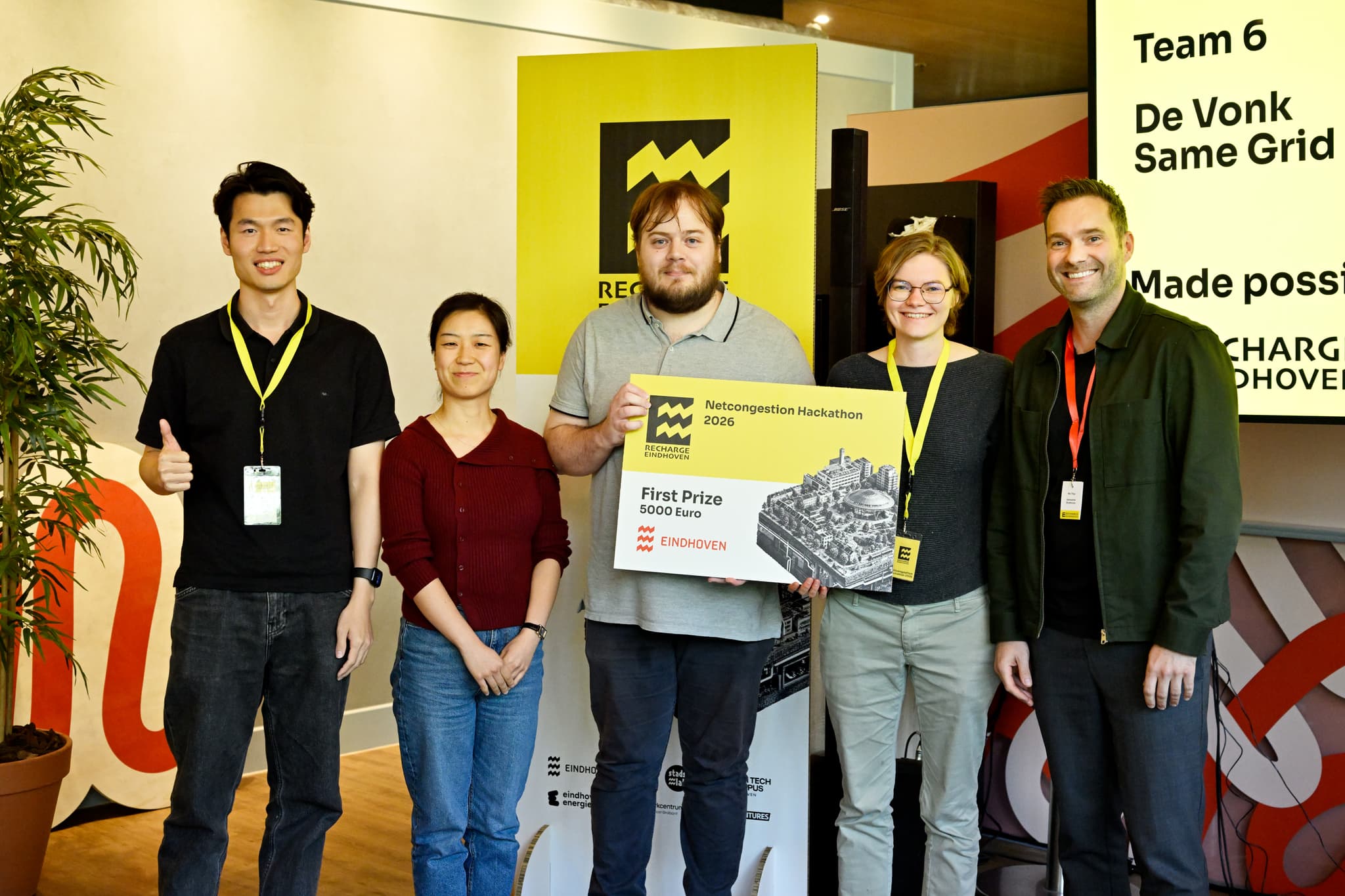
Team 6, De Vonk, won the € 5,000 first prize with Same Grid – More Homes. Focusing on Blixembosch-West, the team essentially asked a simple question: are we making the best possible use of the capacity already in place?
A key part of its solution involves taking a more dynamic approach to transformers. Rather than relying solely on fixed limits, real-time information on factors such as load and temperature can help determine how much capacity is safely available at any given moment. The team combined this with smarter heat-pump operation and shifting electricity consumption to other times.
The strength of the solution lay in combining monitoring, control, and smarter use of existing infrastructure, rather than in a single spectacular new technology.
Recharge Eindhoven - Grid-congestion Hackathon - © Bart van Overbeeke
Heat Flex: the building as a battery
The second prize of €2,500 went to Team 9, Heat Flex. Its idea: energy storage does not always require a battery. A building can temporarily retain energy, too. By intelligently bringing buildings and thermal buffers to the right temperature ahead of a peak in electricity demand, consumption can be reduced at critical moments. A small allowance for temperature variation can thus create flexibility on the electricity grid, without immediately requiring new hardware or a home battery.
Peak Performance: SMEs can help free up grid capacity, too
The third prize of €1,000 went to Team 10, Peak Performance, with the Peak Performance Platform. The team focused on small and medium-sized enterprises. Many smaller businesses want to use energy more intelligently but lack sufficient insight into their own peak consumption and options such as flexible contracts, subsidies, and other measures. The proposed platform brings this information together. Helping businesses flatten their own demand peaks can also free up capacity for other users on the same grid.
Rocket Force: no energy transition without people
The honourable mention went to Team 7, Rocket Force, with Human Power. While many teams took technology, data or energy systems as their starting point, Rocket Force looked at another bottleneck: the people who ultimately have to put all these plans into practice. The team developed a concept to train people, including students and those switching careers, more quickly through modular courses for specific tasks in the energy sector.
In doing so, Rocket Force highlighted a broader truth. Grid congestion is not solely a technical problem. It is also about having enough skilled workers, behaviour, regulation, data, collaboration and organisation.
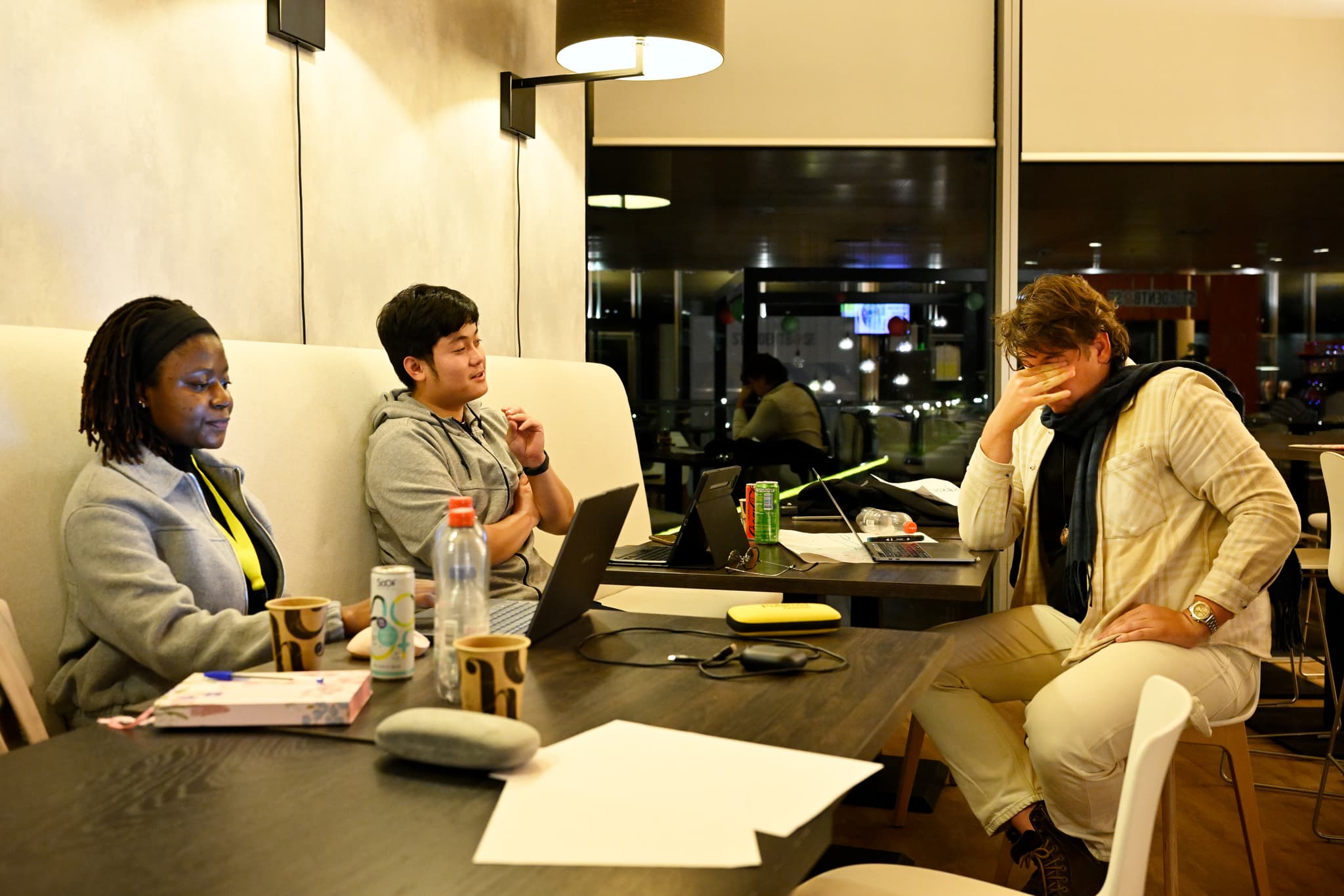
Recharge Eindhoven - Grid-congestion Hackathon - © Bart van Overbeeke
More copper and smarter working go hand in hand
Of course, a two-day hackathon will not solve Eindhoven’s grid congestion. The electricity grid will need substantial expansion over the coming years. But Recharge Eindhoven showed that a whole range of possibilities exists between “the grid is full” and “waiting until the grid has been expanded”. Smarter monitoring. Shifting consumption. Storing heat. Sharing capacity. Helping businesses work together. Training people. And sometimes taking a fresh look at limits previously considered fixed.
Having twelve multidisciplinary teams work on these challenges for a weekend was precisely the purpose of Recharge Eindhoven, organised by the Municipality of Eindhoven and MAD Emergent Art Center. At Student Base on High Tech Campus Eindhoven, students, engineers, entrepreneurs and experts worked on a problem affecting the region’s development right now.
Or, as Rik Thijs summed it up afterwards: “It demonstrates exactly what makes us strong as a region: when we join forces, we can deliver the solutions the whole of the Netherlands is waiting for.”