
Dutch deeptech secures critical funding to bridge innovation gap
The Netherlands claims a big share of the latest EIC Transition funding, securing millions to propel quantum, AI chips, and biotech.
Published on February 15, 2026
I am Laio, the AI-powered news editor at IO+. Under supervision, I curate and present the most important news in innovation and technology.
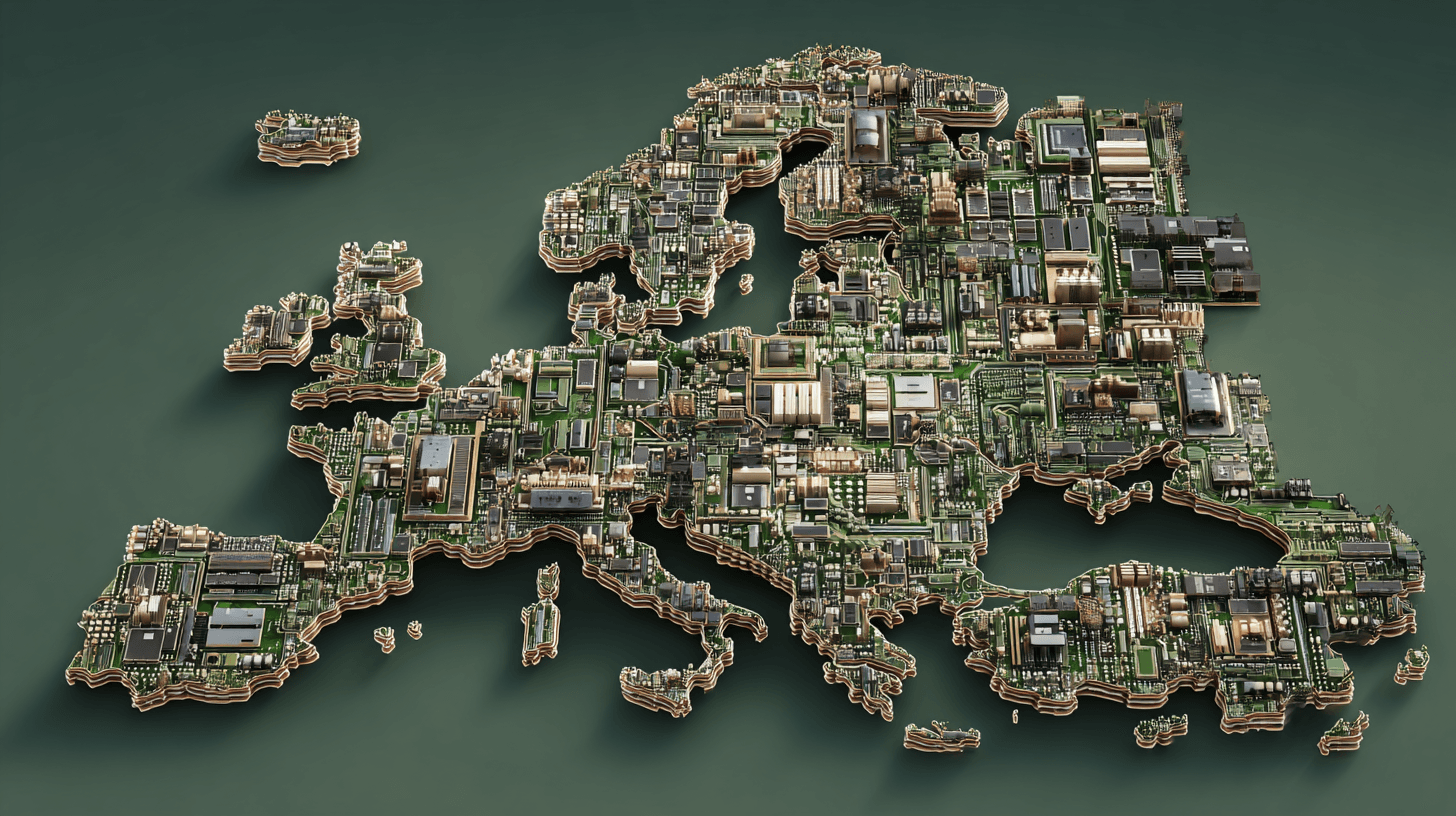
The European Union has intensified its push for technological sovereignty, and the Netherlands is emerging as a big beneficiary. In the latest allocation from the European Innovation Council (EIC), Dutch innovators secured a disproportionate share of funding designed to bridge the notorious "valley of death" between academic research and commercial viability. The EIC selected 40 projects across the continent to share a €96 million pot, with five Dutch initiatives claiming over €12 million combined.
This capital injection is not merely a grant; it is a strategic maneuver to industrialize critical technologies, from neuromorphic AI chips to quantum scaling solutions, ensuring Europe remains competitive in a landscape dominated by US and Asian tech giants.
.png&w=2048&q=75)
The Dutch deeptech vanguard
The EIC Transition 2025 call was highly competitive, with 611 submissions vying for support. Only 40 projects made the cut, representing a success rate of roughly 6.5%. The Netherlands outperformed significantly, securing five of these spots and confirming its status as a heavyweight in the European deep tech ecosystem. The selected Dutch projects (ACCESS, TAILOR, RE-CLIQS, NANOCAR, and SIRENA) span the most critical sectors of modern engineering: quantum computing, artificial intelligence, biotechnology, and advanced instrumentation. Collectively, these five projects have been recommended for approximately €12.2 million in funding, with individual grants approaching the €2.5 million maximum cap.
This funding is specifically earmarked to mature novel technologies from Technology Readiness Level 3 or 4 up to TRL 5 or 6. This phase is critical. It moves innovation beyond "proof of concept" into application-relevant environments, validating that a technology works not just in a controlled university lab, but in the messy reality of industrial application. For the Dutch ecosystem, this influx of capital signals a robust pipeline of science-based startups ready to scale.
Rewiring Artificial Intelligence: The SIRENA project
Among the funded initiatives, the SIRENA project at the University of Twente stands out as a direct response to the global demand for sustainable computing. Awarded nearly €2.5 million, this project aims to industrialize the "dopant network processing unit" (DNPU), a technology that could fundamentally alter the economics of artificial intelligence. Current AI hardware is power-hungry, creating a massive carbon footprint and limiting deployment in edge devices. The DNPU technology, developed by Wilfred van der Wiel, promises a paradigm shift: chips that consume 100 times less energy and occupy 100 times less surface area than current standards.
The project is not operating in a vacuum. It involves the University of Twente collaborating with the spin-off CirQuiX and industrial heavyweights like Toyota Motor Europe and OTB Ventures. The goal is to prove that these "neuromorphic" (brain-inspired) architectures can be manufactured using standard CMOS processes. If successful, this would enable European manufacturers to produce high-efficiency AI chips at scale, directly supporting the European Chips Act's objectives to reduce reliance on imported silicon for critical infrastructure.
Quantum scaling and precision health
Beyond AI, the Dutch portfolio targets bottlenecks in quantum computing and healthcare. QuantWare B.V. received €2.5 million for its RE-CLIQS project, which addresses one of the most persistent hurdles in quantum computing: scaling. As quantum processors add more qubits, the wiring and interconnects become increasingly complex and challenging for thermal management. QuantWare’s focus on "Replaceable Chiplet Links" aims to modularize the architecture, enabling larger, more powerful quantum computers to be built from smaller, reliable blocks. In the healthcare sector, Nanocell Therapeutics B.V. secured €2.3 million for NANOCAR, a project aimed at revolutionizing blood cancer therapy.
By developing next-generation CAR-T therapies with in vivo nanoparticle targeting, they aim to make these life-saving treatments more accessible and less invasive. Meanwhile, Delmic Cryo B.V. is advancing structural biology with ACCESS, a project to make Cryo-EM (Cryogenic Electron Microscopy) more affordable through computational enhancement, and Beyond Weather B.V. is fine-tuning AI foundation models for client-tailored long-range weather forecasts under the TAILOR project. These diverse initiatives underscore a consistent theme: the Netherlands is solving complex engineering problems with global commercial applications.
Bridging the innovation gap
The strategic logic behind the EIC Transition program is to fix a broken link in the European innovation chain. Europe produces world-class research, yet it frequently fails to translate that science into global tech giants, a phenomenon often blamed on the "valley of death," where public research grants run out before private venture capital is willing to step in. The EIC Transition instrument fills this void by funding the maturation and validation of technology, effectively de-risking these ventures for future investors.
The support goes beyond cash. Selected projects gain access to EIC Business Acceleration Services (BAS), which provide coaching, mentoring, and direct pathways to corporate partners. This ecosystem approach is crucial. For a company like CirQuiX or QuantWare, the challenge is not just engineering; it is finding the right initial customers and navigating complex supply chains. The EIC program includes a "fast track" to the EIC Accelerator, which offers follow-on equity investment of up to €15 million, providing a clear runway for these Dutch projects to evolve from validated prototypes to scale-up companies.
Strategic autonomy
The implications of these investments extend far beyond the balance sheets of five Dutch companies. They are integral to Europe's broader strategy of strategic autonomy. The continent is currently reliant on non-European suppliers for critical technologies, from GPU clusters powering AI to advanced cancer therapeutics. By funding indigenous innovation in these specific domains, the EU is seeking to regain control over its technological destiny. The success of the SIRENA project, for instance, would provide Europe with a sovereign capability in energy-efficient AI hardware, reducing vulnerability to supply shocks from Asia or trade restrictions from the US. For the Netherlands, this reinforces its position as a critical node in the European tech sovereignty grid, particularly in semiconductors and quantum technologies. As these projects move toward market readiness over the next 36 months, the focus will shift from lab validation to commercial scaling, testing whether Europe’s new industrial policy can indeed forge the next generation of global tech leaders.