
Dutch mushroom coffin is making its way around the world
What began as an idea in Delft has now made its way to the other side of the world.
Published on September 10, 2026
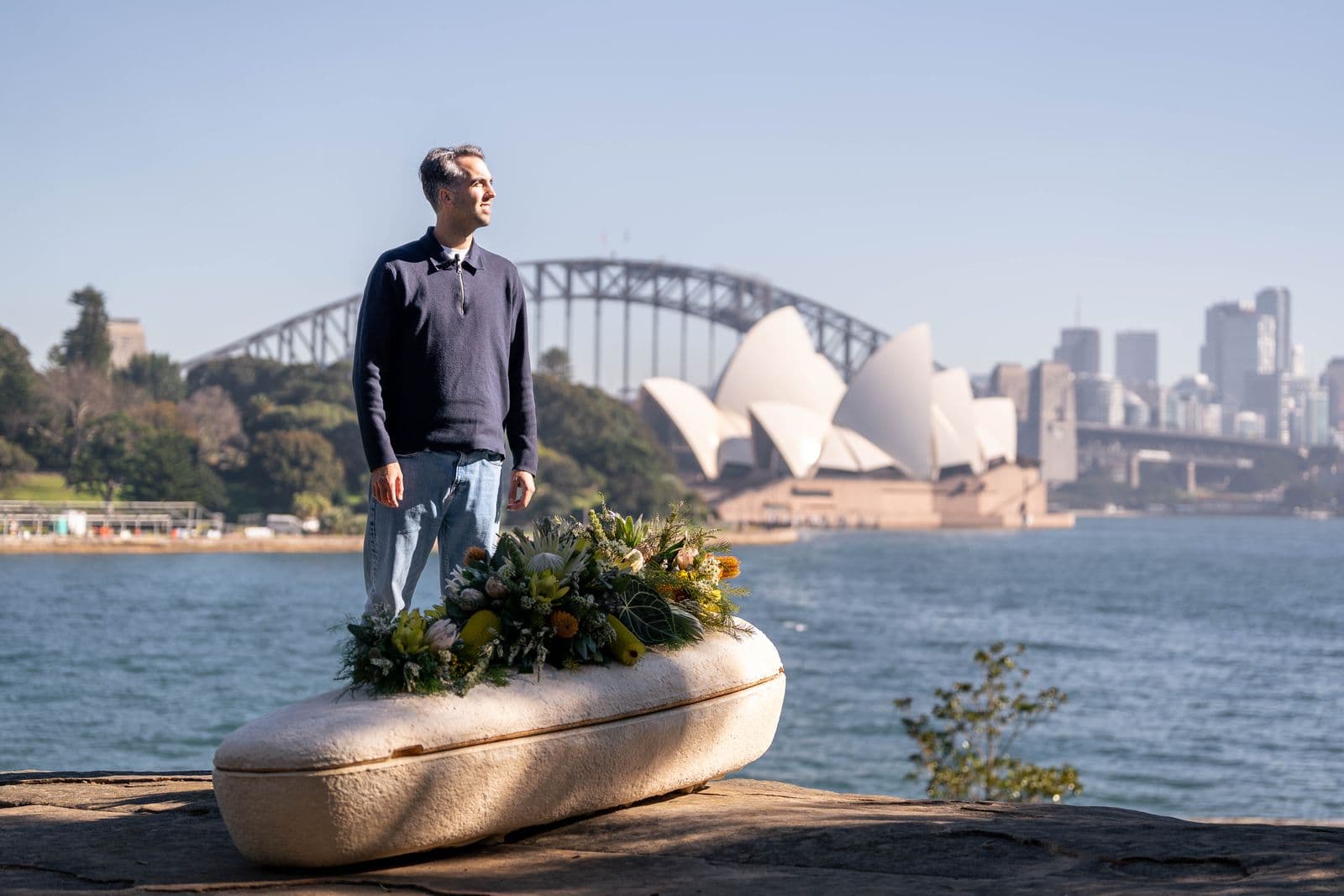
The Living Cocoon of Bob Hendrikx
Our DATA+ expert and Editor-in-Chief, Elcke Vels, explores AI, cyber security, and Dutch innovation. Her "What if..." column imagines bold scenarios beyond the norm.
A woman in New South Wales, Australia, was buried in a coffin made of mycelium. The coffin, called the Living Cocoon, was created by the Dutch company Loop Biotech. “It feels very special that something I came up with a few years ago can now help families on the other side of the world,” says Bob Hendrikx, the company’s CEO.
Carolyn, whose last name has not been disclosed for privacy reasons, was buried Friday by friends and family at Springwood Cemetery in the Blue Mountains. She was in her seventies. Hendrikx attended the funeral. “Of course, it’s always a sad moment when someone passes away. At the same time, it’s remarkable to see how a product like this can make death a bit easier to bear,” he notes. Despite the sadness of the occasion, some of those in attendance reacted positively to the sustainable coffin.
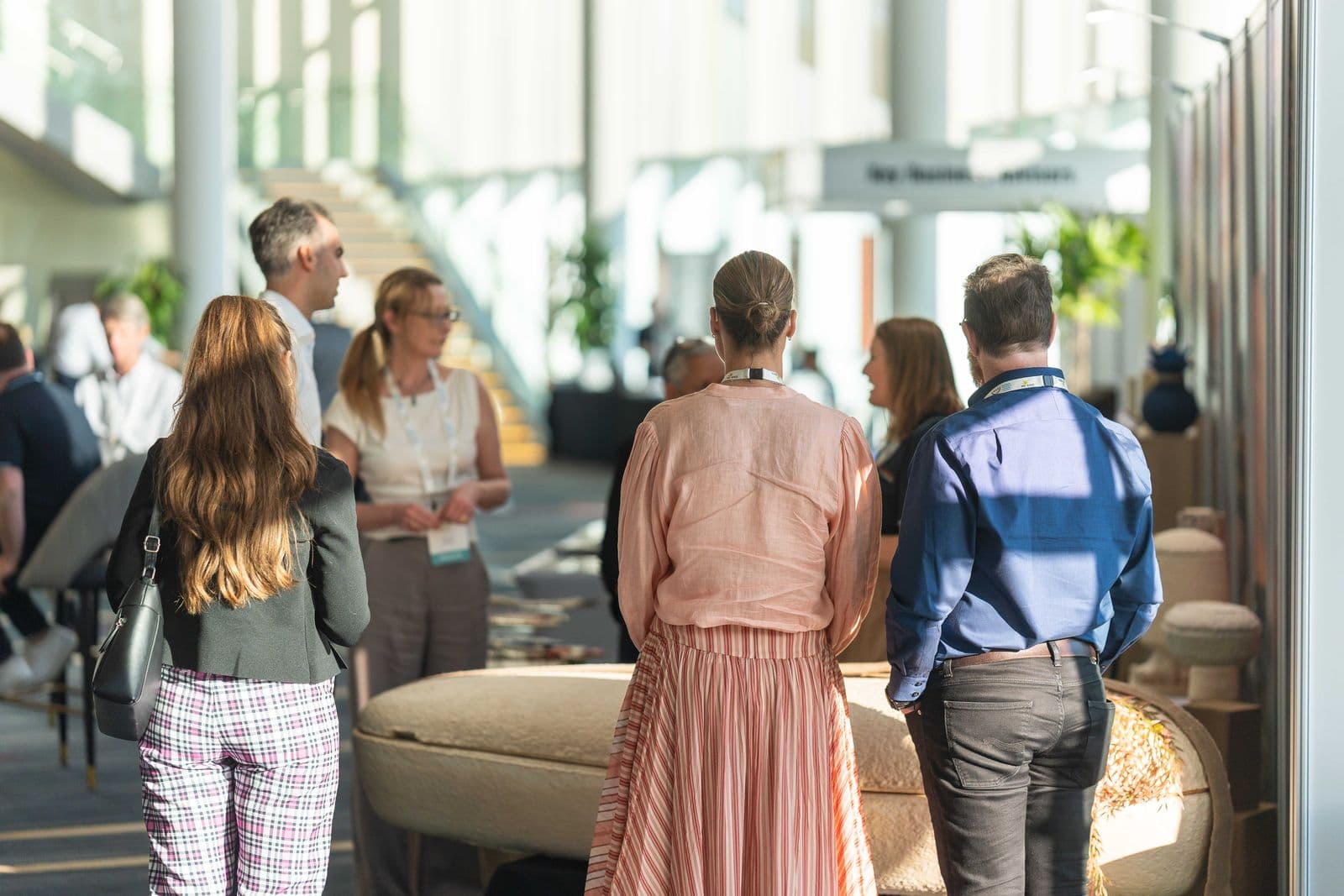
Funeral with the Living Cocoon
Collaboration on the other side of the world
From the very beginning, Hendrikx and his colleagues received many inquiries from Australia and New Zealand. “These are countries with stunning natural beauty, where sustainability plays an important role.”
The launch in Australia is being facilitated through an exclusive partnership with Arrow Bronze, which is responsible for distributing the Living Cocoon within the Australian funeral industry. “Our partner operates in both Australia and New Zealand and has been in the funeral industry for 85 years. They’re big fans of our product, and it’s great to have this kind of partnership on the other side of the world.”
Made in Delft
The coffin is made from mycelium and hemp fibers and is grown in a mold in Delft, in a climate-controlled room. The process is similar to composting: the coffin and the body slowly decompose and turn into nutrient-rich soil. This happens much faster than with a traditional wooden coffin, which can take up to 50 years to decompose. The sustainable coffin decomposes within 45 days, enriching the soil in the process.
The coffins can be used just like traditional funeral coffins. “They can hold 200 kilograms, and you can use them for cremation or burial. Refrigeration isn’t a problem either. Basically, anything a funeral director would normally do with a traditional coffin can also be done with ours.”
Wooden coffins, wicker baskets
Many people think that wooden coffins are a sustainable option. “But,” Hendrix explains, “you actually want to use wood for products that last a long time.” Moreover, as it decomposes, wood adds little to the soil. “The positive impact is minimal. With our coffin, we specifically want to have a positive impact by returning nutrients to the soil.”
Then there are the wicker baskets, which seem to be gaining popularity lately. Hendrikx does understand that popularity to some extent. “I get that you’d choose something that looks eco-friendly. But about 90 percent of wicker baskets come from Asia. They aren’t produced sustainably and are shipped here by plane.”
For some people, the idea of a coffin made from mycelium takes some getting used to. But if we want a sustainable future, Hendrikx argues, we need to approach death differently. “We currently consider it perfectly normal to seal organic material inside a box. That’s actually outdated. Your body is meant to decompose. Why would you put a casing around it that actually hinders that process?”
Local waste streams
Currently, all the coffins are still manufactured in the Netherlands and then shipped abroad by container. “That’s obviously not ideal when you consider the emissions. That’s why we’re trying to offset those emissions by investing in wind energy, for example.” But ultimately, Hendrikx wants to move away from that way of working. “The goal is to gain enough traction to set up a local facility, using local waste streams. You do have to take the right steps first, including financially. But if it were up to me, that factory would be up and running tomorrow.”