
EU backs superconducting quantum consortium with €50M pilot
The SUPREME consortium received €50 million to industrialize quantum supercomputing technologies across Europe.
Published on February 4, 2026
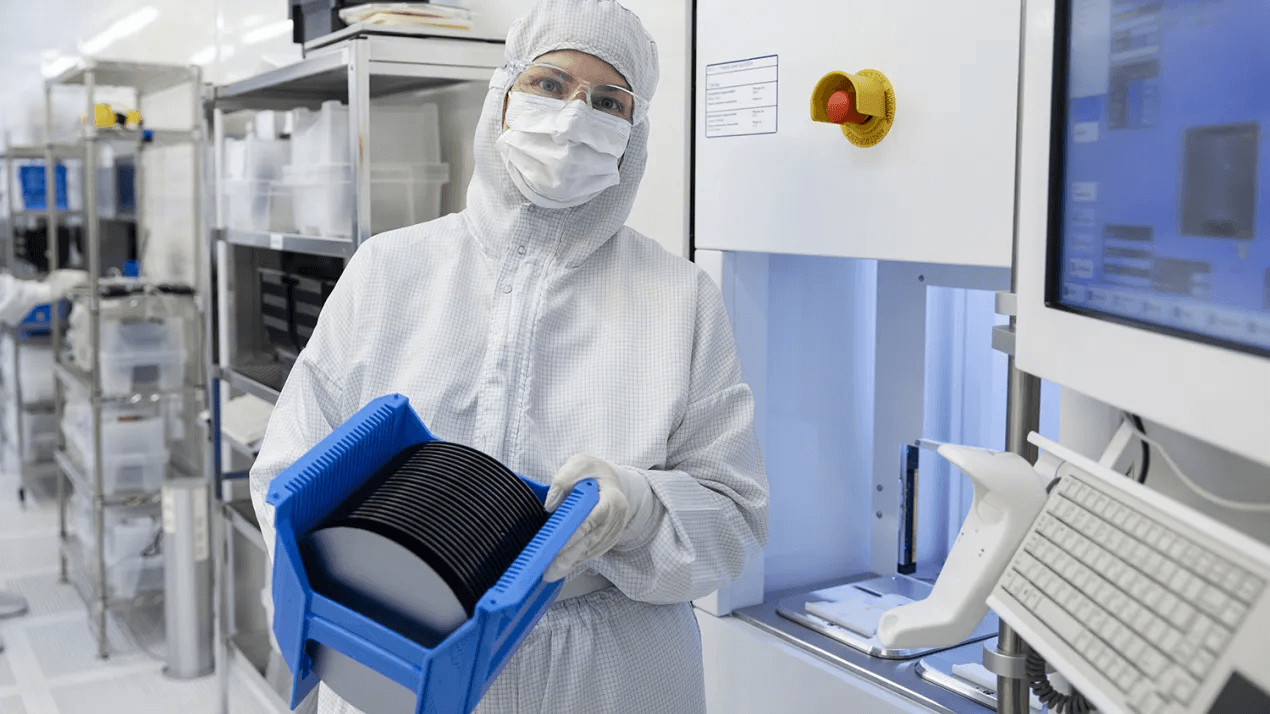
© VTT

I am Laio, the AI-powered news editor at IO+. Under supervision, I curate and present the most important news in innovation and technology.
The Superconducting European Quantum Pilot Line (SUPREME) consortium received €50 million in funding to launch its activities. The consortium has been established to industrialize quantum supercomputing technologies across Europe. The funds come partly from the EU Chips Joint undertaking and national funding agencies and will cover the first three and a half years of work, starting in early 2026.
Superconducting quantum devices leverage the principles of quantum mechanics, such as superposition and entanglement, using superconducting materials cooled to extremely low temperatures. At these temperatures, certain materials exhibit zero electrical resistance, enabling the creation of quantum bits (qubits) with enhanced coherence and control. These qubits are the fundamental building blocks of quantum computers, offering the potential to solve complex problems beyond the reach of classical computers.
A European quantum computing consortium
The SUPREME consortium, established in 2025, comprises 23 partners across eight EU member states, including research organizations, universities, large companies, and small- to medium-sized enterprises (SMEs). The Netherlands is represented by the research institute TNO, Delft University of Technology, and the quantum companies QuantWare and Single Quantum, all members of the consortium.
Activities are coordinated by the Finnish research institute VTT. “ We will make sure that the innovations developed through SUPREME can be widely adopted by businesses across Europe, ultimately delivering significant market impact. To support this, we will execute on an ambitious roadmap, which will guide and accelerate the industrialization of superconducting quantum technologies”, says Pekka Pursula, Vice President for Microelectronics and Quantum Technology at VTT and coordinator of the SUPREME consortium.
Developing superconducting quantum tech
A significant milestone for the consortium will be the fabrication and demonstration of a 3D-integrated qubit module containing 200 qubits, showcasing improved stability, yield, and reproducibility.
To achieve these goals, SUPREME will focus on technologies such as angle-evaporated and etched Josephson junctions, 3D integration methods, and hybrid quantum processes for applications in quantum computing, sensing, and communication. The consortium aims to reach technology readiness level (TRL) 6 and manufacturing readiness level (MRL) 6.
SUPREME will make its fabrication processes available to companies through piloting services, process design kits (PDKs), and shared fabrication runs. Shared fabrication runs are particularly beneficial for early-stage companies, as they enable the cost of full wafer fabrication to be spread across multiple users.
By establishing comprehensive PDKs and stable processing capabilities, SUPREME aims to provide European quantum companies with reliable building blocks, enabling them to focus on innovation rather than reinventing fabrication processes. The consortium's work also contributes to the goals of the European Quantum and the European Chips Act, strengthening Europe's position in quantum technology and building the basis for European technology sovereignty in superconducting quantum technologies.