
Europe fails to meet raw material target for batteries and panels
The European Union is failing to secure the supply of crucial raw materials.
Published on February 3, 2026

Team IO+ selects and features the most important news stories on innovation and technology, carefully curated by our editors.
The European Union is failing to secure the supply of critical raw materials. These raw materials are necessary for its energy and climate ambitions. This is the conclusion reached by the European Court of Auditors (ECA) in a recent report. Attempts to diversify imports are yielding few visible results, while obstacles within Member States are hampering production. Recycling is still in its infancy.
The transition to sustainable energy relies heavily on technologies such as batteries, wind turbines, and solar panels. All these applications require so-called critical raw materials, such as lithium, nickel, cobalt, copper, and rare earth metals. Their extraction is largely concentrated outside the EU, including in China, Turkey, and Chile. To reduce this dependence, in 2024 the Union adopted the Critical Raw Materials Act, intended to guarantee the long-term security of supply of 26 minerals essential for the energy transition.
According to the Court of Auditors, supply can only be strengthened by diversifying import sources, scaling up domestic production, and investing heavily in recycling. However, the regulation mainly contains non-binding targets for 2030.
Negotiations stalled
Although Brussels explicitly aims to reduce dependence on a handful of countries, efforts to diversify imports have so far yielded little results. Over the past five years, the EU has concluded 14 strategic partnerships on raw materials, half of which are with countries that score low on good governance. Remarkably, between 2020 and 2024, imports from these partner countries fell for about half of the materials studied. Other initiatives stalled: negotiations with the United States were halted in 2024, while the raw materials-rich Mercosur agreement with Argentina, Brazil, Paraguay, and Uruguay is still awaiting full ratification within the EU.
Recycling is not taking off
Recycling must also be an important part of the solution. By 2030, the EU wants at least a quarter of strategic raw materials to come from reuse. The reality is less encouraging. For seven of the 26 materials needed, the recycling rate is currently between 1 and 5 percent, while ten are not recovered at all. Moreover, most European targets do not focus on individual materials, which means that substances that are difficult to recycle — such as rare earth metals in electric motors or palladium in electronics — are overlooked. Meanwhile, European recycling companies are struggling with high costs, limited volumes, and technological and regulatory barriers that affect their competitiveness.
Mining in its infancy
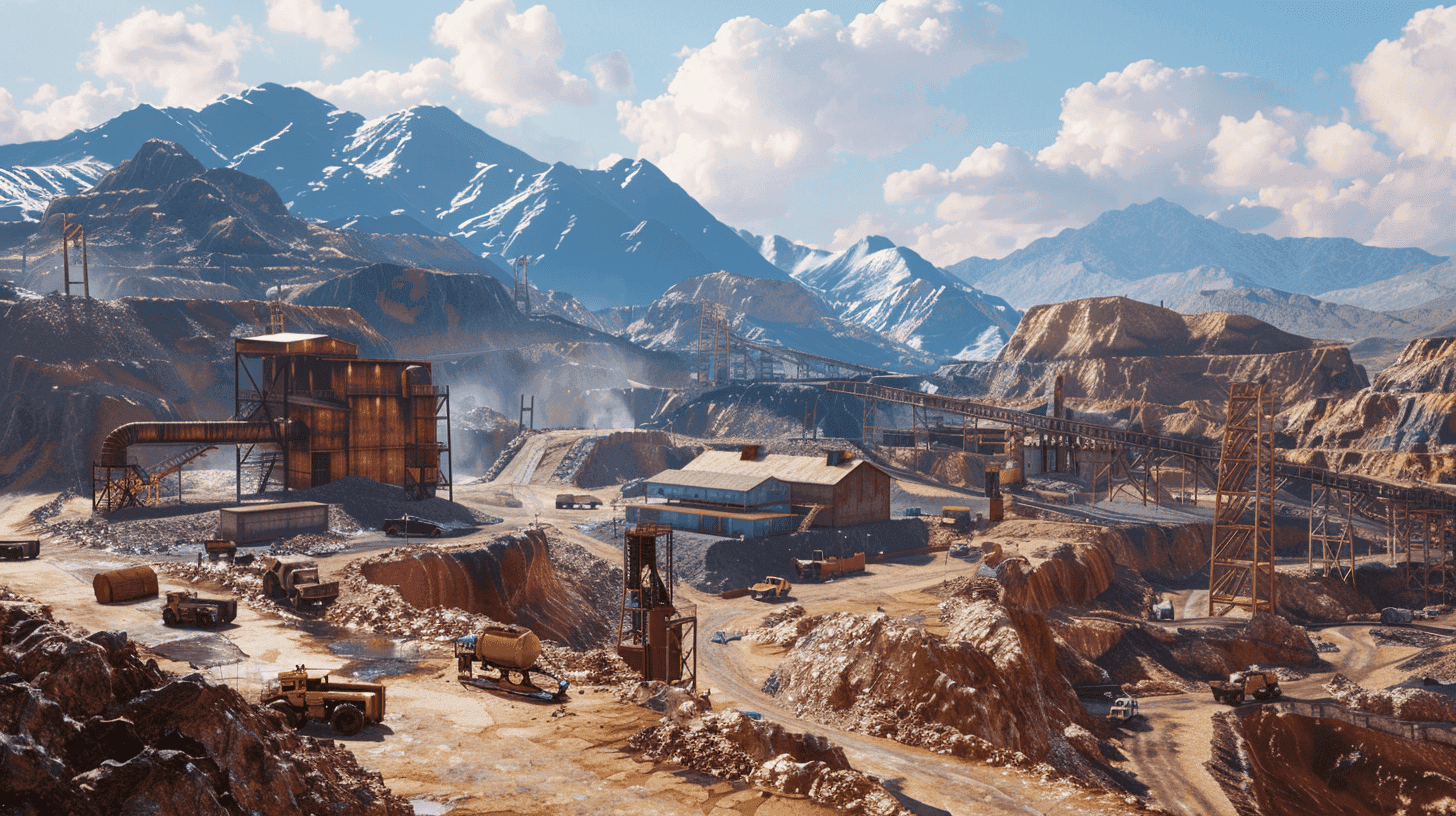
In addition, the EU wants 10% of its own consumption to come from mining within the member states by 2030. In practice, however, exploration is still in its infancy. Even when new reserves are discovered, it can take up to 20 years before a mine is operational — too late to make a meaningful contribution before 2030.
Targets difficult to achieve
Critical raw materials are economically indispensable and at the same time vulnerable in terms of supply. The most recent European list contains 34 such materials; 26 of these are essential for renewable energy technologies and 17 are considered strategic. The EU has set itself the goal of reducing net greenhouse gas emissions by at least 55 percent by 2030 and becoming climate neutral by 2050. However, without stable access to these raw materials, these targets are likely to be difficult to achieve.