
European startups lead the charge in sustainable AI
Four companies are turning AI’s energy problem into a strategic advantage.
Published on May 5, 2026

Team IO+ selects and features the most important news stories on innovation and technology, carefully curated by our editors.
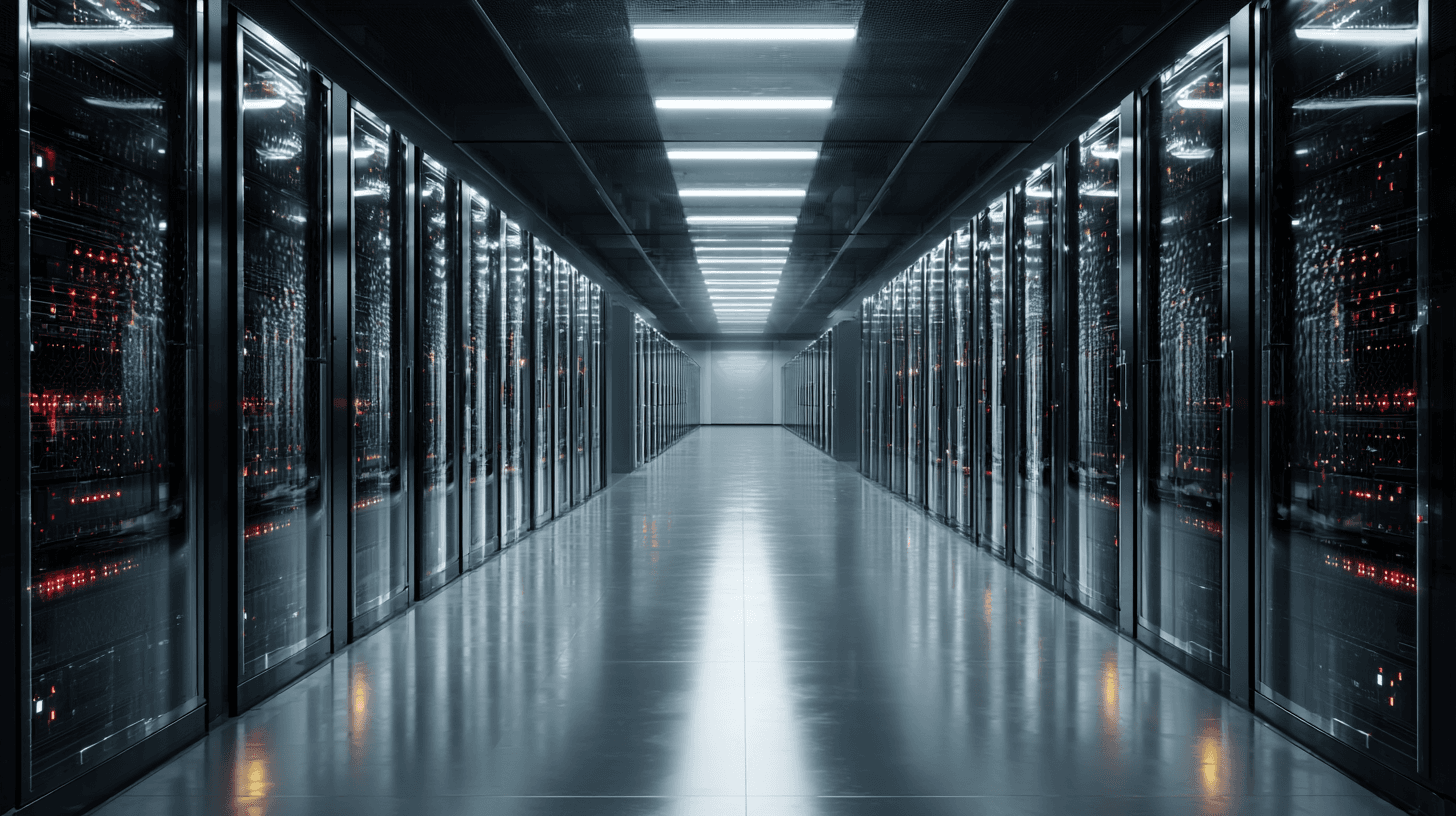
Artificial intelligence is undergoing a massive expansion that threatens to overwhelm global energy grids. As large language models grow in size, their thirst for electricity creates a critical tension between technological progress and climate goals. Europe has emerged as a primary battleground for solving this crisis. Rather than competing in a raw compute arms race with American hyperscalers, European startups are focusing on the 'efficiency frontier.' By rethinking everything from silicon architecture to how data centers interact with local communities, these four companies are turning AI’s energy problem into a strategic advantage.
Deep Green
Deep Green is addressing the massive energy waste inherent in high-performance computing by reimagining the data center as a community utility. Traditional data centers spend enormous amounts of energy simply cooling their servers, effectively throwing away the heat byproduct. Deep Green reverses this model by installing modular data centers directly into community facilities, such as public swimming pools. These units capture the heat generated by AI workloads and servers to provide free hot water for the facility. This circular economy approach significantly reduces the carbon footprint of the host building while cooling the servers with high efficiency.
UPMEM
At the hardware level, the French startup UPMEM is tackling the same fundamental bottleneck as the “memory wall” in modern computing. In traditional architectures, most energy is wasted moving data between memory and processors, often exceeding the energy used for computation itself. This becomes especially critical in large-scale AI workloads.
UPMEM addresses this inefficiency through a processing-in-memory (PIM) approach, where computation is performed directly inside DRAM memory chips rather than in a separate CPU. Instead of constantly transferring data back and forth, UPMEM integrates thousands of small processing units within the memory itself, allowing data to be processed locally where it is stored.
Green Compute
Software-defined optimization provides another critical layer for energy reduction. Green Compute has developed a platform that focuses on 'carbon-aware' scheduling for heavy AI training tasks. Not all AI workloads are time-sensitive; many training runs can be shifted to different times of the day without impacting the final output. Green Compute monitors the European energy grid in real-time to identify when renewable energy production, such as wind and solar, is at its peak. The platform then automatically schedules non-urgent computational tasks to align with these periods of high green energy availability. This allows companies to train large models with a significantly lower carbon intensity without requiring any changes to their underlying AI code.
TWAICE
The German startup TWAICE is advancing AI-driven battery analytics to improve the performance, safety, and lifetime of energy storage systems. As digital infrastructure and renewable energy increasingly depend on large-scale battery deployment, inefficiencies in degradation, charging cycles, and thermal behavior become critical constraints.
TWAICE addresses this by using AI-based predictive analytics to create a digital twin of each battery system. This allows operators to monitor real-time performance, forecast degradation, and optimize charging strategies before issues occur. Instead of reacting to failures, energy storage systems can be actively managed for maximum efficiency and lifespan. TWAICE doesn't make AI itself more energy-efficient, but it does make the power supply for AI systems more efficient and stable.
This approach is especially important for Europe’s energy transition, where grid stability and renewable integration rely heavily on reliable storage. By turning battery systems into data-driven assets, TWAICE enables a more efficient coupling between AI infrastructure and the physical energy grid, reducing waste and improving long-term energy utilization.