
Europe’s $1B AI bet: LeCun's AMI Labs takes on Silicon Valley
AMI Labs, a French AI company founded by Yann LeCun, landed the largest seed round for a startup in Europe, receiving over $1 bn.
Published on March 12, 2026
© AMI Labs

Team IO+ selects and features the most important news stories on innovation and technology, carefully curated by our editors.
Europe has a new contender in the global AI race. Paris-based AMI Labs has secured a record-breaking $1.03 billion seed round, signaling a fierce challenge to American dominance in the sector. Led by Turing Award winner and former Meta AI chief, Yann LeCun, the startup aims to bypass the current obsession with text-based models. Instead, AMI Labs (Advanced Machine Intelligence) is building "world models" designed to understand physical reality.
What does AMI Labs do differently?
The current artificial intelligence boom relies almost entirely on large language models (LLMs). These systems ingest massive amounts of text to predict the next word in a sequence. AMI Labs rejects this approach for real-world applications. LeCun views LLMs as limited because they "can't truly reason or plan, because they lack a model of the world."
To solve this, AMI Labs focuses entirely on world models. These systems learn abstract representations of reality. Instead of generating text, they simulate and reason about physical environments. The core technology relies on the Joint Embedding Predictive Architecture. This architecture allows the model to predict how situations evolve in a compressed space. It ignores irrelevant details, known as pixel noise, to focus on the underlying physics of a scene.
For example, a self-driving car does not need to predict the exact texture of a bouncing ball. It only needs to predict the trajectory to avoid a collision. This architecture moves AI away from mere pattern matching. It drives the technology toward genuine comprehension of cause and effect in the physical world.
This approach allows agentic systems to predict the outcomes of their actions and plan sequences to achieve tasks safely. AMI Labs aims to advance AI research and develop applications where reliability, controllability, and safety are paramount, particularly in sectors like industrial process control, automation, wearable devices, robotics, and healthcare.
The European Alternative
The European Alternative is a series about European tech solutions that prioritize privacy, digital sovereignty, and sustainability. Instead of relying on major American platforms, we highlight the alternatives Europe itself has to offer—transparent, secure, and aligned with European values.
A European challenger emerges
AMI Labs officially launched with the largest seed financing in European history. The company raised $1.03 billion, achieving a pre-money valuation of $3.5 billion. Cathay Innovation, Greycroft, Hiro Capital, HV Capital, and Jeff Bezos Expeditions co-led the round. Corporate backers include Nvidia, Samsung, and Toyota Ventures.
Although it operates research hubs in Singapore, New York, and Montreal, the company's headquarters, including another research hub, is in Paris. The startup currently employs a dozen researchers but plans to expand to 50 within six months.
LeCun departed Meta after 12 years due to fundamental disagreements regarding the future of AI. AMI Labs represents his definitive counter-bet. In recent months, LeCun has voiced the need for an alternative to the dominant US AI firms, such as OpenAI and Anthropic, particularly given Europe's wealth of talent that sometimes lacks the right environment to thrive.
Solving the physical world
Developing action-conditioned world models poses significant technical challenges. It is a whole new paradigm, which calls for a different approach to data processing. The system must process noisy sensor data, maintain persistent memory, and execute hierarchical planning. AMI Labs must build models that anticipate the outcomes of actions before a machine actually moves.
This capability is critical for robotics and autonomous systems. The startup faces stiff competition in this emerging sector. Last month, Fei-Fei Li's World Labs raised $1 billion. However, the two companies pursue different goals. World Labs focuses on spatial intelligence and generating three-dimensional virtual worlds from text prompts. AMI Labs targets the physical world. The company wants machines to act reliably over time in physical spaces. This requires a deep understanding of physical constraints.
The engineering team must solve the problem of scalable representation learning to make these models efficient. They must also ensure the systems remain controllable and safe under unpredictable conditions. Because the models operate in latent space rather than generating pixels, they require entirely new evaluation metrics. Researchers must test the model's ability to plan and complete complex physical tasks. Overcoming these challenges will require unprecedented computing power and a complete rethinking of how machines process sensory input.
AMI Labs roadmap
AMI Labs anticipates a multi-year path to commercialization. The company will operate primarily as a research laboratory for its first year. CEO Alex LeBrun stated that the team needs at least 12 months of fundamental research before introducing real-world applications. Corporate partner discussions will likely begin in six to twelve months.
When the technology matures, AMI Labs will target high-stakes environments. Initial applications will focus on industrial process control, factory automation, wearable devices, and healthcare. In these sectors, reliability and safety are paramount. Nabla, a healthcare technology company previously co-founded by LeBrun, serves as the first strategic partner.
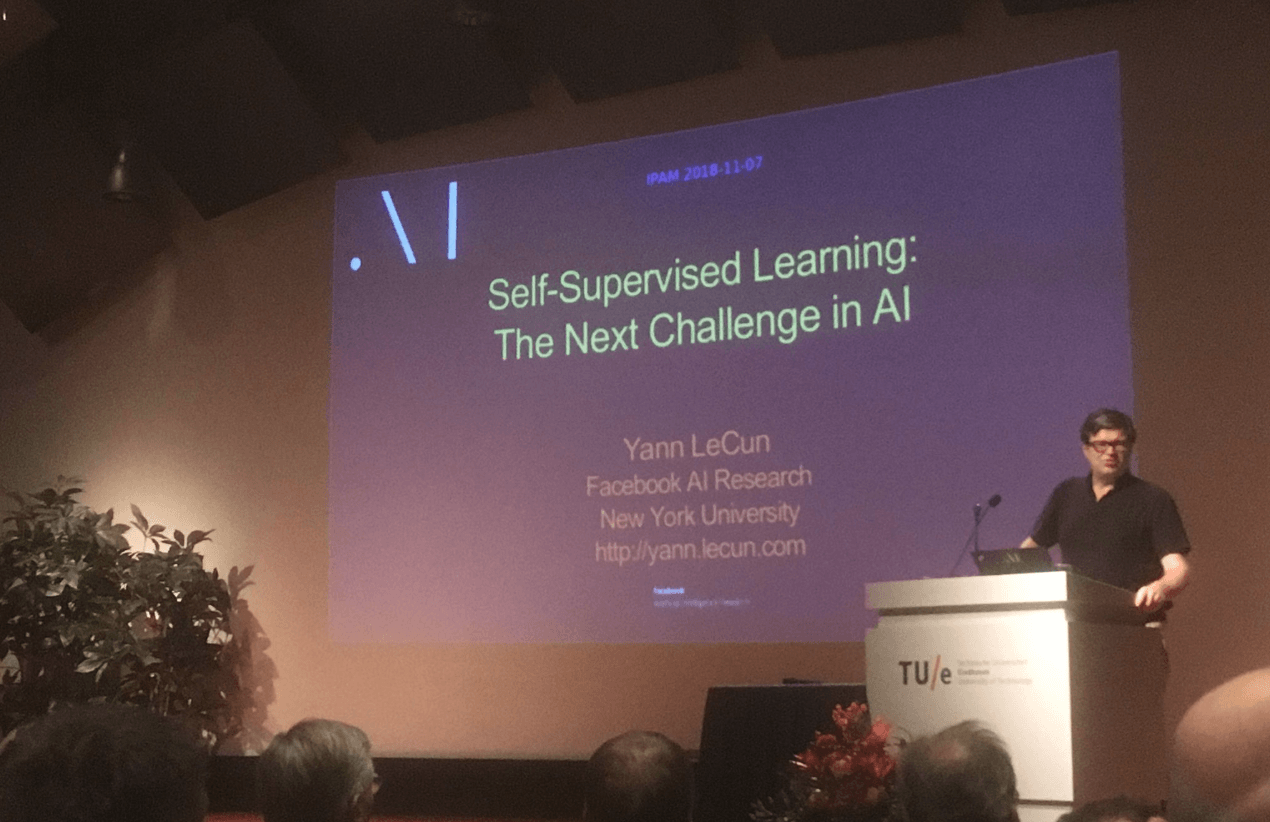
Facebook’s Yann LeCun: Europe should have more ambition in AI research
Facebook’s algorithms are the work of a research team led by Professor Yann LeCun. We spoke extensively with him at the award ceremony of the Holst Medal.
The broad base of corporate investors also hints at future industrial applications. Backed by Toyota Ventures and Samsung, the company suggests upcoming integrations in manufacturing and consumer electronics. Despite leaving Meta over disagreements about the future of AI, LeCun has indicated that AMI Labs could potentially collaborate with Meta on future projects, such as its Ray-Ban Meta smart glasses. By focusing on high-stakes applications, AMI Labs avoids direct competition with consumer-facing chatbots, such as OpenAI's ChatGPT or Anthropic's Claude.
Open, European AI research
The French startup plans to maintain a philosophy of open research. The company intends to publish its findings and open-source significant portions of its code. This strategy mirrors LeCun's long-standing approach at Meta. Open-sourcing foundational models encourages global collaboration and establishes the company's architecture as an industry standard.
AMI Labs is a bid for European strategic autonomy. By developing foundational infrastructure on the continent, Europe reduces its reliance on Silicon Valley. The funding round values the company at $3.5 billion before it even launches a commercial product. This capital injection underscores a growing market consensus: machines must reason and interact with the physical world.