
From baggage holds to dementia care: the AI Pitch Competition
Eight finalists and a wildcard: Be-Inc.ai, Offensys, One Horizon, UNSEQ, YourNeuroTune, Kyvvu, Synthgen and Rigidbody, Alzheimer.App.
Published on September 22, 2026
AI Pitch Competition 2025
Bart, co-founder of Media52 and Professor of Journalism oversees IO+, events, and Laio. A journalist at heart, he keeps writing as many stories as possible.
Eight Brabant-based startups have secured a place in the 2026 AI Pitch Competition final. Wildcard Alzheimer.App completes a remarkably diverse field, showing how quickly AI is moving from general-purpose promise to highly specific applications.
Artificial intelligence may be the common denominator, but the nine companies preparing for the AI Pitch Competition, ranging from student teams to serial entrepreneurs, could hardly be more different. One wants to prevent harmful communication in the workplace; another puts AI to work in the cramped hold of an aircraft. Solutions span cybersecurity, industrial plants, music, computer vision, and dementia care, along with new infrastructure designed to keep AI agents under control.
The jury selected eight official finalists from a competitive field: Be-Inc.ai, Offensys, One Horizon, UNSEQ, YourNeuroTune, Kyvvu, Synthgen and Rigidbody. Alzheimer.App joins them as the wildcard. Before the grand finale, the finalists will refine their propositions and pitches through LEVEL UP 2026 and a pitch workshop at Willem II Stadium. They will take the stage on 12 November during AI Summit Brainport at the Evoluon in Eindhoven.
Here are the eight finalists and the wildcard.
Meet the finalists
Meet and support the finalists during the LEVEL UP AI track on 28 September. More information here.
Be-Inc.ai: safer workplaces through better words
Be-Inc.ai starts from a deceptively simple idea: workplace safety is also shaped by language. An insensitive email, an inaccessible vacancy text or a poorly phrased message can exclude people or make them feel unsafe, even when that was never the writer’s intention.
The company, represented in the competition by Eline Schoonen, has developed a real-time AI communication coach that works alongside employees in Microsoft 365 and Google Workspace. Instead of relying on a one-off training course, Be-Inc offers contextual suggestions as someone writes. Its ambition is to help organisations communicate more clearly, inclusively and effectively and, in doing so, create safer workplaces.
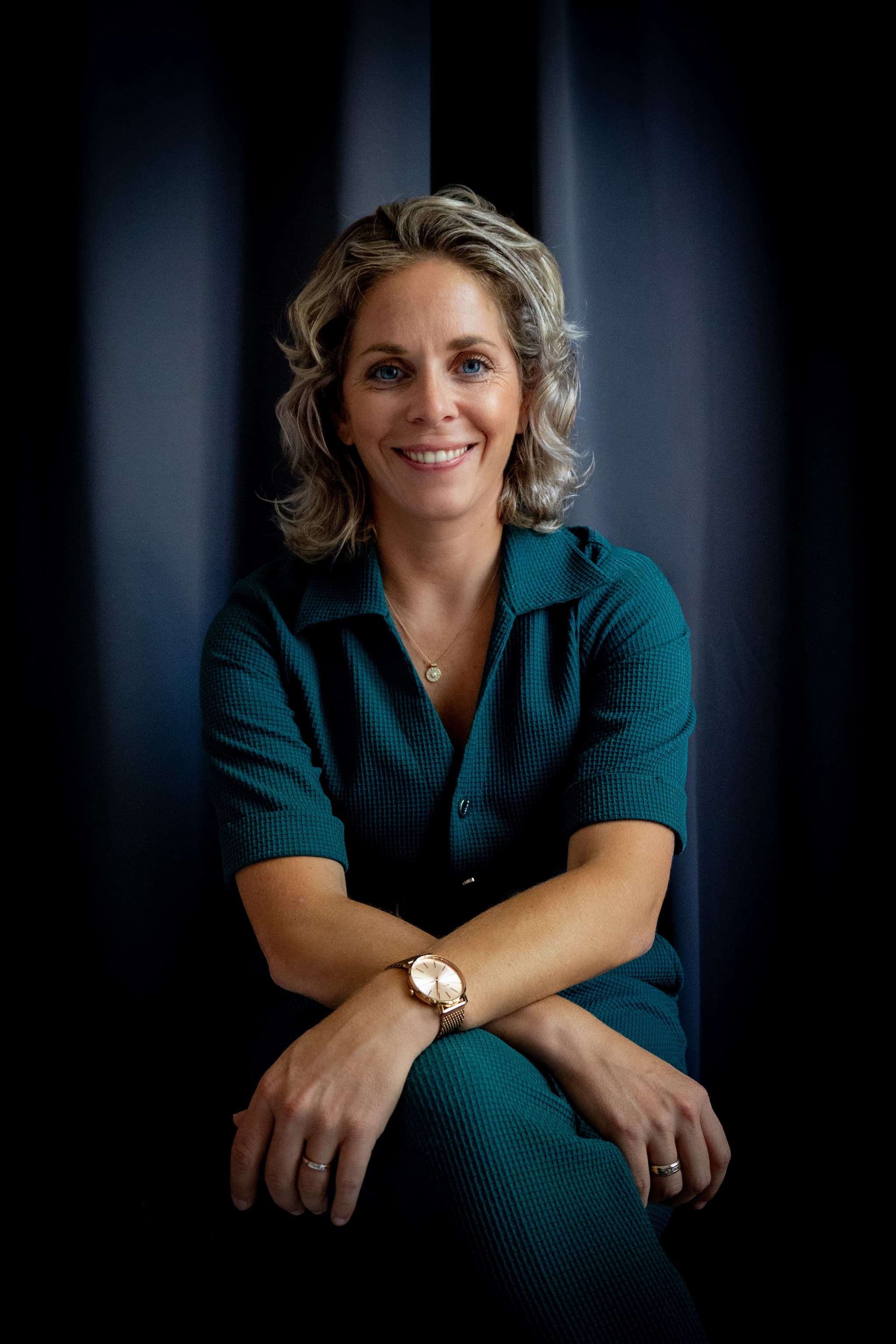
be-inc, Eline Schoonen
Offensys: continuously testing whether cyber defences work
Security controls can look robust on paper and still fail when a real attack unfolds. Offensys, represented by Cor Verhoeven, wants organisations to stop assuming their defences work and start proving it continuously.
Its platform uses continuous purple teaming: realistic, behaviour-based attack simulations that test whether existing security controls detect or block malicious activity. The system can rerun tests as IT environments change, connect to security information and event management systems, and generate evidence for regulatory frameworks such as DORA and NIS2. In effect, Offensys seeks to turn security validation from an occasional, labour-intensive exercise into an ongoing process.
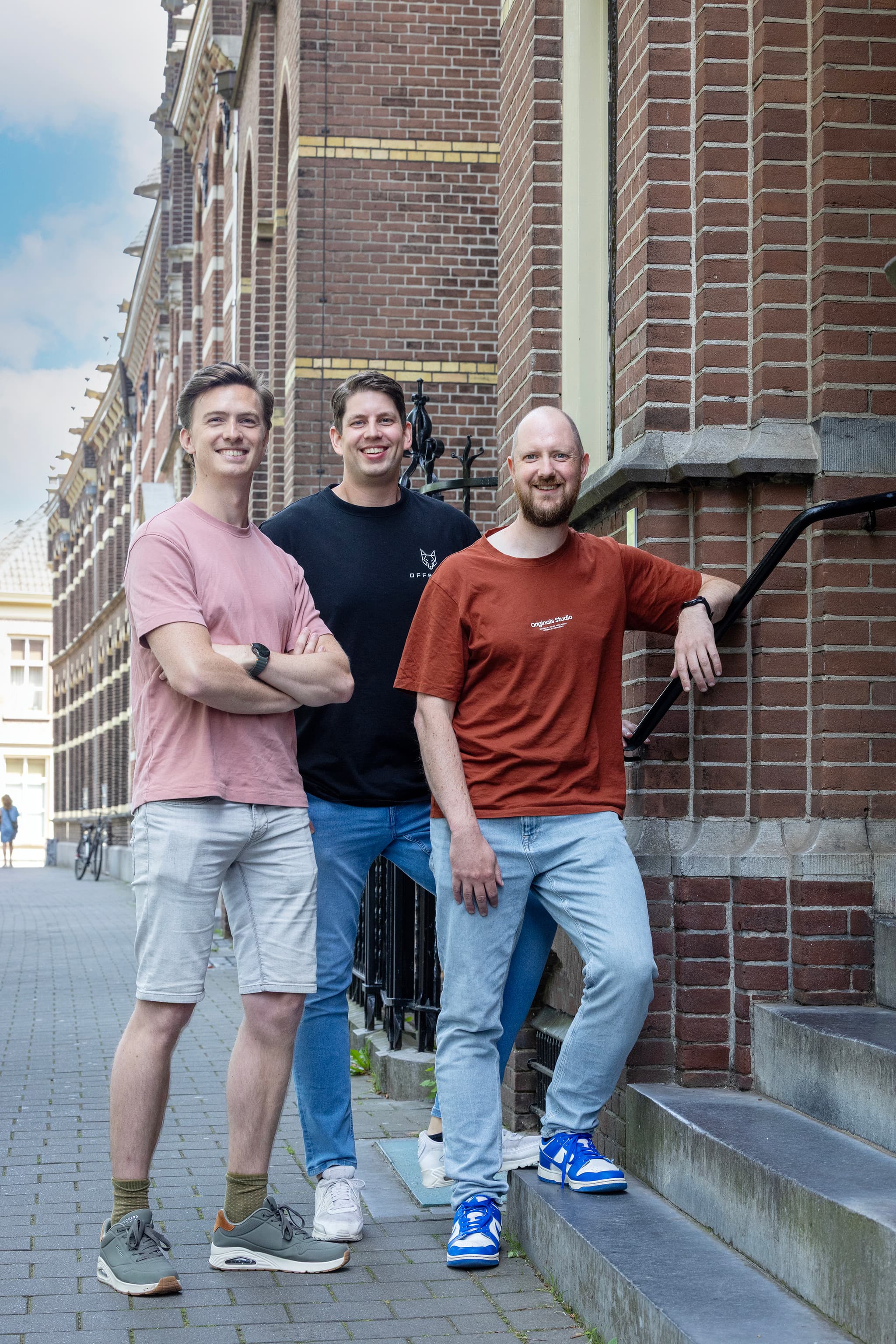
Offensys
One Horizon: managing a workforce of AI agents
As AI agents become capable of completing larger assignments, a new organisational challenge emerges: how do you delegate work without losing consistency, visibility, control or accountability? One Horizon, represented by Gijs van de Nieuwegiessen, is building an answer.
The platform turns assignments into multi-agent workflows that can plan, code, test, review and revise work. Human owners can be brought in at decision points before a project moves from planning to implementation or release. One Horizon is therefore not simply offering another agent; it is developing the coordination layer around a potentially much larger AI workforce.
One Horizon
UNSEQ: taking the heaviest job out of the aircraft hold
Baggage handling inside an aircraft hold is physically demanding work, performed in a confined space and under constant time pressure. UNSEQ, represented by Robert de Bruijne, is developing automation for this stubbornly manual part of aviation.
Its proposition brings AI and robotics together to automate baggage handling in the hold itself. That makes UNSEQ the clearest example in this year’s line-up of physical AI: intelligence that doesn't stay on a screen, but operates in a difficult real-world environment. If it succeeds, the technology could reduce the physical burden on ground crews while helping airports and airlines make turnarounds more efficient.
Unseq
YourNeuroTune: business music without the usual licensing costs
Music is an important part of the experience in gyms, hospitality venues, shops and offices. For the businesses operating those spaces, however, it also brings recurring licensing costs and time-consuming playlist management. YourNeuroTune, represented by Sam Jansen, is building an alternative.
The company produces and curates a large catalogue of high-quality, royalty-free music intended specifically for commercial environments. Its platform combines that catalogue with automated playlist management, aiming to deliver the feel of familiar commercial music while reducing or eliminating conventional licensing costs. The pitch will have to show that cost savings and a premium music experience can indeed go hand in hand.
YourNeuroTune
Kyvvu: a security kernel that makes every AI agent ask first
An AI agent may be authorised to read customer data and send an email, but the sequence of those two actions could still create a serious data leak. Kyvvu, represented by Maurits Kaptein, focuses precisely on that new security problem: the risk that lies in an agent’s path, rather than in one isolated action.
Kyvvu describes its technology as an Agent Security Kernel. The in-process layer checks every action against the full history of the task and can allow, warn or block it before execution. The company says the checks are deterministic, take less than a millisecond and do not require customer data to leave its own environment. As businesses deploy more autonomous agents, Kyvvu wants to provide the small, trusted security core that keeps their behaviour within bounds.

Kyvvu, Maurits Kaptein
Synthgen: creating the defects a vision model needs to see
Computer-vision systems often struggle most with the rare cases that matter most: a defect that occurs too infrequently to produce enough training images, for example. Synthgen, represented by Simeon Dimov, generates synthetic examples of those scarce classes and labels them automatically.
Rather than asking customers to replace cameras or their existing vision stack, Synthgen adds the missing training data. The company says it can generate rare defects in different variations, provide pixel-level labels and test the resulting improvement against a customer’s own validation images. Initial target markets include food and produce lines, precision agriculture, electronics, and precision manufacturing: environments where overlooking one unusual defect can be costly.
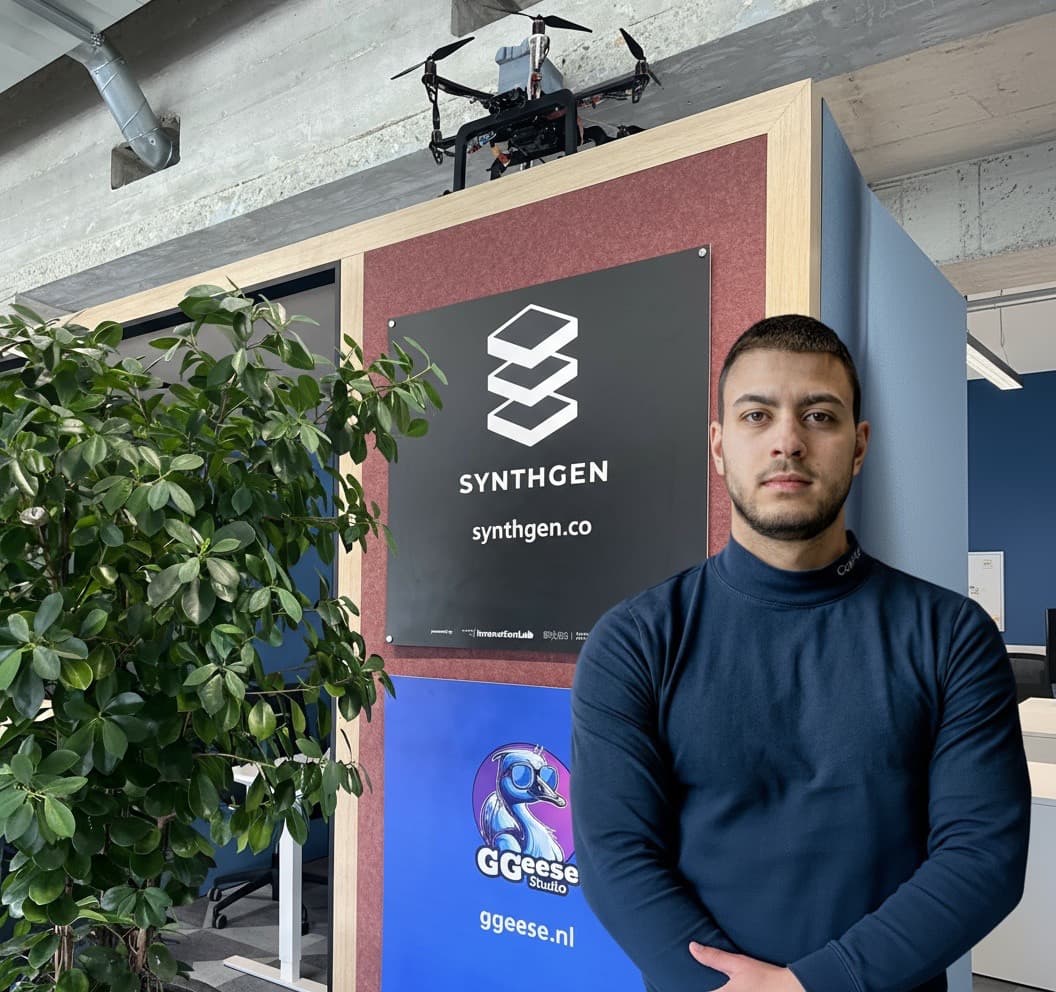
Simeon Dimov, Synthgen
Rigidbody: a brain for complex industrial plants
Industrial plants produce vast amounts of data, but turning it into timely, useful decisions remains difficult. Rigidbody, represented by Charlie Johnston, positions itself as “the brain for data-heavy industrial plants.”
Its proposition targets environments where operators must understand complex processes, equipment and data streams at the same time. By bringing intelligence to that operational information, Rigidbody aims to help plants move from data abundance to better decisions. Among the finalists, it is the venture most directly focused on AI as an operational layer for heavy industry.
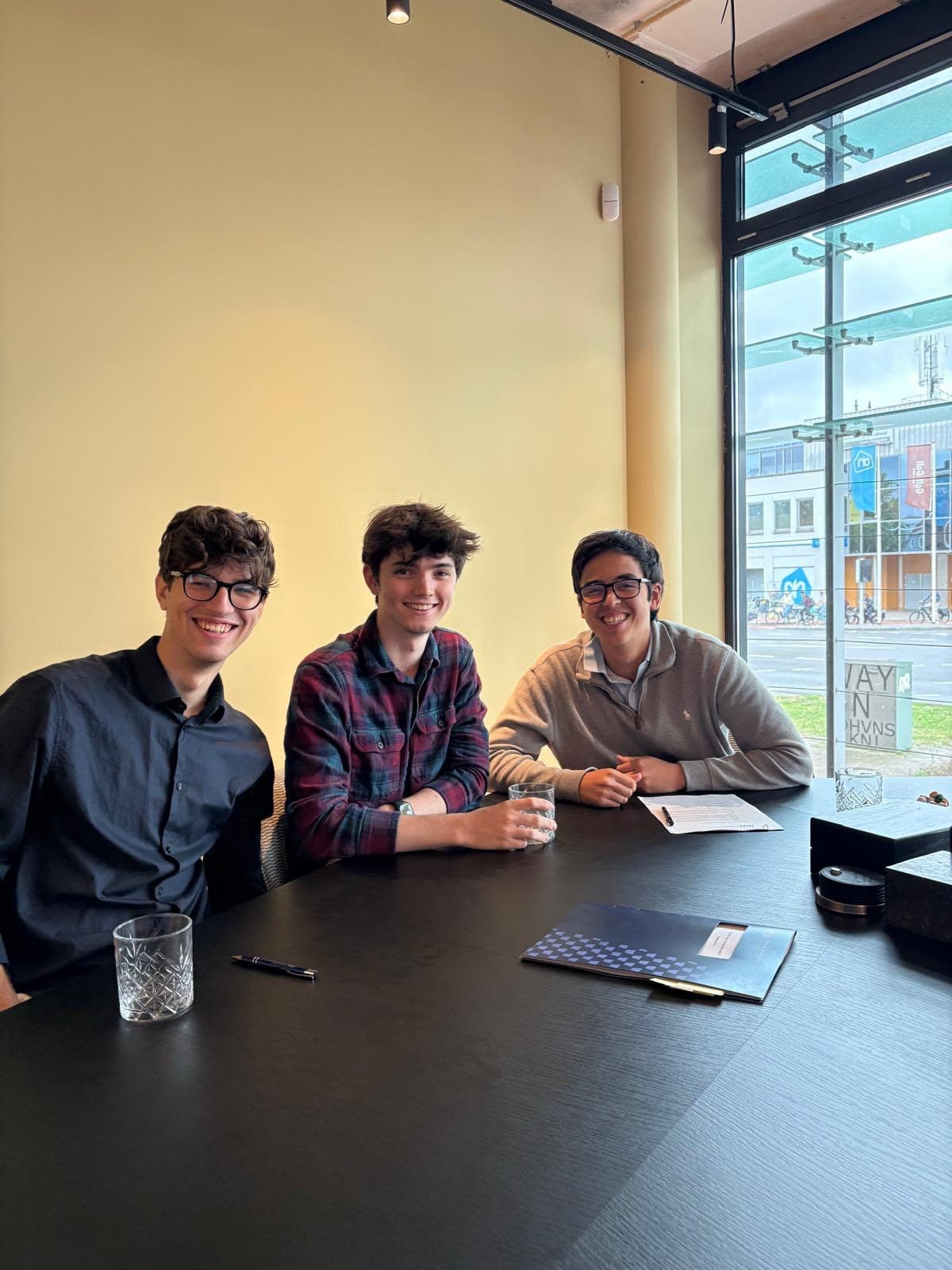
Rigidbody
Wildcard Alzheimer.App: immediate guidance when dementia care becomes difficult
The wildcard brings AI into one of the most personal settings in the competition. Alzheimer.App grew out of daily dementia-care practice at De Gelukshoeve. It offers people with dementia, family members and care professionals immediate, personalised guidance for situations that can otherwise lead to distress or conflict.
The app combines AI with the scientifically grounded Böhm approach, which seeks to connect with the lived reality of the person with dementia. Users can ask a question and receive practical suggestions tailored to their situation. The service is available in more than twenty languages; according to the company, processing takes place within the EU and personal data is not stored without permission. As the wildcard, Alzheimer.App adds an essential question to a technology competition: can AI not only make work faster or systems safer, but also help people respond more humanely at a vulnerable moment?
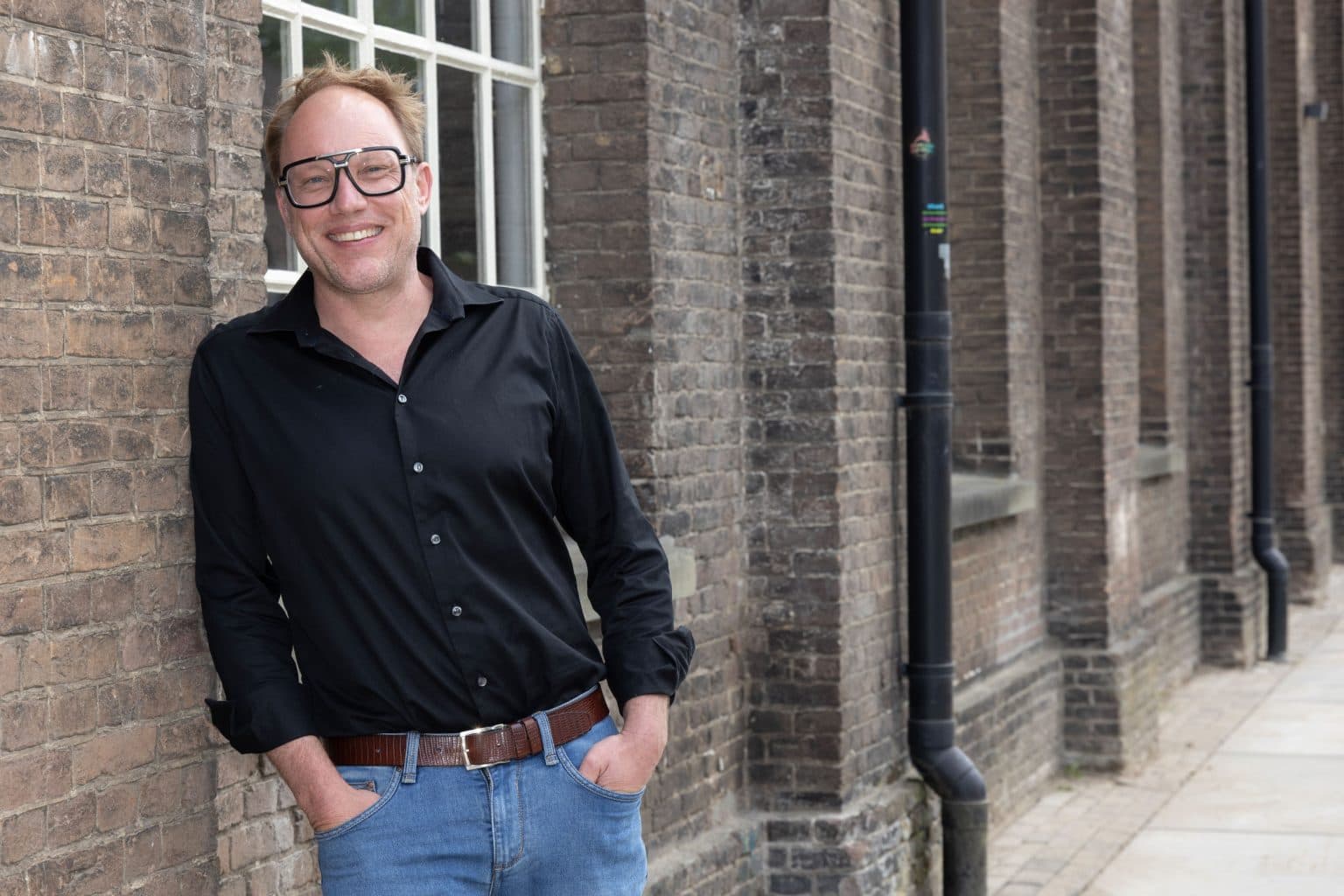
Alzheimer.app, Peter Spijkers
A competition about application, not abstraction
The final promises a clash of very different markets, technologies and business models. Some contenders sell infrastructure for the emerging world of AI agents; others apply AI to long-standing problems in healthcare, aviation, cybersecurity or industry. Several combine AI with another discipline: robotics, music production, communication science or dementia-care practice.
That diversity will make comparison difficult for the jury, but it is also the strength of this year’s field. The central question on 12 November will not be which team can speak most convincingly about AI. It will be which one can show that its technology solves a real problem, for a clearly defined customer, in a way that can grow beyond the pitch stage.
The AI Pitch Competition is taking place for the third time; the 2026 edition is organised by Erasmus Enterprise, BOM and IO+ and made possible by the Province of Brabant.