
From knowledge to cash: spinoffs are the key
In a series of blog posts, Marco Coolen offers a glimpse into his work as a Dutch and European patent attorney at AOMB.
Published on February 8, 2026

Marco, a patent attorney at AOMB since 2013, shares his expertise on IO+ about patents—how they work, why they matter, and when they lose their value.
The Netherlands ranks among the top countries globally for scientific research. Our publications are widely read, cited, and valued worldwide. But when it comes to turning that knowledge into economic value, things go quiet.
Marco Coolen, photo © Bart van Overbeeke
And that’s a shame. Because spinoffs are exactly the type of company you want if you’re aiming for an innovation-driven economy. They are young, agile, and often built around a unique technology. They invest above average in R&D, create high-quality jobs, and challenge the status quo. Not infrequently, they take on established players or even replace them.
The problem isn’t the science
The quality of the research is not the issue. Dutch researchers deliver. Universities are brimming with ideas. But the bottleneck lies in the step toward the market.
Researchers who wanted to start a spinoff often faced unclear rules, slow processes, and endless negotiations over IP and equity. That uncertainty discourages talent from becoming entrepreneurs. As a result, the Netherlands misses out on economic and social opportunities.
One standard for IP agreements
That’s why it is so important that Dutch universities, together with the government, have now drawn up the National IP Deal Term Principles: a national set of guidelines for IP agreements in spinoffs. Clear, market-conforming, and better aligned with international standards.
The idea is simple: lose less time in negotiations and create more room for impact. Researchers know where they stand. Investors do too. And that makes it more attractive to take the leap.
The principles set out, in broad terms, how IP is shared, what equity stake a university asks for, and what happens as the company grows or is sold. This removes the unpredictability that has so often led to frustration in recent years.
From a knowledge economy to an innovation economy
As Peter Wennink put it in his report on the Netherlands’ earning power: “Our investments in knowledge still yield too little economic value. In effect, Dutch investments in knowledge become development aid for countries like Singapore and the United States.”
In other words: we do the groundwork, but others reap the rewards. It’s high time that changed.
Spinoffs are not a side issue
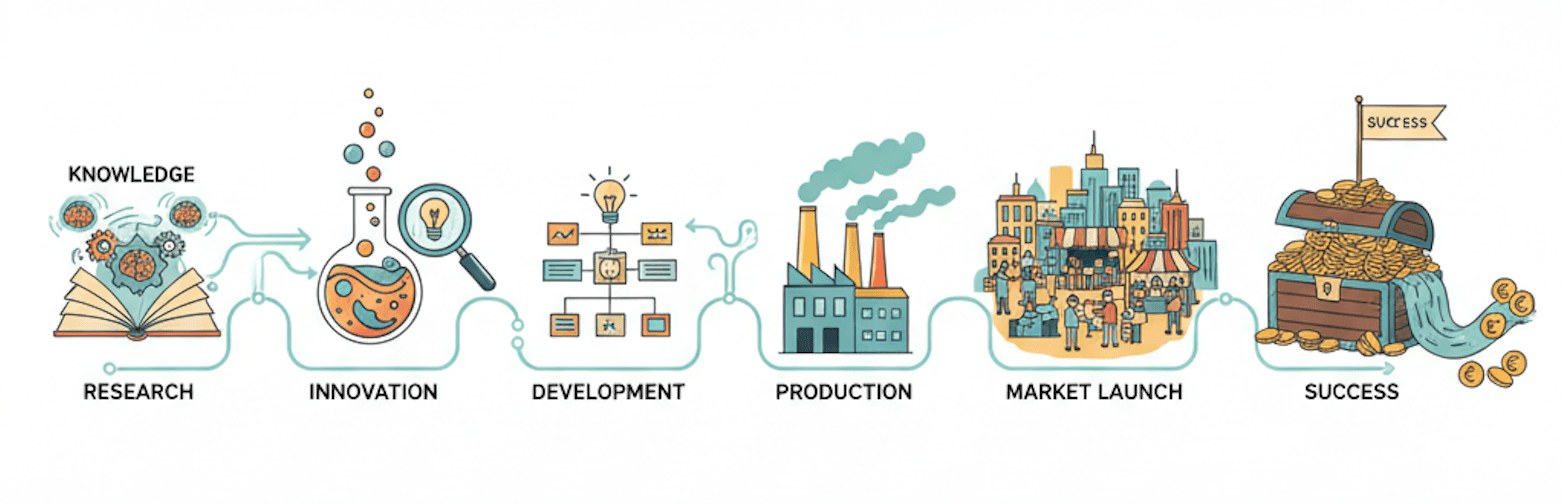
Anyone committed to a strong knowledge economy must ensure that knowledge also reaches the market, not occasionally, but systematically. Spinoffs are essential in this. Not only for technological renewal, but also for economic growth, strategic autonomy, and broad prosperity.
The new IP standard is an important step. Now the task is to actually use it as a bridge between science and entrepreneurship.