
Grid gaps put 120 GW of planned European renewables at risk
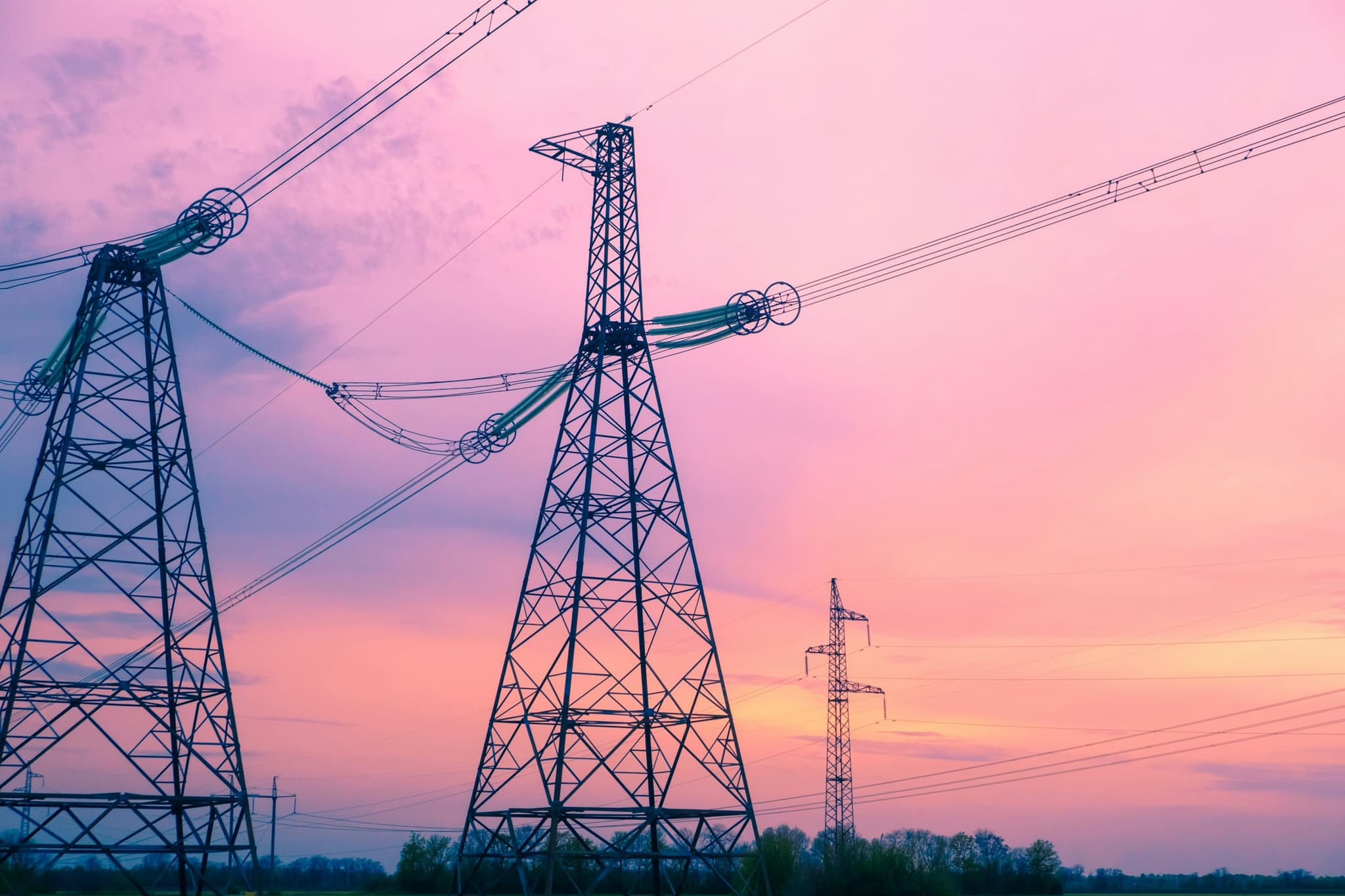
Europe's electricity grids are buckling under demand, putting 120 GW of planned renewable capacity at risk.
Published on April 1, 2026
© Unsplash - Evgeniy Alyoshin

Team IO+ selects and features the most important news stories on innovation and technology, carefully curated by our editors.
120 GW of planned renewable energy capacity additions in Europe are at risk due to grid capacity bottlenecks, a new analysis by energy think tank Ember found. For comparison, the United Kingdom’s total electricity capacity is around 110 GW.
According to the analysts, one in every two grid operators has insufficient grid capacity to connect planned wind and solar. In other words, there is not enough space on the electricity grid to plug in new solar panels and wind turbines. Still, as the war in Iran drives up energy prices, rolling out new renewables is key to Europe’s energy security.
The most severe bottlenecks are reported in Austria, Bulgaria, Latvia, the Netherlands, Poland, Portugal, Romania, and Slovakia. Nevertheless, the same problem affects larger countries such as Germany and Italy, which don’t share grid capacity data.
“With power costs spiking, Europe’s grids are a crucial enabler in the race to install renewables to replace imported fossil fuels and protect households against volatile prices,” said Elisabeth Cremona, energy analyst at Ember. “Grid bottlenecks are no longer simply a technical issue. They are a security risk.”
Over two-thirds of planned solar and wind projects are at risk
Electrification and increasing domestic clean energy production are key pillars of Europe’s decarbonization strategy. Electrifying transport, heating, and industry is particularly relevant for reducing dependence on foreign fossil fuel imports—and on energy markets’ volatility driven by the current geopolitical scenario. If such bottlenecks persist, decarbonization and energy security are at risk.
Ember noted how, across the 17 countries reporting transmission grid capacity, more than two-thirds (66%) of new wind and large-scale solar planned by 2030 are at risk. In addition, the lack of grid capacity could delay or prevent 16 GW of rooftop solar installations, affecting more than 1.5 million households in six out of the 13 countries reporting distribution grid data.
“Following the 2022 energy crisis, investment in rooftop solar surged as households sought protection from volatile energy prices,” continued Cremona. “As countries look for ways to protect themselves from the present energy price spikes, we can’t afford for grids to stand in their way.”
Having free capacity attracts investments
Grid constraints also influence where new investments can be made. Chief among them is the demand for new datacenters, as well as for industrial sites. Therefore, project developers are likely to opt for locations with available grid capacity.
Analysts explain that across the seven countries that publish this data, three have zero capacity for new industrial load: Austria, Bulgaria, and Romania. The Czech Republic has ample available capacity, with Belgium and Latvia also able to accommodate substantial new demand.
Some of Europe's grids are well-positioned to accommodate new demand for household electrification, the analysis found. Six of the eight reporting countries for this metric have sufficient capacity to connect heat pumps for up to one-third of households. Conversely, Poland and Spain would face limitations.
Capacity can be freed—without physically expanding the grid
What are possible solutions to rapidly unlock new capacity? Ember researchers point to non-wire solutions as ways to improve the current situation.
Non-wire solutions are ways of managing electricity grid constraints without building new physical infrastructure, such as cables, power lines, or substations. Among these solutions are integrating energy storage to absorb excess generation and release it when the grid is strained, or adopting software to make the grid smarter and optimize energy flows.
According to the analysts, these solutions would enable Europe to connect as much as 185 GW of new capacity—Germany’s renewable capacity is around 210 GW—without any physical network expansion.