
Happy Asteroid Day! How do we stop a deadly asteroid?
On Asteroid Day, we take a look at the technology designed to protect Earth from a cosmic impact.
Published on June 30, 2026

Our DATA+ expert and Editor-in-Chief, Elcke Vels, explores AI, cyber security, and Dutch innovation. Her "What if..." column imagines bold scenarios beyond the norm.
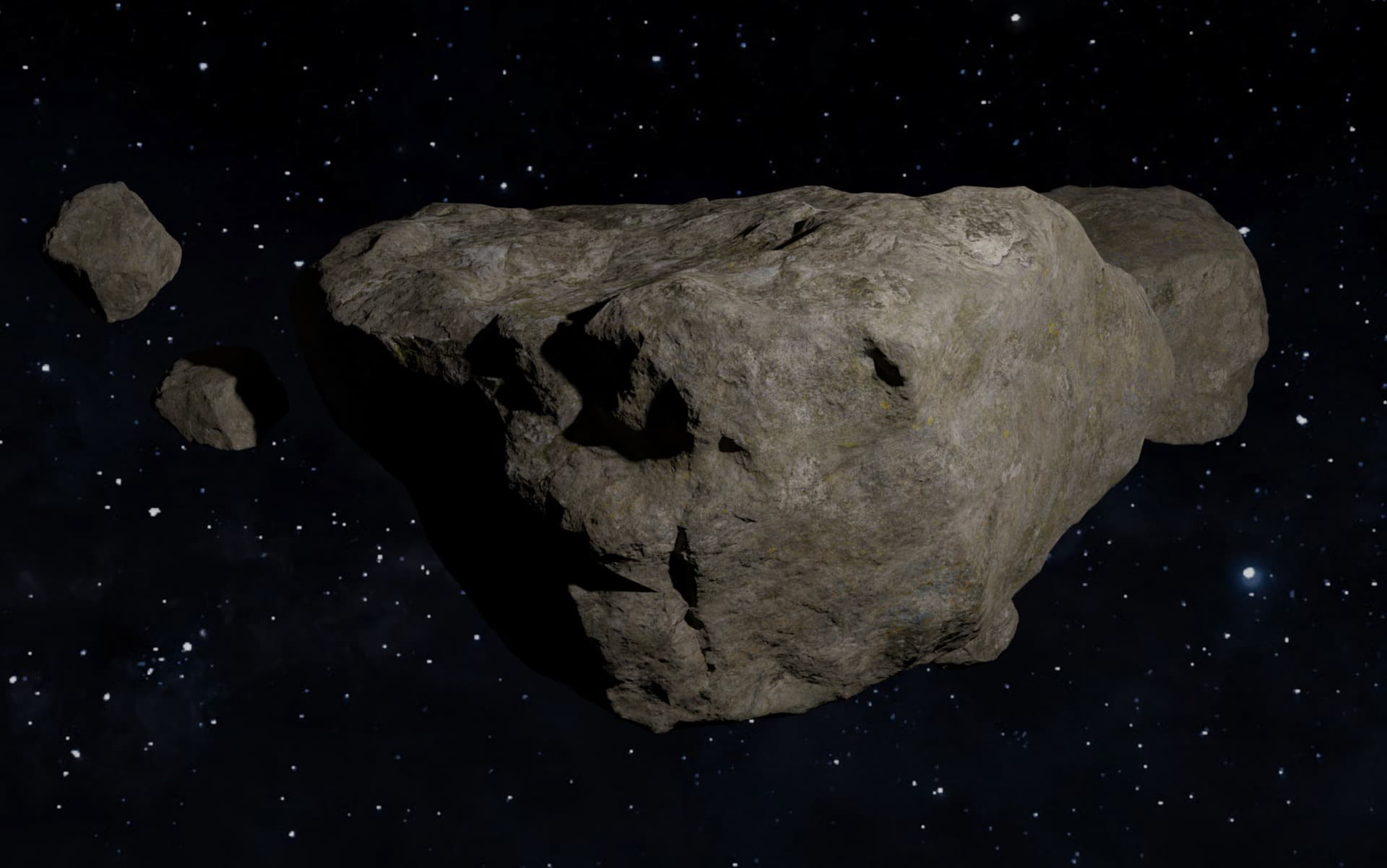
Space is immeasurably vast and harbors invisible dangers. Today is Asteroid Day 🔗︎. This day reminds us of our planet’s vulnerability. What would happen if a giant asteroid were actually heading toward Earth? Fortunately, we are no longer powerless today. The technology to defend ourselves is advancing at a rapid pace.
The legacy of Tunguska
On June 30, 1908, a massive explosion occurred over Siberia. An asteroid exploded in the atmosphere and destroyed 80 million trees in the Tunguska region. This remains the largest documented impact in human history. To warn the world of this looming danger, the United Nations designated this date as Asteroid Day 🔗︎ in 2016. The goal of this day is to raise public awareness about near-Earth objects 🔗︎. While a major impact is rare, the consequences are immediately catastrophic. That is why scientists and engineers are working every day on systems designed to protect us.
.png&w=2048&q=75)
DART’s kinetic impact
What concrete steps can we take if a large asteroid is actually on a collision course? The most tried-and-true and immediately deployable technology is the kinetic impactor 🔗︎. This method involves crashing a heavy spacecraft into the asteroid at extremely high speed. Humanity already proved in 2022 that this theory works in practice with the historic DART mission. A NASA probe successfully collided with the asteroid Dimorphos at that time. Scientific research from March 2026 definitively confirmed the long-term effect of this test. The powerful impact not only changed the orbital period of the small moon Dimorphos. The impact also shifted the orbit of the entire binary system around the Sun.
Gravity: a subtle method
In addition to the brute force of a collision, scientists are also developing more subtle methods. One promising alternative is the gravity tractor 🔗︎. In this technique, a heavy spacecraft flies very close to the asteroid for an extended period of time. The mutual, weak gravitational pull then very slowly pulls the asteroid out of its original orbit. Although this process can take decades, the method is extremely controlled and precise.
Lasers: the ultimate last resort
Another innovative technology is laser ablation 🔗︎. In this process, we aim powerful lasers at the asteroid’s surface to vaporize rock. The escaping gas then acts as a natural rocket engine that shifts the asteroid’s course. However, if time is extremely tight and the asteroid is enormous, the nuclear option remains 🔗︎. This is not a scenario from a Hollywood movie, but a serious backup plan. A nuclear explosion near the asteroid can vaporize its outer layer and thus alter its course. Scientists view this as the ultimate last resort.
Who presses the button?
The necessary technology is under development, but who ultimately decides whether to take action? Decision-making follows carefully established international protocols under the auspices of the United Nations. As soon as a real threat is detected, the Space Mission Planning Advisory Group springs into action. This international body coordinates the response of various space agencies around the world.
Happy Asteroid Day!