
'Hey ChatGPT, where should I go for my next holiday?'
The series ‘AI as a travel agency: a good or bad idea?’ explores how an AI tool can be used to plan your next holiday.
Published on February 23, 2026

Masterstudente journalistiek aan de RUG, stagiair bij IO+, schrijft graag over de integratie van AI in het dagelijks leven
Within seconds, the itinerary appears: eight days in Madagascar, complete with flight and hotel suggestions, and a daily programme. What once required hours of comparing travel guides, blogs, and booking websites can now be done with a single question and a few interest preferences. IO+ speaks with experienced traveller Kayleigh Veninga, who plans her trips without AI, and with Coordinator of Public Services Caroline Rossen, to discover whether AI can take over the work of a travel agent.
Veninga has the opportunity to travel frequently. Last year, for example, she spent a month in Madagascar and also visited lesser-known places in the south of the country. She researched all of this by searching for information online and consulting a travel agency.
Why AI is attractive
In the past, you had to plan trips around work and other obligations: browsing websites, comparing guides and making appointments. With AI tools such as ChatGPT, you can now do this whenever you like. Ask a question, provide your preferences, and within seconds you have a personalised travel itinerary. No office hours, no waiting times, just holiday planning at your own pace. We asked ChatGPT to create a holiday plan for the East African island and had Veninga assess it.
The holiday designed by the AI appears to be a good starting point. “I know this is the most varied route you could get for a week, so for now yes, [I would use AI],” says Veninga.
“But if I hadn’t been there yet, I would still research whether this really is the best option,” Veninga adds. She says she would do this via TikTok and travel websites. She did the same for her own trip but ultimately outsourced the planning to a travel agency. “Madagascar isn’t very popular, so there’s little information available,” says Veninga.
Despite the limited amount of information, ChatGPT comes up with an enjoyable holiday, according to Veninga. The suggestions include trips to Andasibe-Mantadia National Park to see lemurs, relaxing on beaches such as Nosy Be, (night) walks, and various activities such as snorkelling, whale watching or visiting baobab trees.
Madagascar is, according to Veninga, a very special country. She adds that she did many similar things during her holiday. “There’s a lot of driving, distances are enormous and the roads are really poor,” says Veninga. She also notes that it is better to make these journeys with a private driver.
She also indicates that it is better to make these trips with a private driver. ChatGPT also indicates that a private driver is a convenient travel option, but does not explain why, while Veninga would have liked to know that. "The taxi service in Madagascar is not convenient for tourists, which would have been nice to know in advance if I had made a plan with AI," explains Veninga.
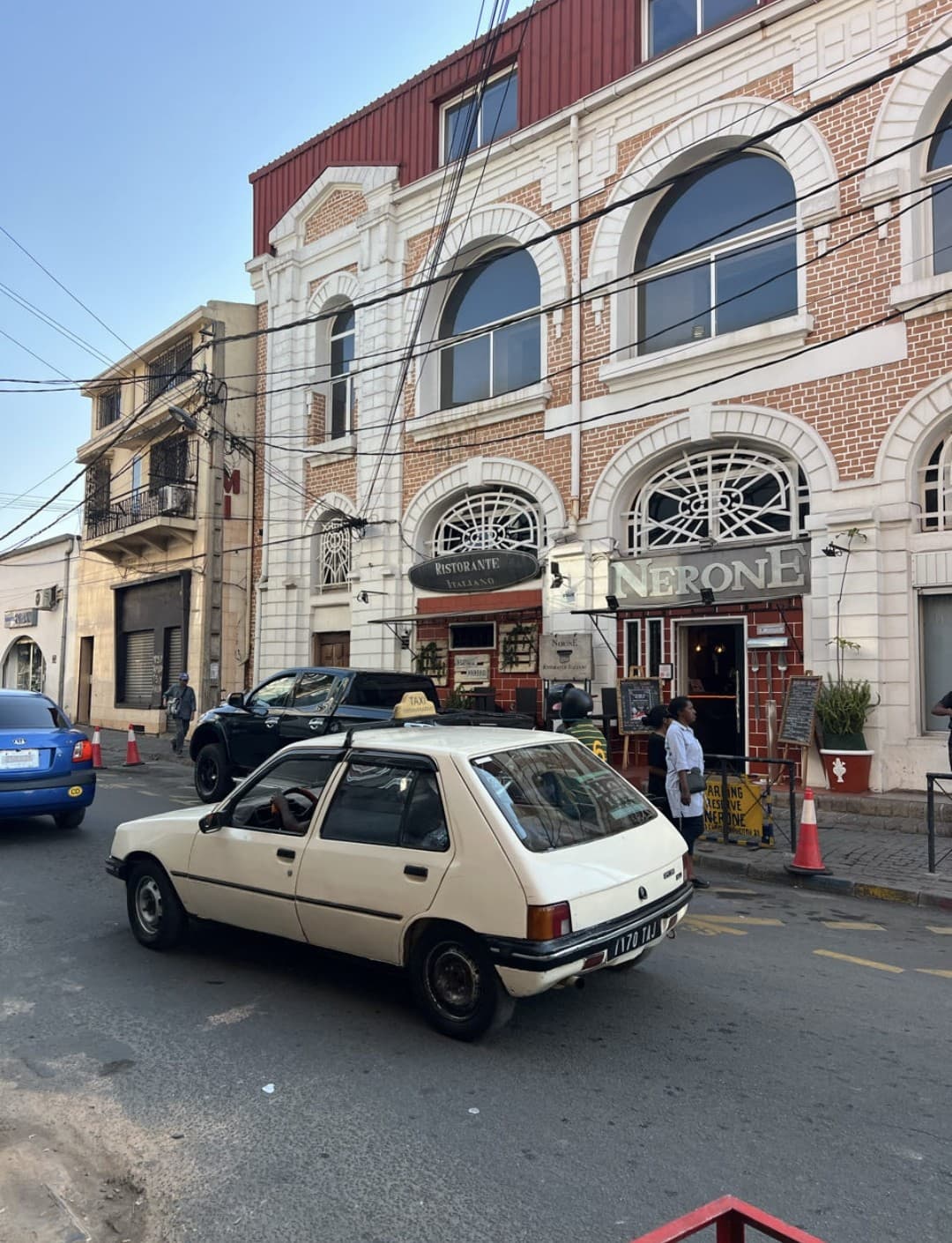
Taxi service Madagascar © Kayleigh Veninga
The role of libraries and travel books
Although some travellers use AI, many still turn to travel books for reliable information, according to Coordinator of Public Services Caroline Rossen. “They are borrowed less often than a few years ago, but demand remains steady,” says Rossen.
In the library where Rossen works, the travel book collection has shrunk over the past decade. “It is important that travel guides are up to date, which is why they are withdrawn from libraries sooner than other categories of books,” Rossen explains.
The library is still popular
Despite people always having AI available on their mobile phones, libraries continue to attract a diverse audience. Rossen says that children often visit to find material for school projects or presentations. “Adults of all ages use travel guides, although I estimate that the over-50s are more represented than young adults,” says Rossen.
Many travel books are published for adults, but for children only books about the most popular destinations are produced, as these sell best, Rossen explains. “The selection is becoming more limited. Nowadays, we often have to disappoint children who are looking for a book about a specific country. It’s such a shame, especially since there is a lot of demand for these kinds of books in public and school libraries,” says Rossen.

Travel books in a library © Amber van Kempen
Traditional methods are still effective
Despite the rise of digital tools, travel guides remain available in libraries. Unlike AI-generated answers, travel books are written by experts who visit destinations, check details and regularly update editions. According to Rossen: “The advantage of a book is that the information is generally more reliable than what you find on the internet, because publishers review it critically before publication.”
“Another advantage is that a book brings together a great deal of information in one place, whereas online you need to enter a new search for every question. Travel books will therefore remain on the market for some time and continue to be available in libraries,” Rossen adds.
Despite technological developments, there will always be a place for the library, says Rossen. “Only the way in which the library’s role is fulfilled changes over time,” she explains.
The disadvantage of AI
ChatGPT, Gemini, Copilot and other large language models are trained on existing literature, but not always the most recent sources. They also do not always have access to the entire internet. Information behind paywalls, for example, is not accessible.
When someone asks for travel advice, the AI does not retrieve a fixed answer from a database. Instead, it predicts a likely response based on what it has learned from similar texts. The disadvantage of this is that the generated answers may not always be accurate.
Moreover, AI has no personal experience and cannot independently verify regularly updated information, such as opening hours. “I hope people realise that they need to look critically at the information they find,” says Rossen.
At the same time, because ChatGPT’s holiday plan and that of a travel agency are quite similar, “AI can be a good starting point for planning a trip to a lesser-known country,” Veninga concludes.