
How Spain keeps energy bills low while oil prices soar
Despite the energy prices shocks, electricity prices in Spain are lower than most of Europe. Let's unpack the reasons that make it possible.
Published on March 25, 2026
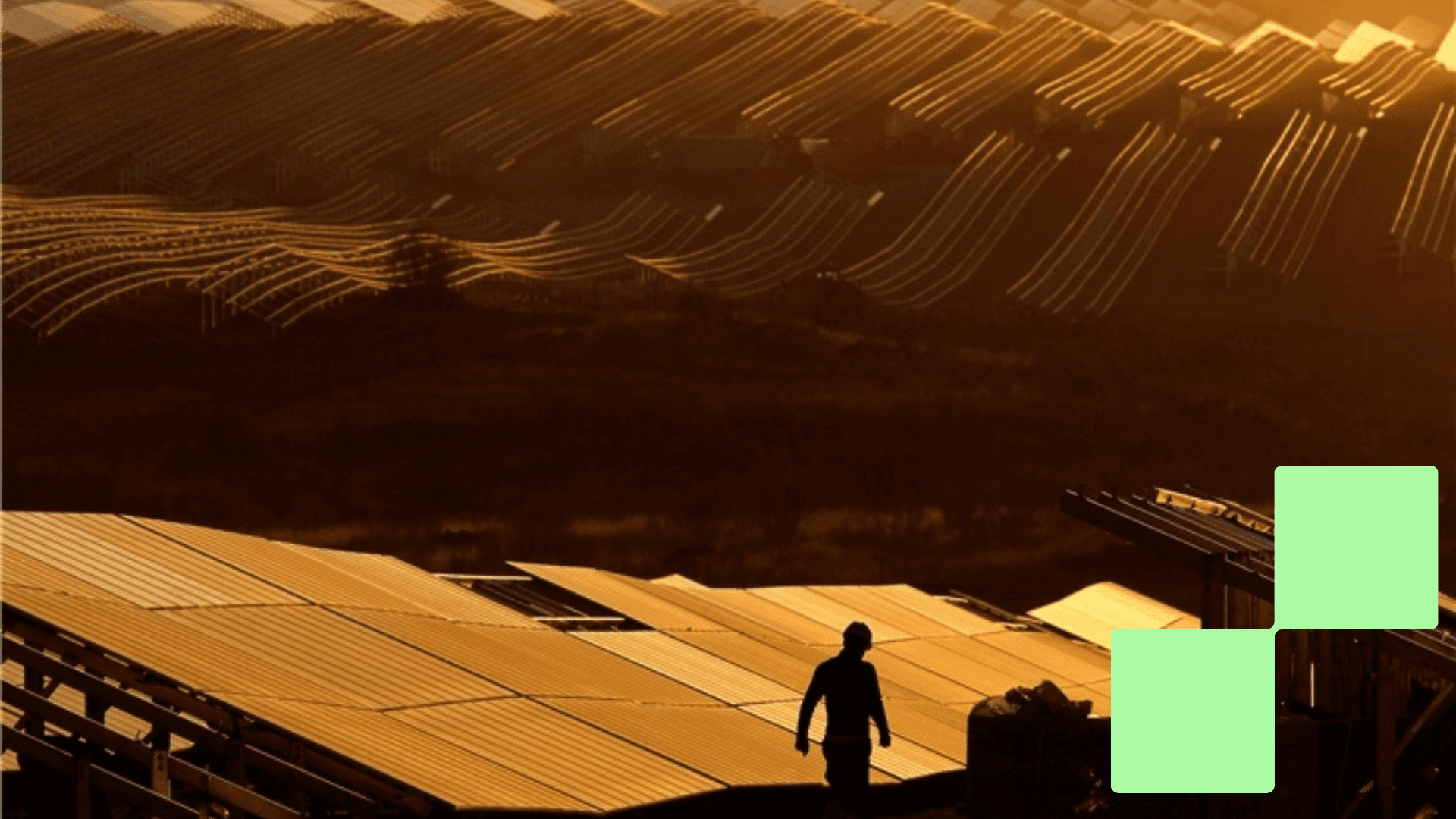
Nunez de Balboa PV plant - © Iberdrola

Mauro swapped Sardinia for Eindhoven and has been an IO+ editor for 3 years. As a GREEN+ expert, he covers the energy transition with data-driven stories.
Spanish Prime Minister Pedro Sánchez's statements ahead of last week’s European Council meeting went viral across Europe. Besides criticizing other EU member states for leveraging the current oil crisis to attack European climate policies, he reaffirmed how his country is shielding itself from the impact of soaring oil prices.
“In Spain, renewables now represent nearly 60% of electricity generation, and last weekend, power prices were at €14 per megawatt-hour. In Italy, Germany, and France, prices were above €100 per megawatt-hour,” he told the press. “That is no coincidence.”
In this new episode of Behind the Figures, we will dive deeper into Spain’s electricity mix, comparing it with those of the countries mentioned by Sánchez and the Netherlands.
Behind the Figures
In Behind the Figures, we take a deep dive into numbers. Using charts and graphs, we break down figures and provide context to help you make more sense of them.
Electricity in Spain is truly cheaper
Over the past few years, Spain has added significant renewable energy capacity. Between December 2019 and June 2025, Madrid added 40 GW of renewable energy capacity (chiefly solar and wind power), more than any other EU country except Germany. As a result, the contribution of clean energy is proving instrumental not only in reducing dependence on fossil fuel imports and in decarbonization, but also in making electricity cheaper.
Let’s have a look at electricity prices and how they have soared since the Israeli and US attacks on Iran that started on February 28. In the line chart below, the cost of electricity is shown since then.
Overall, Spain is the country where electricity costs stay the lowest, even dropping to 0 on March 15. In this period, a kilowatt-hour of electricity cost on average less than 5 euro cents. France follows suit, with an average price of 6 cents. A kilowatt-hour of electricity in Germany and the Netherlands costs over 10 cents, while in Italy it exceeds 14 cents.
Renewables are truly making a difference. Looking at historical data, we can also see that electricity costs were lower in Spain, even amid other energy market shocks, such as the Russian invasion of Ukraine in 2022.
What does Spain’s electricity mix look like?
The bar chart below is an overview of Spain’s electricity mix in 2025. Wind energy is now the largest source of electricity, followed by nuclear and solar. In total, 79% of the country’s electricity came from low-carbon sources, showing how the country is phasing out oil and gas.
Interestingly, in 2025, Spain achieved a milestone. On April 16, the Spanish electricity grid ran on renewable energy for 9 hours on a weekday.
What about the other countries we have been considering?
Aggregation portal LowCarbonPower draws data from Eurostat, the International Energy Agency (IEA), and the European Network of Transmission System Operators for Electricity (ENTSOE). In its database, we can also look at the other countries we have included in this comparison.
Nearly all (97%) of France’s electricity comes from low-carbon sources, driven by a predominant share of nuclear. 61% of Germany’s electricity was produced through low-carbon sources–although there is still a considerable share of coal to be phased out.
Gas is the largest source of electricity in the Netherlands, as low-carbon sources now provide over half of the country’s electricity. There is still a lot of work to do in Italy, where only 35% of electricity came from low-carbon sources. Among the countries considered in this comparison, it is the one that relies most on gas imports.
Spain was better prepared for an energy crisis
The growth of renewables in Spain has been impressive in recent years. In the charts below, you can see it yourself.
The emergence of clean power also affects the price dynamic in another way, suffering less from the impact of gas prices. As noted by energy think tank Ember, Spain is an example of how wind and solar can help a country decouple from the fluctuations deriving from fossil fuel costs.
“In European power markets, the most expensive generator operating to meet demand – typically fossil gas or coal – sets the hourly wholesale electricity price. When the generation from lower-cost technologies like wind and solar grows enough, it displaces gas and coal, and fossil power determines the price less often,” reads the analysis.
Therefore, Spain is effectively displacing fossil fuels, both in the central hours of the day, when the sun shines, and at night, when the wind blows. The analysts underline that, in the first half of 2019, Spain’s power prices reflected the costs of fossil-fuel generation in 75% of the hours. In the same period of 2025, it dropped to 19%.
“As a result, Spain’s average hourly electricity price in the first half of 2025 (62 €/MWh) was below the cost of generating electricity with gas, which averaged 111 €/MWh during the same period, ranging between 87 and 148 €/MWh,” continues the report.
Decoupling electricity prices from gas prices is what makes the Spanish model a success and better equipped against any geopolitical shocks.
What to learn
Clearly, Spain has the advantage of having lots of sunshine and wind, yet also the willingness to bet on them—something that Italy hasn’t done on that scale yet.
In addition, its electricity grid is relatively isolated compared to other European countries, making it less prone to shocks rippling through the market. For comparison, the German and Dutch grids are much more interconnected with other countries, making decoupling from gas prices harder.
Looking ahead, Spanish grid operators will have to guarantee supply on low-generation days, and the cost of that backup capacity — whether batteries, pumped hydro, or yes, gas peakers — is rarely factored into the headline price comparisons.
This is not to diminish what Spain has achieved, but to remind us that the energy transition is a long, complicated process.