
IO+ Weekly Overview: All the ingredients for success, but…
Our weekly overview provides a summary of the most compelling stories around crucial innovations, with a focus on the Netherlands.
Published on February 15, 2026

Bart, co-founder of Media52 and Professor of Journalism oversees IO+, events, and Laio. A journalist at heart, he keeps writing as many stories as possible.
The Netherlands has a strong knowledge base, a growing innovation landscape, and promising technologies, but the real challenge lies in turning potential into scale and impact. Whether it concerns tech companies struggling to break through internationally, new university spin-offs, or digital innovations in education and healthcare, the same question keeps returning: how do we ensure that ideas not only emerge, but also grow into sustainable economic and societal value?
At the same time, there is growing recognition that innovation is increasingly a systems issue. The State of Dutch Tech 2026 report, published this week, shows that investment in Dutch tech is rising, but the number of deals is falling, and growth financing often comes from abroad. As a result, international scaling remains difficult and dependence on foreign investors increases. Without sufficient “patient capital” and stronger collaboration among knowledge institutions, government, and industry, the Netherlands risks falling behind in global tech competition.
Alongside these structural issues, this week’s articles also show how innovations, from medical imaging to digital learning tools, are moving toward real-world application. The common thread is clear: the Netherlands has all the ingredients for success, but must organize, invest, and scale more effectively to truly capitalize on that position.
🔎 Seven highlights
1. Dutch tech is not growing despite a strong foundation
The new State of Dutch Tech 2026 report reveals a paradox: more money is flowing into Dutch tech companies, yet international growth is lagging. Investments are concentrated in later stages, while early-stage and scale-up financing fall short. As a result, scaling stalls and dependence on foreign investors grows. The conclusion: without better-aligned financing and collaboration, stagnation looms at a time when AI and geopolitics are reshaping the rules. Read more here.
2. Is equal funding for female entrepreneurs achievable?
Recent policy plans and sector initiatives suggest that equal access to funding for female entrepreneurs is within reach—provided targeted measures are implemented. Research shows that startups led by women still attract less investment capital despite comparable performance. Adjusted investment criteria, stronger networks, and dedicated funds could help close this gap. The topic is gaining prominence in innovation policy, as entrepreneurship diversity is seen as a driver of economic growth and innovation capacity. Still, experts question whether the ambitions are fully achievable. Read more here.
3. From knowledge to cash: spin-offs are the key
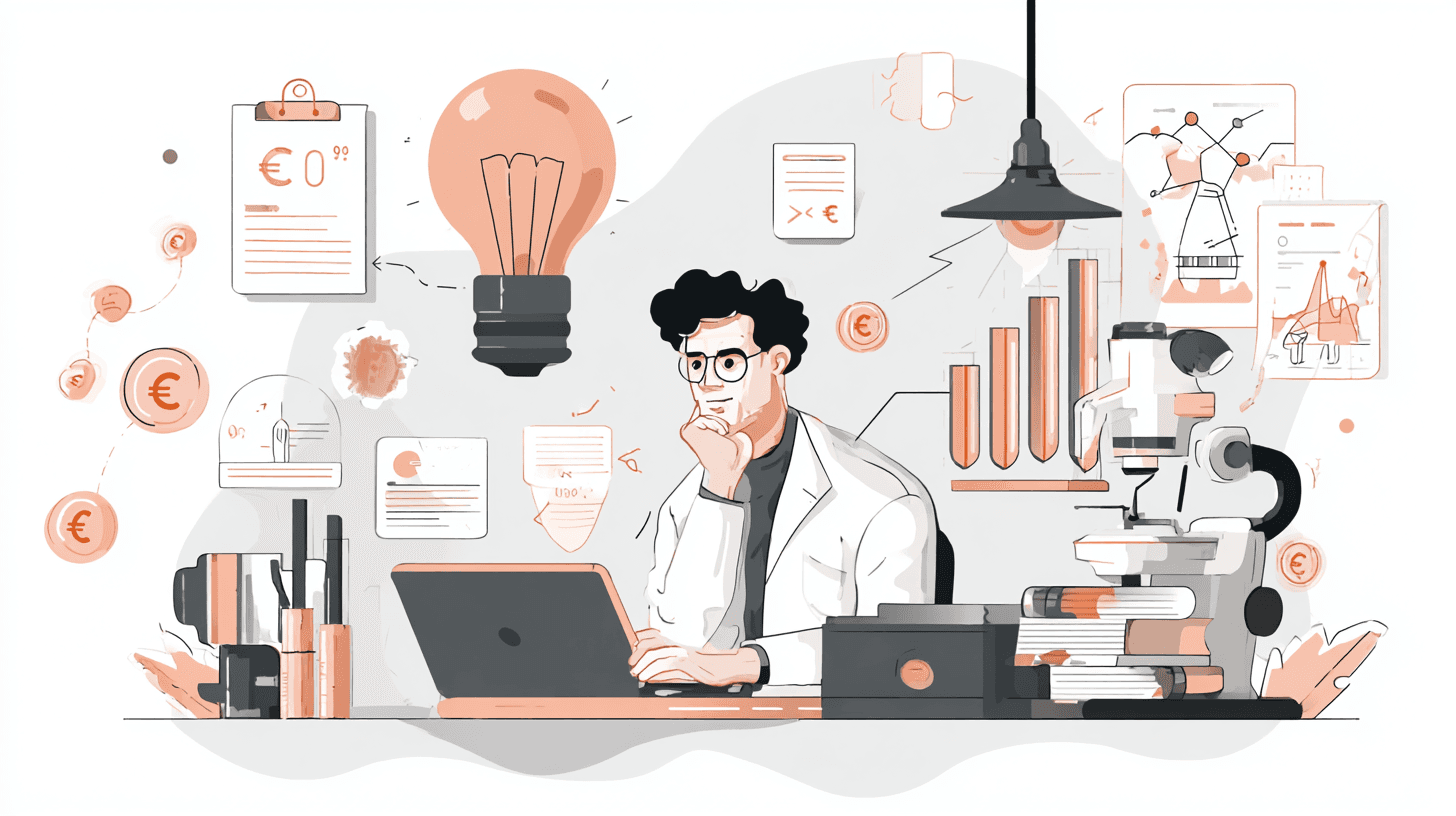
An analysis of the role of spin-offs highlights that while the Netherlands excels globally in research, it struggles to convert that knowledge into economic value. Spin-offs serve as the bridge between the lab and the market but face complex regulations, financing challenges, and long development timelines. To make innovation truly pay off, valorization processes need to become simpler and faster. Read more here.
4. The future of education is digital and playful
A report from a major education innovation event shows how AI, VR, and digital tools are transforming education. Many new applications focus on supporting teachers and fostering student creativity. Notably, practical, ready-to-use solutions are adopted quickly, while more complex innovations take longer to implement. The article illustrates that technological innovation has an impact only when implementation is feasible and usable. Read more here.
5. AI and money: trust is growing, but caution remains
An analysis of AI in finance shows experts are divided on whether we should fully trust algorithms with our money. AI can make investing more efficient, spread risk better, and react faster to market fluctuations, but transparency, accountability, and oversight remain key concerns. The consensus: AI will profoundly change the financial sector, but for now mainly as a support tool for human decision-making. Fully autonomous asset management still requires clear regulation and robust control systems. Read more here.
6. The European pilot chip production line aims to reduce dependency
The planned semiconductor pilot production line in Europe is an important step toward technological autonomy. By organizing production and process development closer to home, Europe hopes to reduce dependence on Asian and American chip supply chains. The initiative shows that strategic investments in semiconductors are not only economically motivated but also geopolitical: access to chips increasingly determines the strength of industry, defense, and digital infrastructure. Read more here.

© Pexels
7. Geothermal energy could replace a large share of fossil power
New analyses show that geothermal energy could replace up to 42% of fossil-fuel electricity generation in Europe. This gives the relatively quiet energy source a more prominent role in the energy transition. The main challenges lie in investment and infrastructure: deep geothermal projects are capital-intensive and require long development timelines. But if scaling succeeds, geothermal energy could provide a stable, continuous power source that structurally reduces dependence on fossil fuels. Read more here.
Want to explore all other articles? You can find them here.
A Daily Podcast
A new episode of our daily podcast is ready for you every weekday at 6:30 AM. In it, our AI colleagues Oliver and Shelby discuss the two most interesting stories of the day. That makes IO+ Daily the perfect way to start your morning with optimistic news from the world of innovation and technology. See you tomorrow.
Our Other Newsletters
Thank you for reading this newsletter. But there’s more. Subscribing is easy — via the options on the IO+ homepage or simply by clicking one of the newsletters below:
- IO+ Daily (1,200 subscribers)
- Mauro’s Green Corner (monthly, 13,800 subscribers)
- Elcke’s Saturday Data Dive (monthly, 20,550 subscribers)
- Elcke en Mauro’s BIO+ Bites (monthly, 29,300 subscribers)
- Bart’s Saturday CHIPS (monthly, 16,300 subscribers)
Enjoy your Sunday — and don’t forget: a new episode of IO+ Daily will be waiting for you tomorrow morning at 6:30. Be prepared before you hop on your bike! 🚲