
Jeff Bezos invests in Dutch AI startup General Intuition
Dutch founder Pim de Witte raises $320M for his AI startup General Intuition, receiving backing from Jeff Bezos.
Published on June 25, 2026
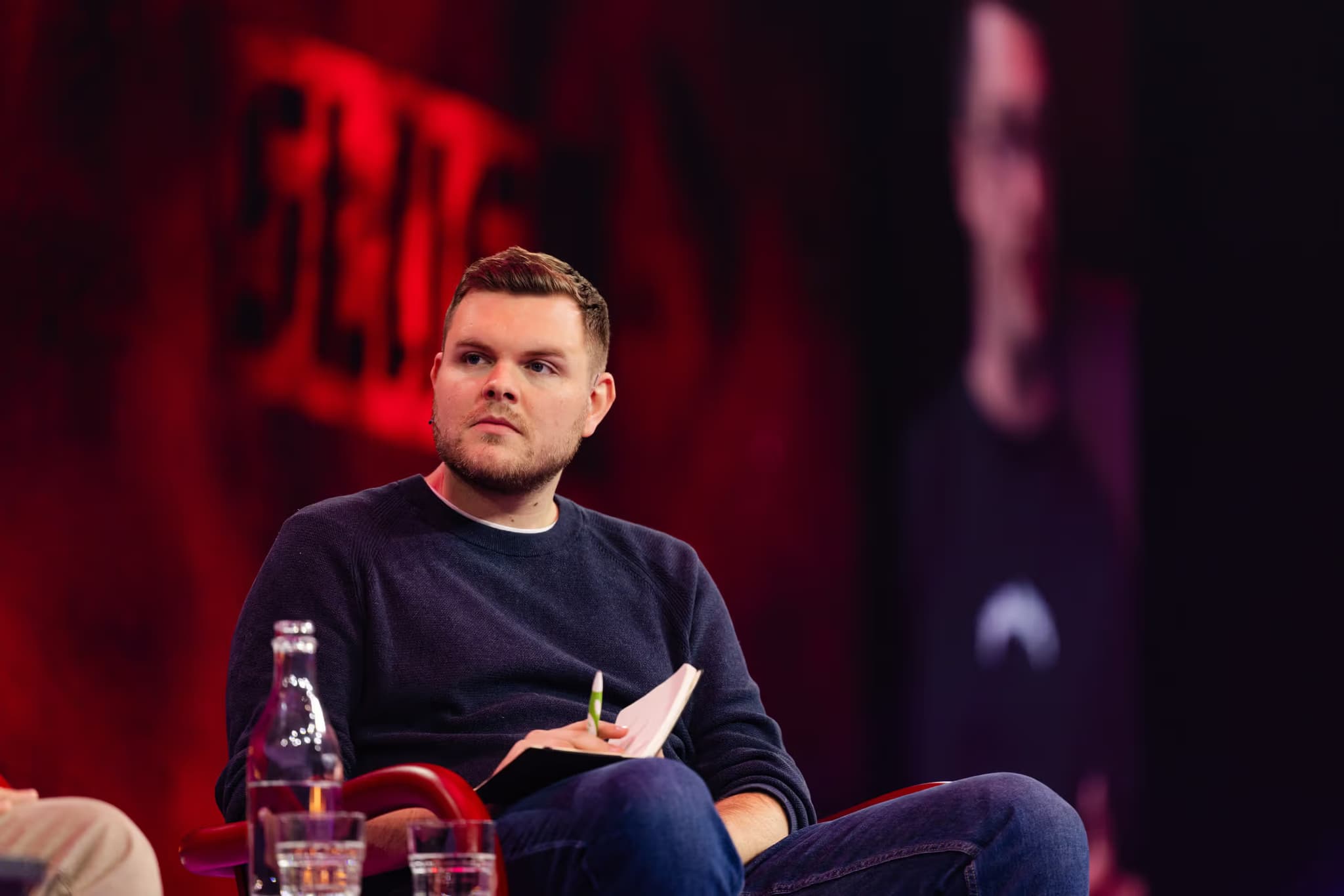
Pim de Witte - © General Intuition

Team IO+ selects and features the most important news stories on innovation and technology, carefully curated by our editors.
Dutch entrepreneur Pim de Witte has secured a landmark funding round for his AI startup, General Intuition, raising $320 million at a $2.3 billion valuation. Among the investors are Amazon founder Jeff Bezos, former Google CEO Eric Schmidt, and a group of Dutch AI investors including Jelle Prins (Cradle), Duco van Lanschot (Duna), and Michiel Bakker (DeepMind), alongside existing backers Khosla Ventures and General Catalyst.
Although the office and founder are based in New York, the company is legally registered in the Netherlands — a deliberate choice. "They can theoretically stop us in America, but they cannot completely stop the model," De Witte told NRC. "The data is also in the Netherlands."
.png&w=2048&q=75)
Giving AI a way to learn physics
General Intuition was co-founded with De Witte's former kindergarten classmate, Iggy Harmsen, and is part of the same parent company as Medal, a platform where gamers share gameplay clips. The company trains its AI models on around 2 billion video clips per year from 10 million active gamers playing titles such as Fortnite. The crucial difference from other gaming video sources like YouTube or Twitch, the company argues, is that these clips are interactive and captured from a first-person perspective, giving AI data to learn how actions, space, time, and physics interact.
The model works on two levels: world models predict how an environment changes based on actions, while action models do the reverse — generating the optimal action based on what the AI perceives. "That is essentially what people continuously do: observe the environment, weigh goals, anticipate the future and decide what to do, in real time," says De Witte.
Bringing AI to the physical world
The promise is considerable. If world models break through the way language models did, the consequences for the labour market could be significant — not just in white-collar services, but potentially enabling AI to perform physical work such as truck driving, plumbing, or care work. De Witte is bullish on the timeline: "We think this will break through this year or next, while most people are thinking more like 2029."
The company does not yet have a publicly available product, though one is expected by the end of summer — likely a business-facing service. In an interview last year, De Witte estimated annual revenues of around $40 million in 2025, mainly from companies paying for early access to the model. OpenAI had reportedly offered $500 million to acquire Medal last year; the current valuation is now more than four times that figure.