
Lightyear integrates solar cells into Volkswagen concept car
Lightyear is integrating solar cells into Volkswagen’s electric concept car.
Published on September 22, 2026
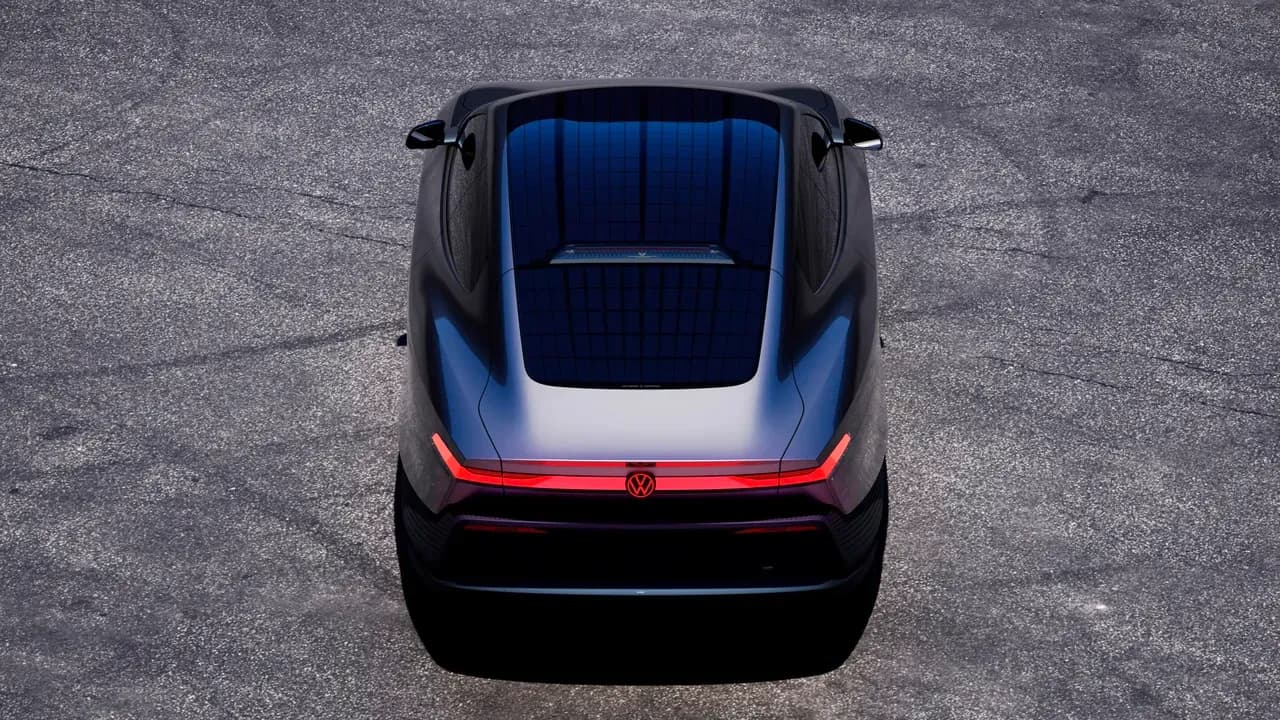
©lightyear
The Dutch solar technology developer Lightyear has worked with Volkswagen to integrate solar cells into the Mission Efficiency, an electric concept car developed by Volkswagen to further reduce energy consumption.
Solar cells as part of the design
The project goes beyond placing solar panels on the roof of an existing car. Lightyear developed a 370-watt photovoltaic system that was integrated into the vehicle’s body. The solar cells are incorporated into the glass roof and rear window. This required consideration of factors including the position and orientation of the cells, as well as requirements for transparency, appearance and the shape of the glass.
The vehicle-integrated photovoltaic (VIPV) technology makes the car’s glass surfaces part of its energy system. The semi-transparent panels allow natural light into the cabin while generating solar power. The electricity generated is supplied to the vehicle’s electrical system through Lightyear’s power electronics.
This means the solar installation was incorporated into the vehicle’s development from the design stage, rather than being added to an existing vehicle at a later stage.
Volkswagen tests the limits of efficiency
Mission Efficiency was developed to demonstrate how energy-efficient an electric car can be. Volkswagen reports that the vehicle consumed an average of 6.89 kWh per 100 kilometres during a 1,278-kilometre journey from Wolfsburg to Vienna, excluding charging losses. The journey required just one charging stop.
The solar cells provide an additional energy source within the project. Rather than focusing solely on battery capacity and charging infrastructure, the project also explores how much energy the vehicle itself can generate while driving and when stationary.
Striving for lower energy consumption
For Lightyear, the project serves as a practical example of how solar panels can be incorporated into the design and engineering of an electric vehicle from the outset. The Dutch company has been working on VIPV technology for several years, integrating solar cells into vehicle components rather than mounting them as separate panels on a surface.
The collaboration with Volkswagen demonstrates how solar energy can be integrated into the design and energy system of an electric vehicle, with the aim of reducing its overall energy consumption.