
New plastic dissolves in seawater — and may truly break down
A breakthrough at Wageningen University utilizes seawater-soluble saloplastics to combat global marine plastic pollution.
Published on July 2, 2026
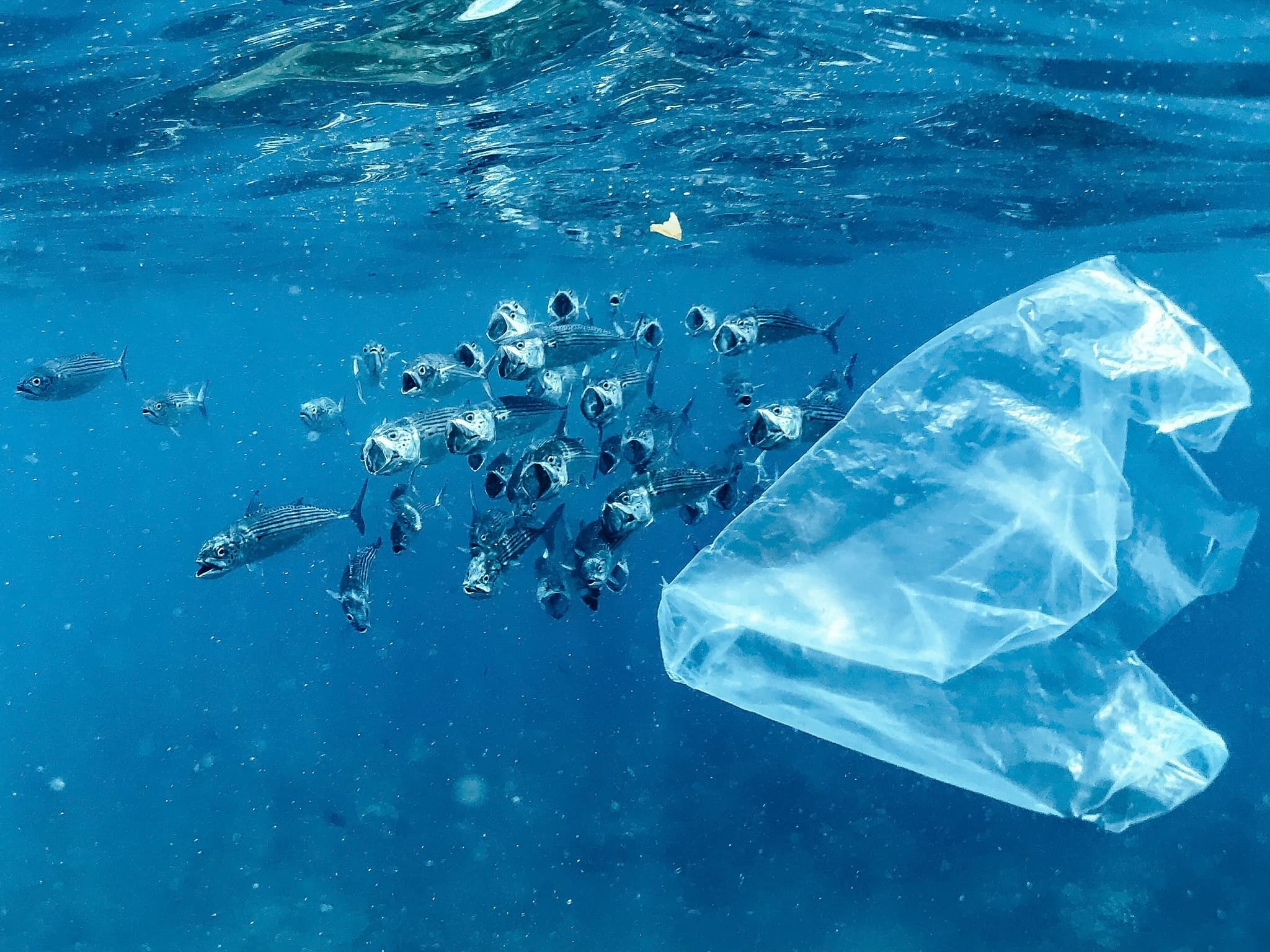
© Naja Bertolt Jensen - Unsplash

Team IO+ selects and features the most important news stories on innovation and technology, carefully curated by our editors.
A Wageningen University PhD student has taken a promising step toward solving one of the ocean's biggest pollution problems: plastic that simply won't go away.
Julian Engelhardt has improved a special type of plastic called "saloplastic" — a material designed to dissolve when it touches salt water. His new twist adds a chemical feature that could also help the plastic break down completely once it's gone.
.png&w=2048&q=75)
Regular plastic is made from long chains of carbon atoms linked tightly together. This structure is exactly what makes plastic so useful — strong, cheap, durable — and exactly what makes it such a nightmare in nature. Around 11 million tonnes of plastic waste enter the oceans every year, and because of that tough carbon backbone, it can take decades or even centuries to disappear.
How plastic can dissolve in seawater
Saloplastics work differently. Their molecular structure is sensitive to salt, so when the plastic ends up in seawater, it comes apart into individual polymer strands. Engelhardt demonstrated this himself in a simple but striking test: he dropped a piece of the plastic into a beaker of plain water and another piece into a beaker of salt water. After ten minutes, the piece in salt water was already dissolving. After thirty minutes, it had vanished completely, while the piece in plain water hadn't changed at all.
Adding oxygen for extra breakdown power
Dissolving is only half the battle. The leftover polymer fragments still need to break down naturally, or they just become invisible microplastic pollution. This is where Engelhardt's real innovation comes in. By swapping in different chemical building blocks, he inserted oxygen atoms into the plastic's backbone, creating what chemists call "ester groups."
Think of ester groups as built-in weak points. Regular plastic's carbon backbone is like a chain of tightly welded links that water and microbes can barely touch. Ester groups act more like snap-fasteners: water molecules and bacteria can latch onto them and pull the chain apart. It's the same chemical trick that makes PLA — a well-known biodegradable plastic — break down naturally.
Engelhardt confirmed that these ester groups are indeed present in his material, making biodegradation likely. However, he's careful not to overclaim: "We still need to prove it," he says. Dissolving in seawater has been clearly shown; full biodegradation hasn't been tested yet.
Not for shopping bags — yet
Because the material is moisture-sensitive, it isn't suited for everyday packaging. Instead, Engelhardt sees potential in areas such as agricultural films or coral reef restoration, where corals could be embedded in the plastic to provide structural support that gradually disappears, leaving only the coral behind.
The biggest hurdle now is cost. Making plastic responsive to salt requires additional chemical processing steps, pitting it against a petrochemical industry that mass-produces conventional plastic cheaply. Still, Engelhardt sees real value in plastics engineered to know exactly when their job is done — and disappear afterward.