
Norwegian rare earths: Europe's hope against Chinese dominance
The Norwegian Fen deposit proves 81% larger. Crucial for Europe’s independence from China in the race for supermagnets.
Published on March 4, 2026
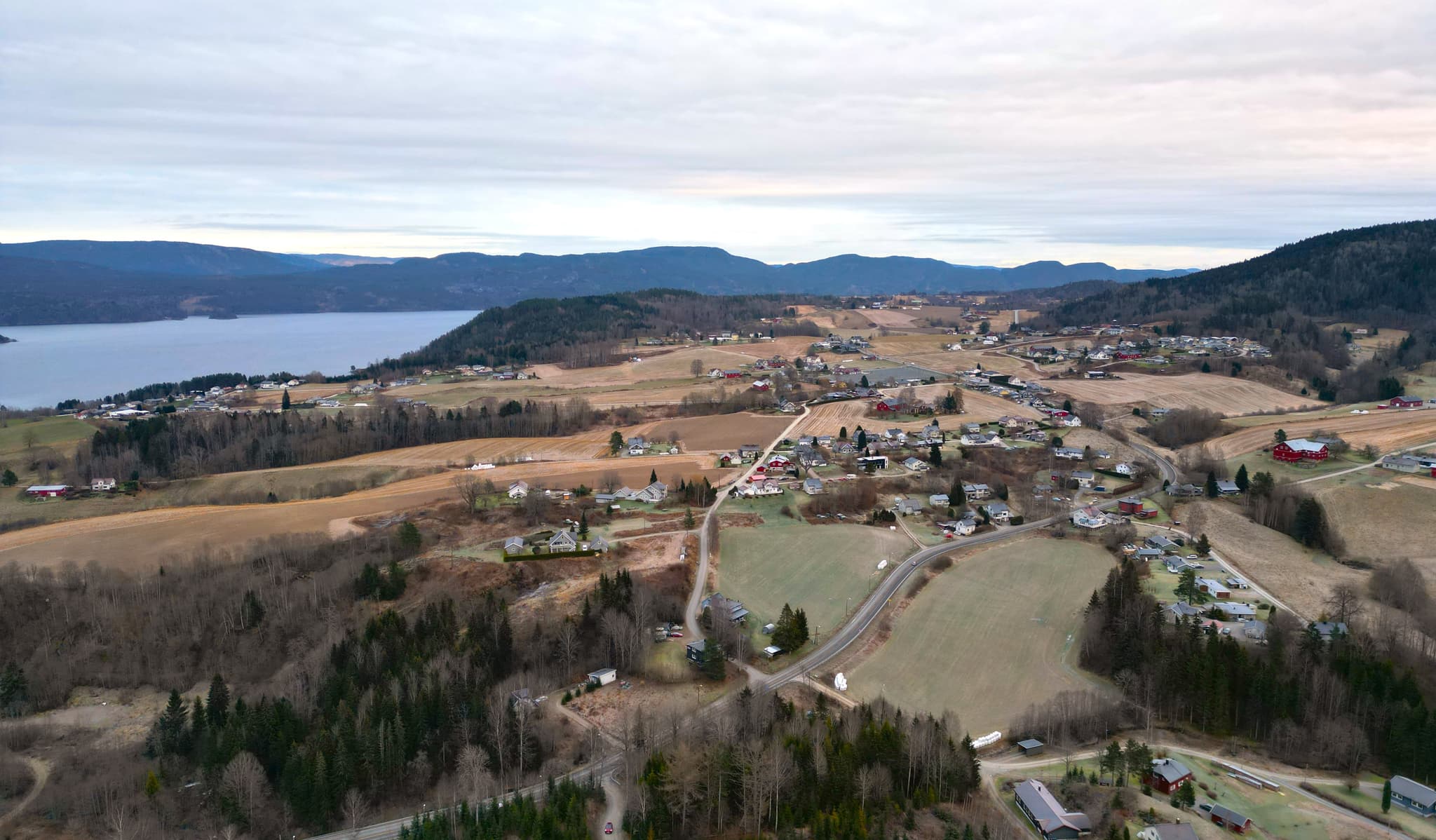
The Fen site - © Rare Earths Norway

Team IO+ selects and features the most important news stories on innovation and technology, carefully curated by our editors.
The news from Norway is music to the ears of European policymakers. Rare Earths Norway reports that the mineral resources in the Fen Complex are much larger than previously thought. Over two years ago, we wrote about the potential of this sleepy village near Ulefoss. At the time, it seemed a promising project. Now, with new figures on the table, its status has shifted from “promise” to “strategic necessity.” Europe’s dependence on China for critical raw materials is a vulnerability. This Norwegian discovery could significantly reduce that weakness.
A giant leap in reserves
The numbers speak for themselves. Rare Earths Norway (REN) has drastically revised its estimate of the resources in the Fen area. While the 2024 estimate stood at 8.8 million tons, the figure now reaches 15.9 million tons. That’s an 81% increase. This cements Norway’s position as the manager of the largest rare earth deposit on the European mainland. For comparison: the much-discussed Per Geijer deposit in Sweden’s Kiruna is estimated at just 2.2 million tons. The scale of the Norwegian find is of a different order.
These are not just any rocks. About 19% of these oxides consist of neodymium and praseodymium (NdPr), the specific metals essential for producing powerful permanent magnets. Without these magnets, wind turbines would stop, and electric cars wouldn’t move an inch.
The geopolitical imperative
Why is this news so significant? The answer lies in the stark trade figures. Europe is almost entirely dependent on imports for its rare earth metals. In 2024, 95% of these materials came from countries like China, Malaysia, and Russia. China not only dominates mining but also controls nearly 90% of global processing capacity. This gives Beijing a powerful lever in trade disputes.
The European Union has recognized this risk with the Critical Raw Materials Act (CRMA). The goal is clear: by 2030, 10% of Europe’s annual needs must be mined within its borders. The Fen deposit is crucial to achieving this. REN aims to produce 800 tons of NdPr annually by 2032. While this may seem like a drop in the ocean, it would cover about 5% of the EU’s total demand. For a single mine, this is a significant contribution to strategic autonomy.
The long road to production
A large deposit in the ground does not mean magnets in the factory. The question on everyone’s mind: when will production begin? Reality is stubborn. Mining projects typically take ten to fifteen years to develop. REN is targeting the start of production by the end of 2031, an ambitious goal. The company secured an extraction permit in September 2023, which has now been extended to 2034. But this is only the first step. The crucial operational permit is still pending.
A massive capital injection is also required. Developing the mine will cost around 10 billion Norwegian kroner, approximately €870 million. The final investment decision is not expected until around 2030. Until then, the company must attract investors and navigate a forest of regulations. Europe is in a hurry, but mining cannot be rushed.
The invisible mine
In Europe, mining is often controversial due to its environmental impact. REN aims to address this with an innovative concept: the “Invisible Mine”. The plan is to minimize surface impact. Everything happens underground. Electric and autonomous vehicles do the heavy lifting. Waste material is immediately returned to the tunnels to fill the voids. This should drastically reduce the ecological footprint.
The company collaborates with renowned partners like Austria’s Montanuniversität Leoben and plans a pilot plant in Nome to test processing techniques. This sustainable profile is not a marketing gimmick but a hard requirement. Without local support and strict environmental compliance, no mine will get off the ground in Norway.
More than just digging
Mining the ore is only part of the solution. The raw materials must be processed into usable oxides and, ultimately, magnets. This is a major challenge for Europe, as most processing capacity has moved to Asia. Fortunately, Fen is not alone. Efforts are underway to build a complete European value chain. Projects like SecREEts and SUPREEMO, funded by the EU, focus on establishing this processing industry. Partners such as Yara and SINTEF play a key role. The EU’s ResourceEU plan also aims to restrict the export of valuable scrap, ensuring recycled materials stay within Europe.
The goal is a closed loop: from Norwegian rock to an electric motor in Europe. The expansion of the Fen reserves is the starting shot, but the race is only won when the entire chain is operational.