
Small chip, big mission: TUSK IC wins ESA backing
Antwerp-based TUSK IC just landed an ESA contract to scale up its energy-efficient satellite antenna chips.
Published on July 9, 2026
© TUSK IC

Team IO+ selects and features the most important news stories on innovation and technology, carefully curated by our editors.
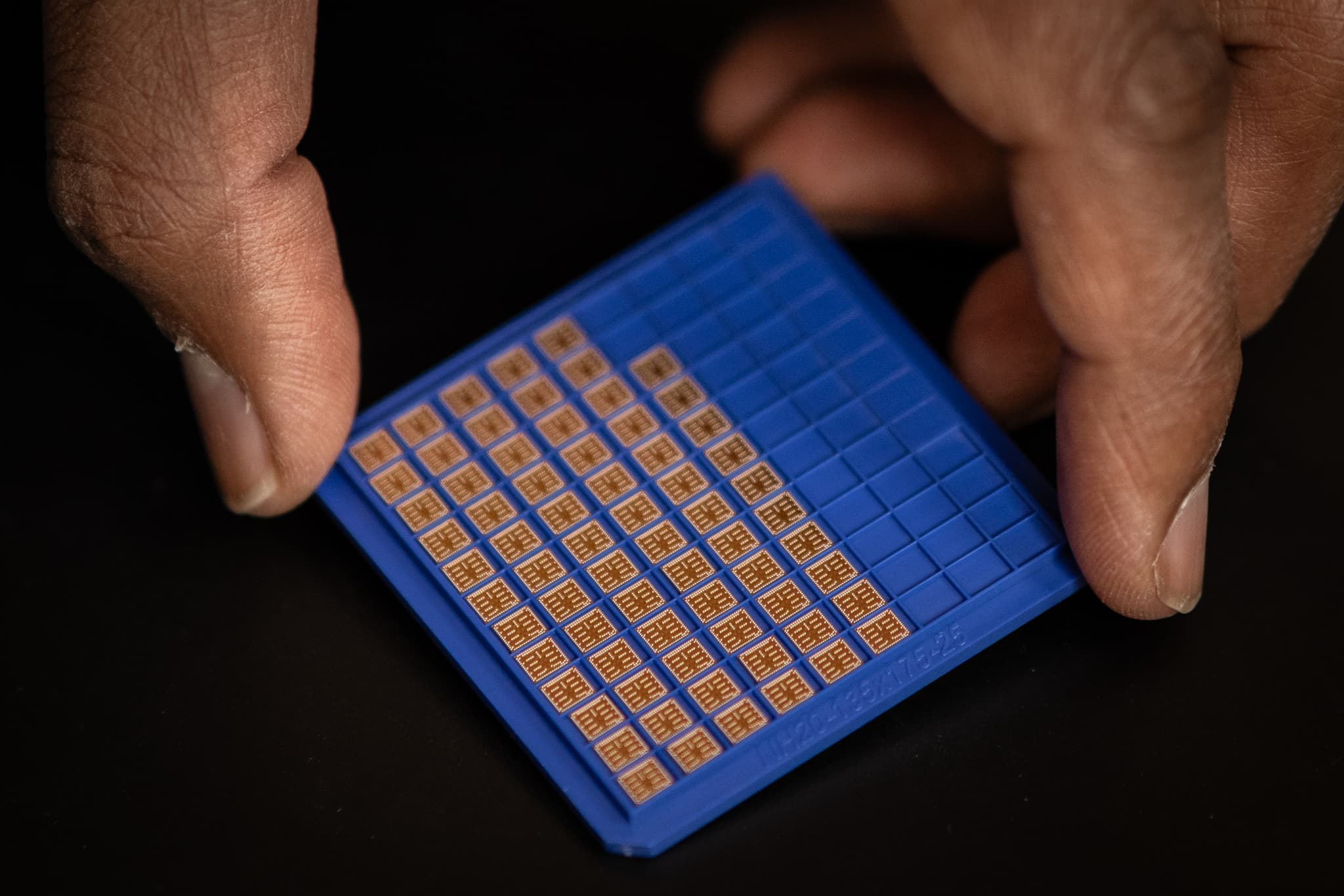
TUSK IC, a chip company based in Antwerp, has won a new contract from the European Space Agency (ESA). Belgium's science agency, BELSPO, is also supporting the deal. The contract will help TUSK IC turn a technology it built in an earlier ESA project, called Nebula, into a real product ready to sell.
TUSK IC makes small chips and modules — called ConnectKa and ConnecTile™ — that help satellite dishes send and receive signals. This new contract will fund the final steps needed to get those chips ready for the market: testing them, making sure they meet quality standards, producing a small batch first, and then setting up the equipment needed to manufacture them in large numbers. The company expects to begin small-batch production in 2027, with full-scale production in 2028. Some customers will be able to try early sample chips later this year.
.png&w=2048&q=75)
Cheaper chips
TUSK IC's chips go inside flat satellite antennas — the flat panels that are starting to replace the big round satellite dishes we're used to seeing. The company says its chips use about 30% less power than similar products, and they're built using common, easy-to-produce computer-chip technology (CMOS), which keeps costs down. The chips can be used for things like home internet as well as for government and military communication.
This deal comes at a good time for the industry. More and more companies are launching satellites into low orbit around Earth to provide internet — companies like Amazon, Telesat, Eutelsat OneWeb, and SES are all building these satellite networks. As they grow, more antennas are needed, and TUSK IC hopes its chips will be a popular choice.
"This new phase marks an important step in TUSK IC's journey from innovation to commercialization," said Dr. Kathleen Philips, the company's CEO. She said the goal is to help Europe build up its own strong, independent supply of satellite technology, and she thanked ESA and BELSPO for their support.
Constantin Siriteanu, an engineer at ESA, said the agency is backing TUSK IC because its low-power, easy-to-manufacture chips can help Europe become more competitive and self-sufficient in satellite communications.
TUSK IC was started in 2018 and grew out of research done at KU Leuven, a university in Belgium. The company designs chips for satellite communication, working with both everyday businesses and government or defense clients.