
Valorizing the whole cocoa bean: Greencovery knows how
Startup Greencovery has developed a process to valorize food side streams, extracting valuable food ingredients from them.
Published on October 9, 2026
© Greencovery

Mauro swapped Sardinia for Eindhoven and has been an IO+ editor for 3 years. As a GREEN+ expert, he covers the energy transition with data-driven stories.
When chocolate beans are processed to make the chocolate you are really fond of, a considerable share of the material is discarded. Shells and other side streams are usually exported for low-value uses or simply thrown away. Wageningen-based Greencovery sees something else in them: fiber, extract and soluble fiber that food manufacturers can put straight back into their products.
After eight years of development, the startup has reached what CEO and founder Carlos Cabrera calls the moment every entrepreneur hears about. "Over time, we reached a point where everything clicked," he says. "There's market demand for what we produce, and we have a strong partner backing us to make it a reality."
In September, the company announced a €1 million raise from ROM InWest, North Holland's regional development agency, existing shareholder Brightlands Venture Partners and a private investor. It is now closing a further €3 million round.
.png&w=2048&q=75)
Investment of the month
Each month, we interview a startup or company that has recently received an investment.
A gentle way to separate food
At Greencovery's core is a mild separation technology that pulls functional ingredients out of food side streams. It runs under gentle process conditions and uses less energy and water than other separation methods. The resulting ingredients keep their functionality, taste and microbial stability.
The company has tested its approach on coffee, oil press cakes, nuts and even Parmesan rinds. Moving to a new stream is mostly a matter of fine-tuning. "The adaptations we make are really small," Cabrera says. "It's not new equipment or added complexity."
That doesn't mean every leftover qualifies. Greencovery looks for two things: protein that keeps its functionality once extracted, or valuable flavors and antioxidants. When a byproduct offers one of those, the company knows it is in a strong position.
Why cocoa
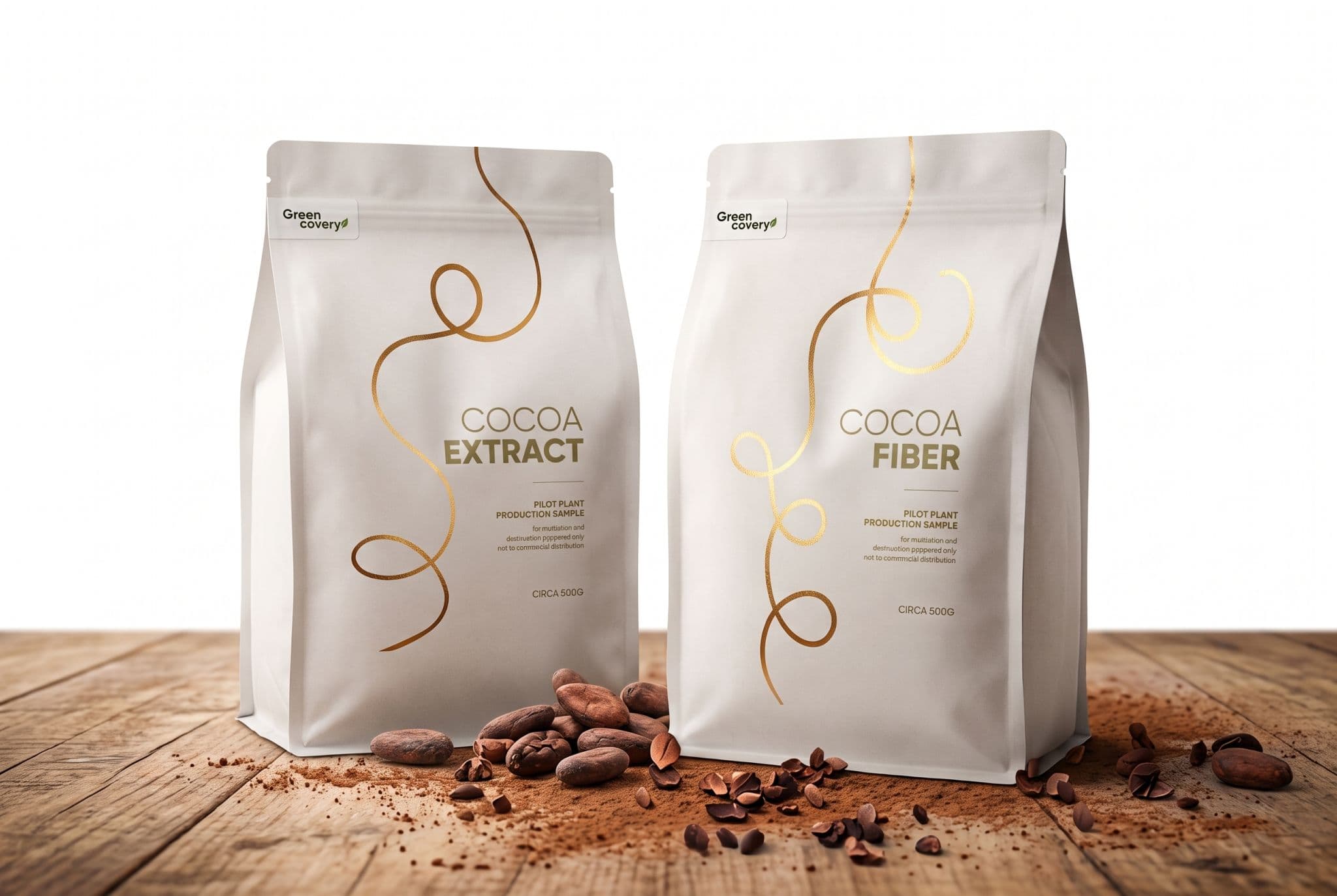
Cocoa ticks those boxes, and after three years of work it has become the company's main focus. "We valorize the whole bean," Cabrera says. In a single process, Greencovery splits the side streams into fractions: a cocoa fiber, a cocoa extract and a cocoa soluble fiber. “In cocoa beans processing, 10 to 15% of the material ends up as a byproduct,” he adds.
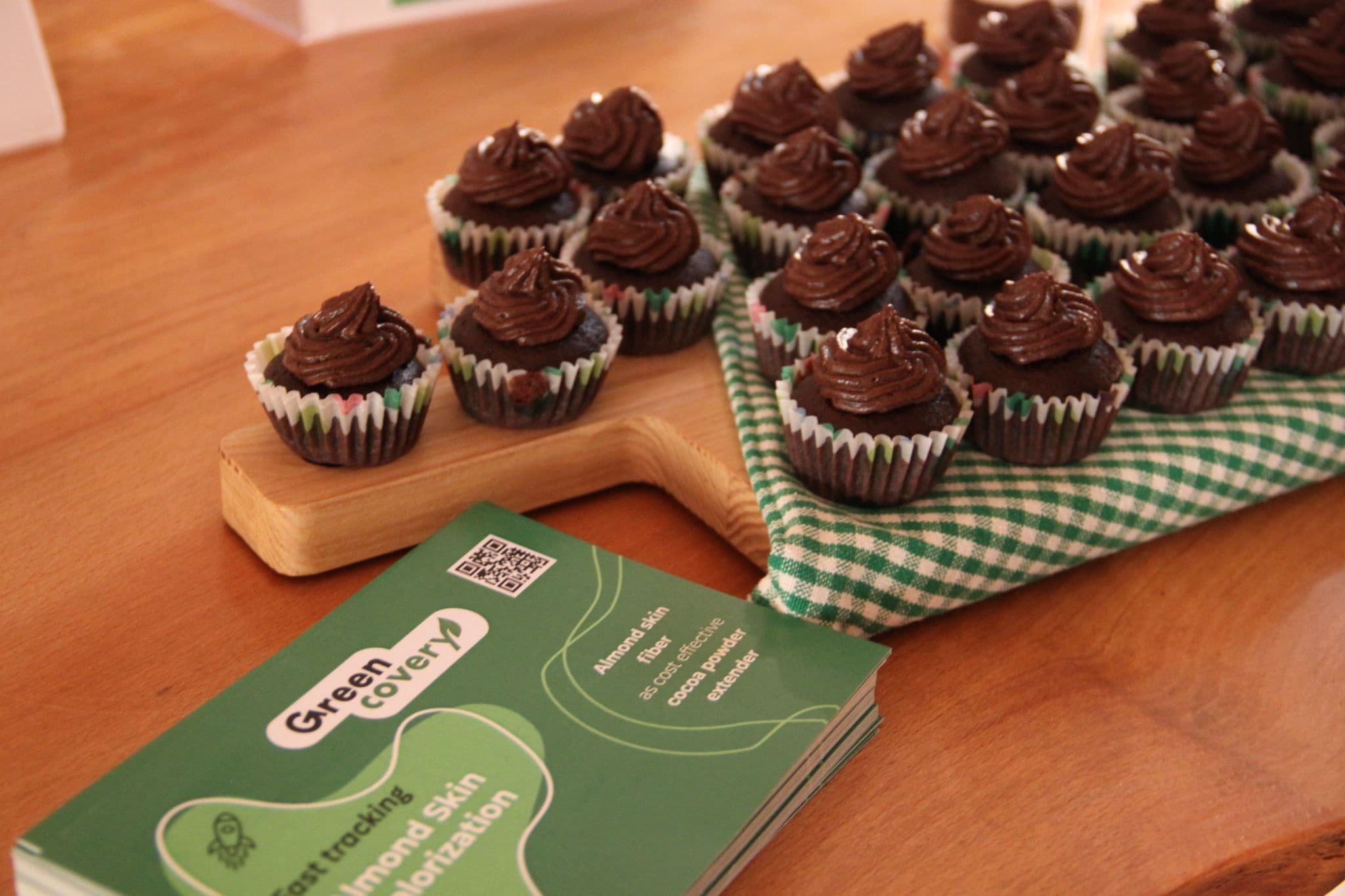
The obtained cocoa fiber can replace, in part, cocoa powder in a cost-effective way in breads, bakery products and even ice cream. The extract acts as a flavor building block and also prevents oxidation — that causes rancidity and decoloring in food products. For manufacturers, the ingredients offer a buffer against volatile cocoa prices while supporting clean labels, natural flavors and lower sugar.
Greencovery targets large bakeries and food producers. After validating its first commercial batches with key clients, the startup is scaling with an industrial partner toward a capacity of 1,000 tons, a production ramp-up of some 2,000 times. Traction from this phase will dictate when Greeencovery builds a larger facility of its own.
Production starts close to where the big volumes are: Zaandam, a food processing hub for four centuries and still central to the global cocoa trade. According to Greeencovery, North Holland alone generates more than 350,000 tons of food-grade side streams a year.
© Greencovery
Working with industry giants
Since founding the company, Cabrera and his team have worked with on several projects with large food companies, learning a lot about their dynamics. In his view, sustainability excites almost everyone, not least because side streams can generate new value. "Not everyone wants to innovate, but everyone wants to be part of the ride," he says.
For a large manufacturer, stepping beyond day-to-day operations is hard. Greencovery positioned itself as the partner that makes it work. It brings clients in early, so they see how things develop, and takes on work their teams, focused on stable production, would need longer to do themselves.
Securing the right commitment form the beginning is the main learning the entrepreneur shares. Priorities inside large companies shift, and in some projects acquisitions completely reset a year of joint work. "Securing their long-term commitment early on is essential," Cabrera says.
Those delays hit a small company hard. He recalls a partner situation that forced Greencovery to go back to the very basics and rebuild trust. "For big companies, six months is nothing," he says. "For a startup, it's an eternity."
From Zaandam to the world
For now, the priorities are clear: ramp up production, win commercial traction and bring the cocoa ingredients to market in the Netherlands first. The €3 million round, with commitments already secured from existing and new investors, will fund full-scale commercial manufacturing.
But cocoa is a global crop, and Cabrera sees the Dutch rollout as the proof point. Once the model has been demonstrated at scale here, Greencovery plans to take it to other locations and to the many other side streams still waiting for a second life.