
What’s in your cart? FLTRD scores ultra-processed food
Startup FLTRD offers shoppers an app that rates how ultra-processed supermarket products are and suggests better alternatives.
Published on November 24, 2026
© FLTRD

Mauro swapped Sardinia for Eindhoven and has been an IO+ editor for 3 years. As a GREEN+ expert, he covers the energy transition with data-driven stories.
Anke Kuik had no particular interest in nutrition until she had children. “Once I had to feed my kids, I started asking what was actually healthy for them,” she says. The answers surprised her: more than half of Dutch people live with a chronic disease, and much of it could be prevented through diet. So the former marketing and privacy entrepreneur founded FLTRD.
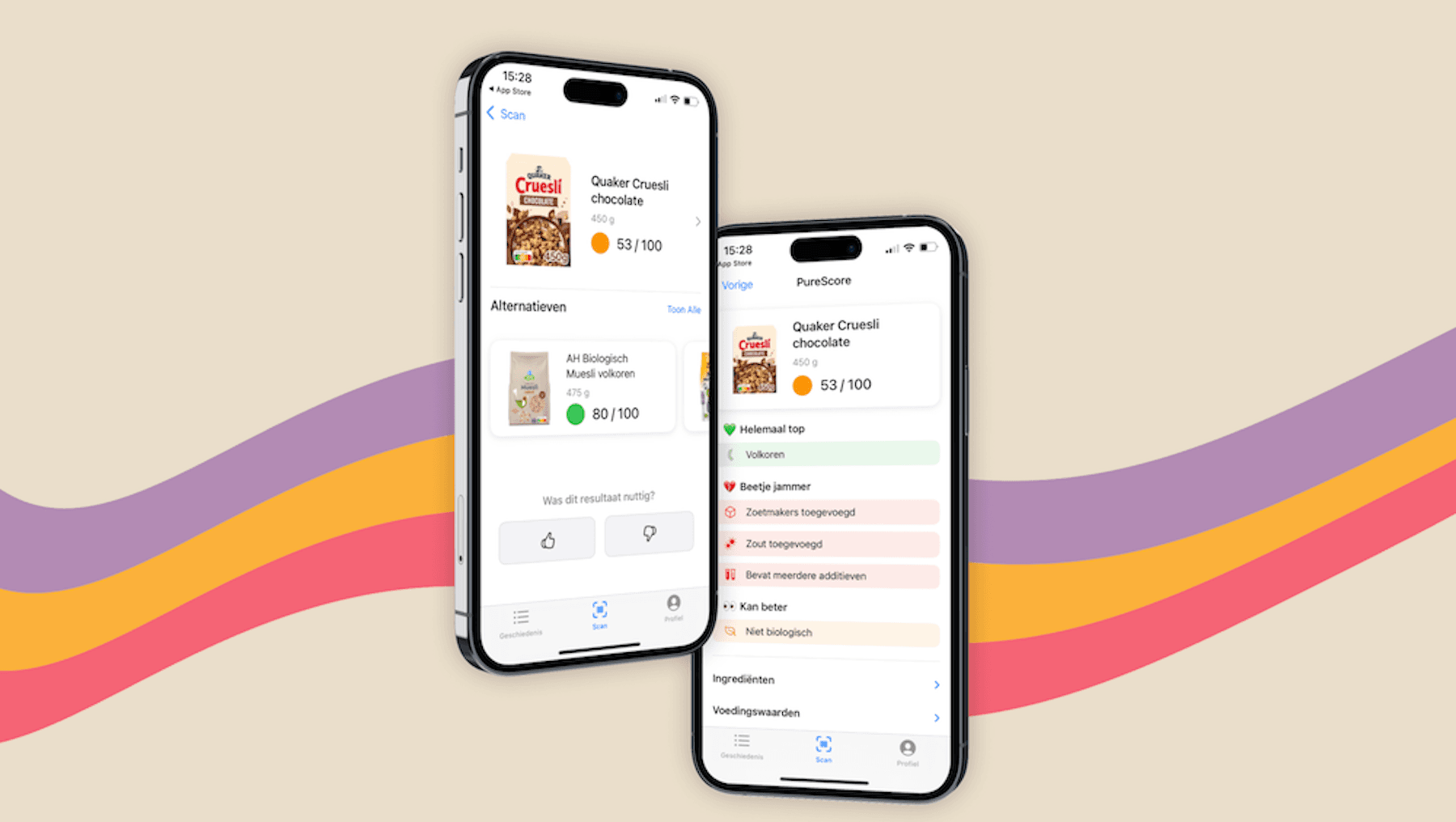
The startup has developed an app that lets shoppers check how ultra-processed supermarket products are. By scanning a product’s barcode, users get a score for that product, along with less-processed alternatives.
Ultra-processed foods (UPFs) are factory-made products containing ingredients you wouldn’t use in a home kitchen, such as flavorings, colorings, and emulsifiers. Packaged snacks, soft drinks, and sweetened cereals are typical examples. High consumption of UPFs has been linked to a greater risk of heart disease, cancer, and diabetes.
Headquartered in Amsterdam, FLTRD recently raised over €500,000, which it plans to use to fund its international expansion. The app’s database currently covers products from six Dutch supermarket chains.

Investment of the month
Each month, we interview a startup or company that has recently received an investment.
The PureScore
Dietary advice is highly contested, with different schools of thought on what is healthy and what is not. “But everyone agrees it’s good to eat fewer UPFs, and the topic is getting more and more attention,” says Kuik.
So FLTRD came up with its own way to assess food: the PureScore. It is partly inspired by the NOVA classification, developed by the same researcher who coined the term “ultra-processed food.” The PureScore rests on three mechanisms common to ultra-processed foods:
- Nutrient removal, such as refining grains, which strips out fiber;
- Harmful additions, such as salt, sugar, and certain additives;
- Engineered cravings, with foods formulated to make you want more.
Every ingredient is assessed against these three mechanisms. “Whole nuts get no minus points because they are a whole ingredient; white flour does, because the fiber has been removed,” Kuik explains. “We also check whether a product is organic and look at the processing techniques, combining everything into a score from 0 to 100.”
Ingredients account for 75% of the score, processing for 20%, and organic certification for the remaining 5%. “Ingredients tell you a lot about how processed a product is,” she says. Processing techniques make a significant difference, too. “Oranges and orange juice have the same ingredients, yet juice is more processed: the fiber is removed, and you drink a lot of it, so you take in far more sugar.”
What is the NOVA classification?
Not another food score
Kuik first considered opening a supermarket that sold only healthy food, but soon judged a new chain too ambitious. An app was the more realistic route. The first version, built by an outside developer, tried to do too much at once: recipes, product selections, shopping lists. So FLTRD brought in technical co-founder Laurens Janssen, who rebuilt the app around a single task: scan a product, see how processed it is, and find a better option.
The PureScore also sets itself apart from the Nutri-Score, the front-of-pack label already familiar to European shoppers. Because the Nutri-Score compares products within the same category, its results can confuse consumers. “A bag of crisps can get a healthy B, while salmon, full of good fats, gets an unhealthy D,” Kuik says. The Nutri-Score also doesn’t consider processing at all. Kuik sees the two as complementary: users can check both, though some now rely on the PureScore alone.
At the same time, she stresses that the app is no replacement for expert advice. She recommends seeing a food coach or dietitian; FLTRD’s role is to help people make concrete choices in the supermarket aisles.
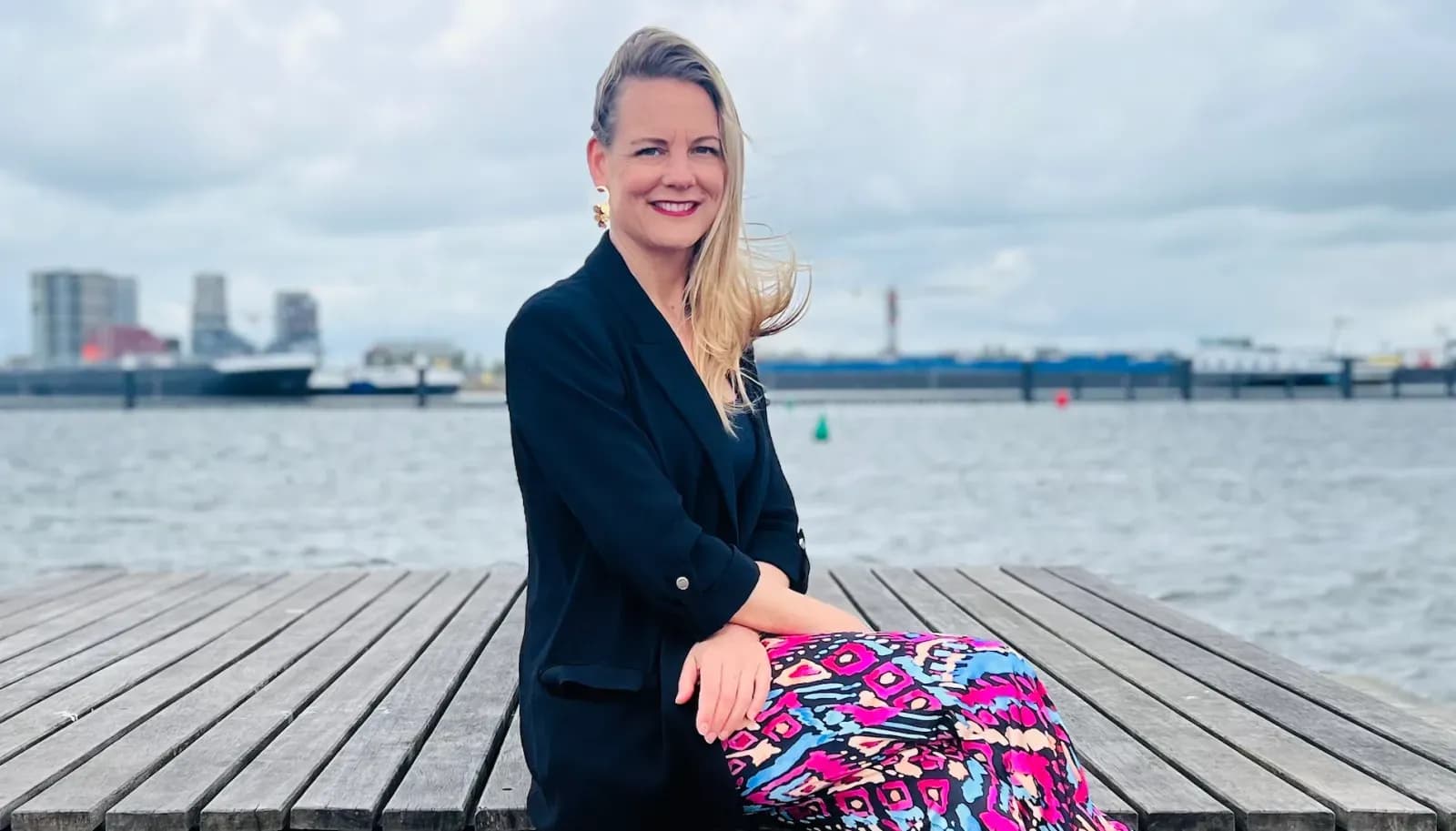
Anke Kuik - © FLTRD
Reshaping the industry
With around 35,000 users, FLTRD hopes to reach many more. The scanning feature is free and will stay that way, while a premium version adds recipes, search, and personal filters.
The bigger opportunity likely lies within the retail industry itself. The startup is launching a model to license the PureScore to supermarkets and food producers. Rather than resisting, retailers are knocking on the door. “Even the bigger food players see that the food world is shifting,” Kuik says, “so they’re keen to talk to us.”
Awareness
Kuik is particularly proud of closing the funding round. “You could come up with 20,000 reasons why this won’t work,” she says. “What matters most is believing it’s an important topic and wanting to make an impact.”
By the end of the year, FLTRD plans to enter the Belgian market, with more European countries to follow next year. Beyond downloads and partnerships, the goal is to make as many people as possible aware of what ends up in their shopping carts.
“If we know healthy food can prevent so much disease, why is it still so easy to make unhealthy choices? Why are supermarkets full of ultra-processed foods?” she asks. A mobile app may be just the place to start raising awareness and changing habits.