
White hydrogen in France: boosting Europe's energy independence
Deep beneath the French soil lies an energy treasure: white hydrogen.
Published on March 25, 2026
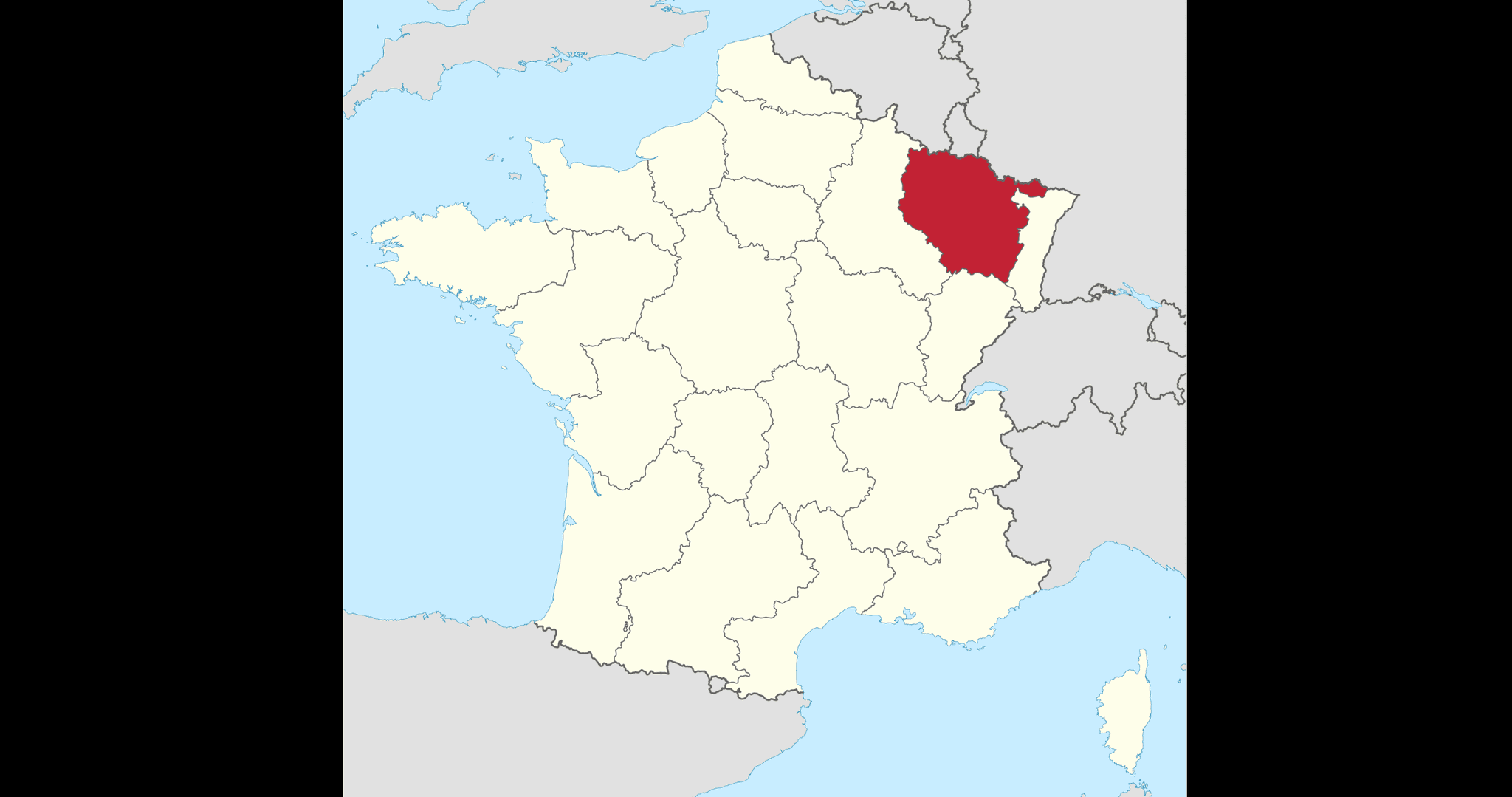
Lorraine

Team IO+ selects and features the most important news stories on innovation and technology, carefully curated by our editors.
Deep beneath the French soil lies an energy treasure trove. Researchers were searching for methane, but found something far more valuable: a gigantic pocket of natural hydrogen. It is a discovery that could turn the European energy market upside down. While the world is investing billions in plants to produce hydrogen, the earth is delivering it ready-made right here. This offers Europe an unexpected opportunity to drastically reduce its dependence on foreign energy.
A gigantic bubble beneath Lorraine
History has been made in the former mining basin of Lorraine. Researchers from the Université de Lorraine made a spectacular discovery there. Near the village of Folschviller and later near Pontpierre on the Moselle, they found enormous concentrations of natural hydrogen.
The French energy company Française de l'Énergie (FDE) drilled to a depth of over 3,600 meters. There they found a reservoir estimated to contain 34 to 46 million tons of hydrogen. Some estimates for the entire region even reach 250 million tons. That is more than half of the current global annual production of hydrogen.
Geologists suspect that the reservoir extends beneath the ground in Belgium, Luxembourg, and Germany. This makes it potentially the largest natural hydrogen reservoir in the world.
What exactly is white hydrogen?
The energy sector uses colors to indicate how hydrogen is produced. We produce gray hydrogen from natural gas. This process emits a lot of CO2. We produce green hydrogen by splitting water using electricity from wind turbines or solar panels. This is climate-neutral, but it requires an enormous amount of electricity and money.
White hydrogen is fundamentally different. This gas forms naturally deep within the Earth’s crust. It is a continuous geological process. Iron-rich minerals react with groundwater under high pressure and temperature. The major advantage is that the earth has already done the hard work. We just need to bring the gas to the surface. When white hydrogen is burned, only water vapor is released. There are no CO2 emissions. Because the gas is continuously replenished in some underground reservoirs, scientists consider it a renewable source.
Years-long testing phase
To make extraction commercially viable, the Regalor II project was launched. Universities and companies such as Saint-Gobain are collaborating on this project. They are investigating how to efficiently separate hydrogen from other gases in the ground, such as methane or nitrogen. This can be done, for example, using special membranes. They are also investigating the risks of leaks. If hydrogen escapes into the atmosphere, it can slow down the breakdown of greenhouse gases such as methane. The industry must therefore develop leak-proof systems. A years-long testing phase is now crucial to ensure safe and scalable techniques.
European autonomy
The impact of this discovery extends far beyond the French countryside. It is a geopolitical trump card for all of Europe. Recent years have painfully demonstrated how vulnerable Europe is. Our economy relies heavily on imports of fossil fuels from unstable regions. We also import solar panels, batteries, and critical metals primarily from countries such as China.
White hydrogen offers a way out. It is a locally available, clean energy source. If Europe can successfully exploit these reserves, it will strengthen our strategic autonomy. We are literally extracting energy from our own backyard. This makes European industry less vulnerable to international conflicts and price fluctuations on the global market.
France is thus positioning itself as the clear frontrunner in the race for natural hydrogen. If the test drilling is successful, this French project could be the catalyst for a faster and cheaper European energy transition.