
Wristband could catch skin disease before it flares
Erasmus MC researchers built a bracelet that spots skin disease without a single prick, using inflammation proteins in sweat.
Published on August 12, 2026
© Erasmus MC

Team IO+ selects and features the most important news stories on innovation and technology, carefully curated by our editors.
Researchers at Rotterdam's Erasmus Medical Centre have developed a simple wristband that can detect skin conditions such as eczema and psoriasis without a single needle prick or scratch, offering a painless new way to diagnose and potentially predict flare-ups.
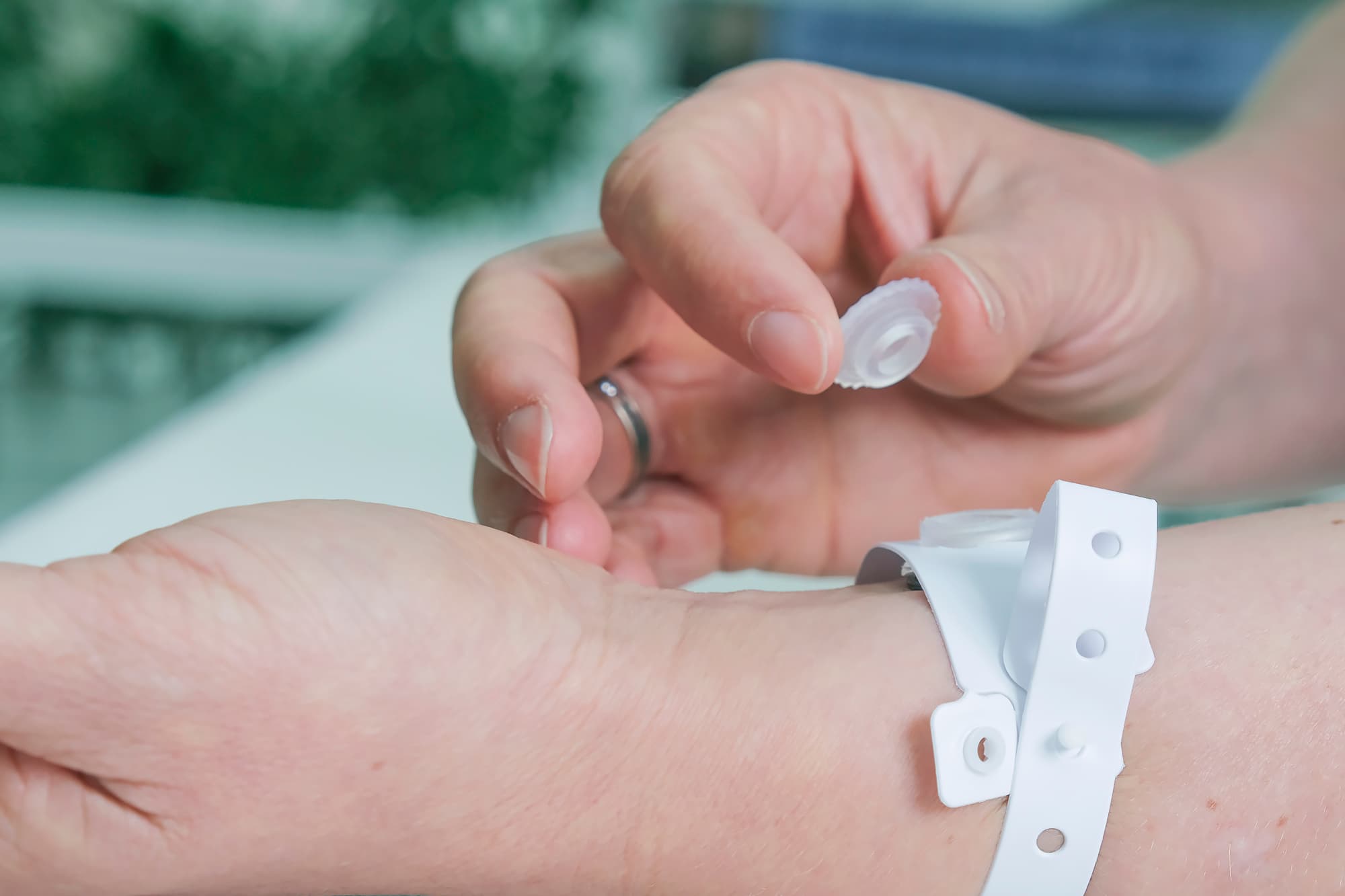
The device, dubbed the Skinwash device, resembles an ordinary plastic bracelet fitted with a tiny fluid-filled cup. Patients wear it for just 20 minutes. A thin membrane between the cup and the skin allows inflammatory proteins to pass through and collect in the liquid, where antibody-coated beads capture them like magnets. The sample is then analyzed in a lab.
.png&w=2048&q=75)
The design solves a problem that had stumped earlier attempts at painless skin testing, according to the researchers. The skin contains enzymes called proteases that break down inflammation proteins before they can be measured. The Skinwash device's trap-like structure protects the collected proteins from that breakdown, allowing for an accurate reading.
"It works very well on affected skin, but it also works on skin that is still healthy," said Eveline de Geus, a dermatology researcher who developed the device with medical immunologist Wim Dik. The pair are part of a research group at Convergence Health & Technology, a partnership between Erasmus MC and Delft University of Technology, studying how climate change and pollution affect health in real time.
Air pollution is increasing skin conditions
De Geus said the motivation behind the device was rising air pollution, which can trigger flare-ups of immune-related skin conditions. "Could we measure such flare-ups on the skin before they start causing patients problems?" she said, adding that early detection could let patients see a doctor sooner or avoid polluted areas altogether.
In initial trials, the device was tested on healthy volunteers as well as patients with atopic dermatitis and psoriasis. It detected elevated levels of inflammation proteins in affected patients, and the specific pattern of proteins was distinct enough to identify which of the two conditions a patient had. The findings were published this month in the journal JID Innovations, and a patent has been filed for the device.
Further research on contact allergy
The team is now preparing a similar study on contact allergy, a condition typically diagnosed using patch tests, in which allergen-coated stickers are applied to the skin. Distinguishing an allergic reaction from ordinary skin irritation using that method is not always straightforward, and researchers hope the wristband could offer a clearer answer.
De Geus cautioned that this application remains a long way off. Scientists have identified roughly 25 inflammation proteins potentially involved in contact allergies from existing literature, but the list will need to be narrowed considerably before it can support a practical diagnostic test.
For now, the device represents an early step toward detecting skin disease before symptoms worsen — without the need for a single prick.